Pasture weed control requires products that are effective on broadleaf weeds while remaining safe for livestock and forage. The following selections cover a range of formulations, from ready-to-use amine 2,4-D mixes to concentrated blends designed for larger acreage. Each option comes with practical use cases, application notes, and compatibility information to help farmers, ranchers, and land managers choose the right product for their pastures, rangelands, and grazing-ready fields.
| Product | Brand | Use Case | Notes |
|---|---|---|---|
| Southern Ag Amine 2,4-D WEED KILLER, 32oz | Southern Ag | Pastures, turf, rangeland; broadleaf weeds | Low usage rate; economical per acre; broadleaf control |
| Grazon Next HL 2 Gallon | Dow AgroSciences | Pastures, rangeland; broadleaf weeds and brush | Herbicide designed for large-scale applications |
| GORDON’S PBI Qt Conc Pasture Pro | GORDON’S | Pastures; brush and weed control | Concentrated 2,4-D formulation; quick grazing after drying |
| Hi-Yield (21416) 2,4-D Selective Weed Killer | Hi-Yield | Pastures; broadleaf weeds; not for lawns | Selective 2,4-D broadleaf control; compatible with stickers |
| ALLIGARE 2,4 D Amine Herbicide 128oz | ALLIGARE | Pastures, forests, lawns; various sites | Amine formulation; broad applicability |
Note: The table above highlights a mix of ready-to-use and concentrated products suitable for pasture settings. Always read the label for livestock grazing restrictions, re-entry intervals, and compatibility with existing forage crops before application.
Southern Ag Amine 2,4-D Weeds KIller
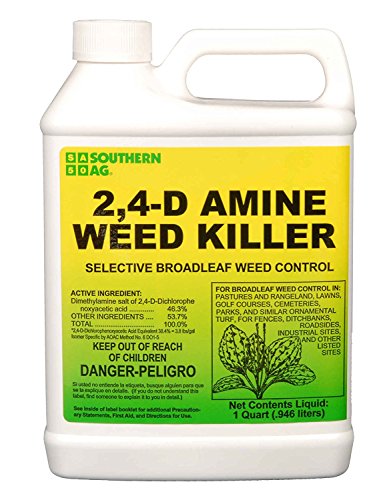
Overview: This 32-ounce option uses a 2,4-D amine formulation designed for broadleaf weed control in pastures, turf, and rangeland. It enables a low to moderate application rate per acre, enabling economical coverage across larger plots. The product targets many broadleaf species and can be applied along ditch banks, fence lines, and other non-crop areas where weeds threaten forage quality. When applied according to label directions, it supports rapid browning of targeted weeds while giving grasses room to recover. The formula is compatible with turf and pasture management programs that prioritize livestock safety and forage yield.
Key considerations: Proper dilution, compatible adjuvants, and adherence to grazing restrictions are essential. Begin with a spot-test on a small area to observe plant response and ensure there is no unwanted phytotoxicity to desirable forage species. Repeat applications may be necessary for persistent weed populations, but always follow label intervals and rates to avoid regrowth or resistance.
Dow Grazon Next HL 2 Gallon

Overview: Grazon Next HL is a widely used herbicide formulation for rangeland and permanent grass pastures. It combines active ingredients designed to control broadleaf weeds and brush species, allowing livestock forage systems to maintain productive pasture cover. The HL formulation is engineered for agricultural settings with larger acreage, offering flexible application rates that can be tailored to weed pressure and grazing schedules. It is typically deployed in late-season weed management plans and in areas where brush control is a priority alongside forage production.
Key considerations: Verify compatibility with existing livestock rotation plans, observe any grazing restrictions post-application, and consider the potential impact on non-target species. For best results, follow label instructions for water volumes, spray timing, and buffer zones around sensitive habitats or waterways. A well-timed treatment can reduce weed competitiveness and support long-term forage quality.
GORDON’S PBI Qt Conc Pasture Pro

Overview: This concentrated 2,4-D amine formulation is designed for pasture and brush control. The product emphasizes the elimination of a broad spectrum of tough listed weeds and brush species, helping maintain productive grazing areas. Importantly, it notes that there is no waiting period between treatment and grazing when used alone after sprays have dried, which can be advantageous for livestock-intensive operations. The concentrate allows operators to tailor mixing rates for specific weed pressures and pasture sizes.
Key considerations: Confirm precise mixing rates, as over-application can harm desirable forage species. Consider tank-mix compatibility with other pasture amendments, and ensure thorough spray coverage to maximize efficacy. Always adhere to label guidance for grazing intervals to protect animal health and forage safety in rotational grazing systems.
Hi-Yield 2,4-D Selective Weed Killer
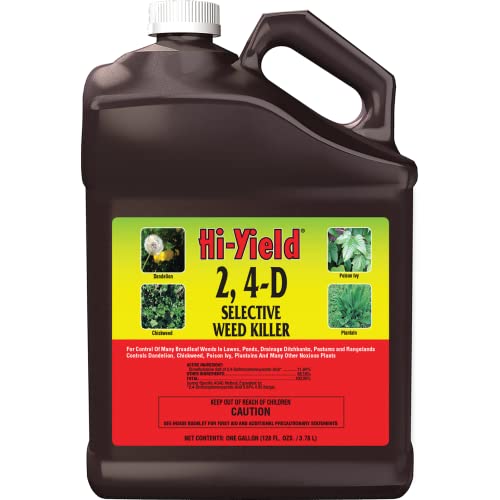
Overview: This selective weed killer targets many broadleaf weeds and plants susceptible to 2,4-D, including common pasture weed species. It is designed to pair well with adjuvants like spreader stickers to boost efficacy. The product’s suitability for off-lawn use makes it appealing for field borders, non-crop areas, and mixed pastures where weed control is needed without affecting the overall forage mix too aggressively.
Key considerations: Review the label for the exact weed species listed and the recommended concentrations. Note that it is not intended for lawns, so it is more suitable for pasture and non-turf settings. For large weed patches, consider staged applications to minimize potential stress on desirable forage species and to reduce the risk of resistance buildup.
ALLIGARE 2,4 D Amine Herbicide 128oz

Overview: Alligare 2,4-D Amine is a broad-use herbicide designed for pastures and various landscapes. This 128-ounce formulation provides flexibility in dilution to accommodate different pasture sizes and weed pressures. The amine salt formulation is generally associated with better mixing stability and compatibility with water. It supports effective control of many broadleaf weeds, contributing to improved forage health when applied according to label instructions.
Key considerations: Ensure proper mixing rates, especially when treating larger areas. Consider time windows for grazing and haying following application to protect livestock. Use appropriate protective equipment and follow all safety guidelines on the label to minimize exposure risks for workers and animals.
Buying Guide: Key Purchase Considerations And Comparisons
Selecting the right weed killer for pastures involves balancing effectiveness, safety, and practicality. The following considerations help compare options and align choices with specific pasture needs.
- Target weed species: Identify the prevalent broadleaf weeds and brush in your pastures. Some products perform better on certain weed groups, while others offer broad-spectrum control.
- Livestock safety and grazing restrictions: Review grazing intervals, re-entry times, and any forage safety warnings. Some formulations allow grazing soon after drying, while others require longer intervals.
- Formulation and application scale: Choose between ready-to-use liquids and concentrated mixes based on pasture size. Concentrates can be cost-effective for large areas but require proper mixing equipment and accuracy.
- Compatibility with forage crops: Confirm that the product is suitable for your specific grasses and forages. Some products may affect certain species more than others.
- Adjuvants and tank mixes: Consider compatibility with spreader stickers or other adjuvants to improve coverage and uptake. Always test tank mixes on a small area first if mixing.
- Weather and timing: Plan applications for favorable conditions (low wind, moderate temperatures) to minimize drift and maximize absorption. Weed growth stage can influence efficacy; younger, actively growing weeds often respond best.
- Environmental and regulatory considerations: Ensure compliance with local regulations, buffer zones, and nearby water resources. Avoid application near streams, ponds, or sensitive habitats unless labeled for such use.
- Cost efficiency: Compare cost per acre by considering product concentration, dilution rates, and quantity needed for your pasture size. A higher upfront cost may be offset by lower application frequency or coverage.
- Resistance management: Rotate active ingredients and avoid repeated use of the same mode of action to reduce resistance risk among weed populations.
- Safety and handling: Follow label directions for storage, handling, and protective equipment. Proper storage preserves product integrity and reduces exposure risk for handlers and livestock.
In summary, choosing the right weed killer for pastures entails evaluating weed species, grazing plans, and pasture management goals. The selected products above provide a spectrum of options—from ready-to-use to concentrated formulations—to fit varying acres, livestock considerations, and budget constraints. Always consult the label for precise instructions, restrictions, and compatibility with your pasture management program.