Achieving a lush, weed-free lawn often means combining targeted weed control with steady feeding. The right weed killer and fertilizer for grass can suppress common broadleaf weeds while nourishing turf to outcompete future growth. Below is a curated selection of products designed to deter dandelions, clover, crabgrass, and other stubborn invaders while promoting thick, green turf. The recommendations use triple-action formulas, fall and spring applications, and ready-to-use solutions suitable for American lawns of various sizes.
To help you compare quickly, here is a snapshot of five standout options. The table highlights the product name, brand, and a core benefit that aligns with typical lawn needs—weed control, feeding, and preventative action. These picks cover a range of application styles, from granular blends to concentrated liquids, and are suitable for medium to large lawn areas when used according to label directions.
| Product | Brand | Core Benefit |
|---|---|---|
| Scotts Turf Builder Triple Action Weed Killer And Fertilizer | Scotts | Kills listed weeds, prevents crabgrass, feeds lawn |
| Scotts Turf Builder WinterGuard Fall Weed & Feed | Scotts | Kills weeds in fall, feeds for spring vigor |
| Scotts Liquid Turf Builder Plus 2 Weed Control | Scotts | Liquid weed control plus nitrogen boost |
| Spectracide Weed & Feed Ready-to-Spray | Spectracide | Dual-action weed killer and lawn fertilizer |
| BioAdvanced 5 in 1 Weed And Feed | BioAdvanced | Kills tough weeds, prevents new ones, and feeds |
Scotts Turf Builder Triple Action Weed Killer And Fertilizer
Scotts Turf Builder Triple Action I, Weed Killer and Preventer Plus Lawn Fertilizer offers a three-in-one formula designed to kill listed lawn weeds, prevent crabgrass for up to four months, and feed grass to promote a thick, green lawn. Its listed weeds include common broadleaf species like dandelion, clover, and plantain, as well as ground ivy and chickweed. This product is well-suited for homeowners seeking a single-step solution to weed control and lawn nutrition. For best results, apply to a moist lawn when weeds are actively growing and temperatures fall within label guidelines.

Key considerations: Ensure your lawn size matches the product coverage (this option covers up to about 4,000 sq. ft.). The product is effective for broadleaf weed control and crabgrass prevention, but it does not kill existing crabgrass, so additional management may be needed if crabgrass is already established. Follow application timing to avoid heat stress and ensure compatibility with your irrigation schedule.
Scotts Turf Builder WinterGuard Fall Weed & Feed
Scotts Turf Builder WinterGuard Fall Weed & Feed combines weed killing with fall lawn feed to prepare grass for spring. It targets more than 50 listed lawn weeds, including clover, dandelion, and plantain, while supplying necessary nutrients to strengthen roots before winter. This option is ideal for homeowners who want to reduce spring cleanup and improve turf density early in the off-season.

Notes on use: Apply when weeds are actively growing and temperatures are between 60°F and 90°F. It’s a fall application intended to feed and prepare the lawn for winter and the following spring. Consider your local climate and the timing of your final mowing before applying to maximize root development and turf resilience.
Scotts Liquid Turf Builder With Plus 2 Weed Control
Scotts Liquid Turf Builder with Plus 2 Weed Control is a ready-to-spray option that provides a quick weed kill alongside a nitrogen boost to promote greener, thicker turf. The formula targets weeds such as dandelion, clover, ground ivy, henbit, chickweed, and plantain, among others. Liquid applications can be quicker and easier to apply precisely, making it a practical choice for smaller lawns or patch treatments where quick results are desired.

Practical guidance: Use when weeds are actively growing and temperatures are moderate. Follow spray instructions to avoid overspray onto non-target plants. This product is best for spot treatments in addition to broader lawn care plans, ensuring you avoid excessive nitrogen applications that could promote weed growth in certain conditions.
Spectracide Weed & Feed Ready-To-Spray
Spectracide Weed & Feed 20-0-0 Ready-to-Spray delivers a dual-action approach: it kills major broadleaf weeds while feeding the lawn with a 20 percent nitrogen formulation. The product targets weeds such as dandelion, clover, knotweed, plantain, and purslane, among others. The ready-to-spray format offers convenience for fast, in-hand applications to large or irregularly shaped lawns, reducing the need for mixing and measuring.
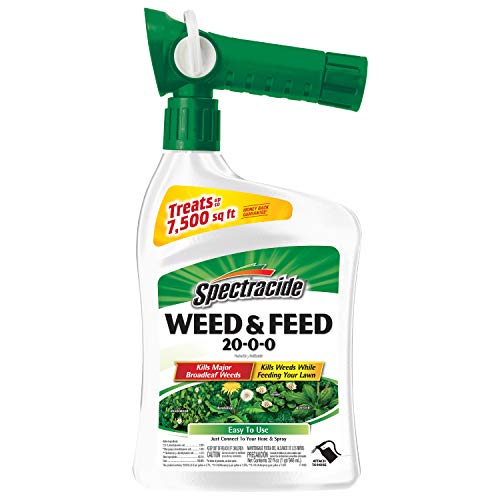
Considerations: Check label compatibility with your specific grass type and any local chemical guidelines. The ready-to-spray format is convenient for large areas but may require careful calibration to avoid over-application on drought-stressed lawns. Regular applications throughout the season should be coordinated with mowing and irrigation to maximize benefits and minimize stress to your turf.
BioAdvanced 5 in 1 Weed And Feed
BioAdvanced 5 in 1 Weed And Feed Lawn Fertilizer is designed to kill tough listed weeds while feeding and preventing future growth. Its multi-action approach targets broadleaf species and helps manage crabgrass, clover, dandelions, and other common lawn pests. The granule format makes it suitable for larger lawns and provides several weeks of protection against weed invasion, depending on weather and usage conditions.

Usage tips: Apply when weeds are actively growing and the soil is moist for better absorption. Avoid applying to newly seeded lawns and follow label directions regarding maximum applications per season. This option can be particularly attractive for those seeking a one-stop solution that combines weed control with lawn nourishment and ongoing preventive benefits.
Buying Guide: Key Purchase Considerations For Weed Killer And Fertilizer For Grass
When choosing a weed killer and fertilizer product for your lawn, consider these factors to align with your turf goals, climate, and maintenance routine:
- Weed species and lawn needs: Identify the most prevalent weeds (dandelion, clover, crabgrass, plantain, etc.) and select a product that targets those species while providing fertilizer benefits.
- Application timing: Fall, spring, or summer applications vary in effectiveness. Fall weed and feed supports spring lawn health, while spring and summer formulations address actively growing weeds and nutrient uptake.
- Coverage area: Match product coverage to your lawn size (square footage) to avoid under- or over-application. Granular options often require spreaders, while liquid formulas may be sprayed with a hose-end applicator.
- Formulation and rate: Granules vs. liquids offer different application experiences. Consider your preferred method, equipment, and ability to water in after application for optimal results.
- Impact on grass type: Some blends are tailored to cool-season grasses (fescue, Kentucky bluegrass) or warm-season varieties (Bermuda, zoysia). Ensure label compatibility with your lawn.
- Environmental and safety considerations: Follow label directions for pets, children, and water runoff. Some products may be more suitable for certain soil conditions or climates.
- Seasonal timing and maintenance: Plan a lawn care calendar that alternates weed control with feeding to avoid heavy chemical loads in a single season and to promote sustainable growth.
- Reapplication limits: Many products specify the maximum number of applications per year. Adhering to these limits helps prevent chemical buildup and turf stress.