Planning a productive deer food plot starts with selecting turnip seeds that deliver high-energy forage, rapid germination, and dependable growth. This article highlights five top turnip seed options ideal for attracting and sustaining whitetail deer. Each entry includes practical planting guidance, growth timelines, and how the seed mix supports deer nutrition and habitat health. Read on to compare options and choose seeds that fit your climate, soil, and hunting-season goals.
| Product | Key Benefit | Best For |
|---|---|---|
| Outsidepride Purple Top Turnip Seeds (5 Lbs) | High-protein forage; fast maturity | Fall/Winter food plots |
| Hale Habitat Purple Top Turnip Seed (5 Lbs) | Certified seed; reliable germination | Easy-to-plant plots |
| Domain Outdoor Big Sexy Seed (Turnip/Radish/Kale/Forage Rape) | Multi-species mix for diverse nutrition | All-season attraction |
| Outsidepride Purple Top Turnip Seeds (1 Lb) | Same benefits in smaller bag | Small plots or test patches |
| Whitetail Institute Tall Tine Tubers | Two food sources: foliage and tubers | Season-long forage |
Outsidepride Purple Top Turnip Seeds — 5 Lbs

This variety is prized for its high-protein forage, making it a staple for deer food plots. It grows well under full sun to partial shade and tolerates USDA zones 2–9, expanding planting options across much of the United States. The purple top turnip produces a large root and voluminous green foliage, allowing both parts to be grazed by wildlife. When planted at 10–15 pounds per acre, it matures in about 55 days, offering a quick turnaround for seasonal plots. Cool temperatures can enhance flavor, supporting late-season hunting plots that provide forage through winter.
Key considerations: split-planting windows between late summer and early fall work well, especially in cooler climates. The dual-use nature helps maximize land use, with the root and greens feeding deer, livestock, and wildlife alike. To optimize germination, ensure consistent moisture and avoid overly dense sowing, which can hinder root development. The seed is suitable for various soil types, but enrichment with organic matter improves yield in poorer soils.
Hale Habitat & Seed Purple Top Turnip Food Plot Seed — 5 Lbs

Hale Habitat & Seed markets certified seed to support robust germination rates and dependable growth. A single 5-pound bag can seed approximately one acre, making it convenient for larger plots or multiple plots with consistent results. The emphasis on seed quality aligns with reliable stand establishment and steady forage production through fall and winter months. This option suits landowners seeking predictable performance and straightforward planting, with fewer surprises in emergence and maturation compared with less-tested varieties.
Key considerations: certified seed often translates to higher germination and uniformity, reducing variability in stand density. For best results, align sowing with cooler temperatures to optimize flavor and palatability for deer. Consider pairing with a soil test to balance nutrients and improve root development in compact or nutrient-poor soils. Regular weed suppression during establishment helps ensure the turnips establish a strong presence quickly.
Domain Outdoor Big Sexy Food Plot Seed — 1/2 Acre

This large 3-pound jug is designed as a 1/2-acre seed package and includes a mix of turnips, radish, kale, and forage rape. The combination targets multiple nutritional needs and supports deer attraction across seasons. The variety’s multi-species approach helps diversify forage sources and can improve grazing tolerance by spreading feeding pressure. It’s positioned as a dependable cold-season option, providing both energy and essential minerals for antler growth and general health.
Key considerations: multi-species blends offer resilience against weather fluctuations and pest pressure. Check the sowing rate on the bag and calibrate for field size to maximize coverage without over-seeding. Because it’s a mixed seed, differentiation in maturity times is common, so plan staggered planting dates if you want continuous forage through fall to winter. For plots that endure heavy deer pressure, consider fertilization and soil conditioning to sustain regrowth after grazing.
Outsidepride Purple Top Turnip Seeds — 1 Lb
This smaller bag delivers the same high-protein forage and quick-maturing benefits as the larger 5-pound package, ideal for test plots or smaller properties. It remains suitable for zones 2–9 and supports both leaf and root grazing. With a 10–15 pounds-per-acre guideline and a 55-day maturation window, you can achieve multiple planting opportunities within a typical hunting season.
Key considerations: for limited space, focus on a few high-traffic plot corners or along field edges to intercept deer movement. Maintain even moisture during germination, as turnips require consistent soil moisture for uniform emergence. Pair with complementary forages if deer pressure is intense to sustain continued interest over time and reduce overgrazing in one area.
Whitetail Institute Tall Tine Tubers — 3 Lbs
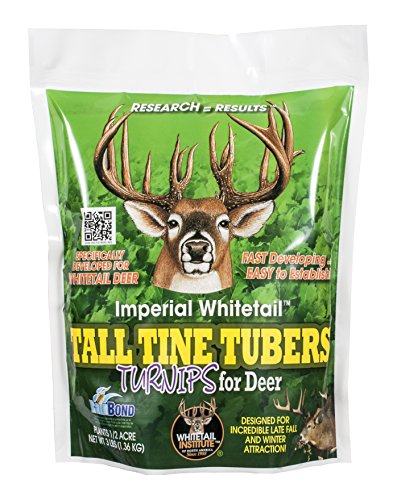
Whitetail Institute combines a turnip with a tuber-based approach designed to attract deer through both foliage and subterranean tubers. This dual-source strategy can extend forage availability through colder months and add structural variety to your plot. The product is presented as a specialized option developed after extensive research, aiming to maximize deer hold time by providing two palatable feed options within one seed mix.
Key considerations: tall tine tubers offer a nutritional edge but may require careful timing to ensure tubers contribute to late-season forage. Monitor soil moisture and avoid compaction, as tuber development benefits from loose soil. Integrate with other late-season forage seeds to sustain deer presence as temperatures drop and forage greens decline.
Buying Guide: Turnip Seed For Deer
- Nutrition and palatability: Look for varieties that emphasize high-protein forage and sweet, tender roots. Dual-use turnips that feed both greens and tubers offer more consistent nutrition across seasons.
- Germination and maturity: Favor seeds with short to moderate maturity (around 55 days) for fall plots, and consider earlier sowing for extended late-season forage.
- Climate suitability: Ensure seeds are labeled for USDA zones applicable to your property. Cooler climates often benefit from turnips with enhanced flavor and slower regrowth in winter.
- Soil health and preparation: Turnip seeds prefer well-drained soil rich in organic matter. Conduct a soil test to fine-tune pH and nutrient levels; amending soil can boost germination and root formation.
- Plot management: Plan sowing density to balance root yields with greens. Use weed control during establishment and stagger plantings to extend forage availability through hunting season.
- Water and maintenance: Maintain consistent moisture during germination and establishment. Avoid waterlogging, which can stunt root development and invite disease.
- Escape and rotation: Rotate plots or mix with other forages (radish, kale, forage rape) to reduce disease risk and extend attractant value across multiple seasons.
- Cost versus scale: Bigger plots often require additional seed, fertilizer, and weed control, but may produce more consistent deer visitation. Start with a test patch if unsure.
In selecting turnip seed for deer, combine factors like seed quality, local climate, and plot size. Blending high-protein, fast-maturing varieties with a multi-species approach can improve your plot’s resilience, attract deer more reliably, and support healthier antler growth through the season. Always follow label directions for sowing rates and timing to maximize germination and forage production.