For gardeners starting seeds indoors, the right seed starter tray can simplify germination, reduce transplant shock, and boost germination success. This guide reviews five versatile options that cover a range of seed sizes, watering needs, and durability. Whether you’re growing herbs, vegetables, or ornamental plants, these trays provide clear observation, adjustable ventilation, and easy cleanup. The selections emphasize durability, ease of use, and compatibility with common seed starting practices to help you pick a kit that fits your space and gardening goals.
| Product | Cells per Tray / Total Cells | |
|---|---|---|
| Gardzen 5-Set Seed Starter Tray Kits | Total 200 Cells (5 trays x 40 cells) | Adjustable vents, durable plastic, included dome and base |
| Burpee SuperSeed Seed Starting Tray (36 Cell) | 36 cells | Silicone pop-out cells, easy transplant, dishwasher safe |
| Burpee SuperSeed Seed Starting Tray (16 XL Cell) | 16 XL cells | Alphanumeric labeling, deep channels for drainage, easy lifting handles |
| The Hydroponic City Seed Starter Trays (144 Cells) | 144 cells (24 x 6 grid) | 1.5″ x 2″ cells, durable, versatile for many seeds |
| MIXC Seedling Trays Seed Starter Tray (200 Cells) | 200 cells (5 trays x 40 cells) | Clear observation, adjustable vents, compact footprint |
Gardzen 5-Set Seed Starter Tray Kits

Gardzen’s seed starter kit is designed for dependable indoor seed starting with a 40-cell capacity per kit and a durable build. The set includes resealable vents to regulate airflow inside the dome, supporting consistent humidity and temperature for germination. These trays promote healthy root development by allowing observers to monitor progress through the clear plastic while reducing root disturbance. A notable feature is the upgraded dome fit, which minimizes air leaks and keeps moisture balanced to optimize seedling vigor. Each kit ships with separate domes and bases that provide a tidy stacking arrangement for compact growing spaces.
Key considerations include ventilation control, tray durability, and the ability to reuse trays across seasons. The Gardzen system supports a variety of seed types, including vegetables, herbs, and ornamentals, and its modular design makes it easy to expand your starter setup. For growers prioritizing longevity and uniform cell size, this option offers a reliable balance of capacity and manageability in a single purchase.
Burpee SuperSeed 36-Cell Seed Starting Tray

The Burpee 36-cell SuperSeed tray focuses on simplifying indoor germination with soft silicone cells that gently cradle seedlings. The embedded drainage channels improve soil aeration and reduce overwatering, while the raised perimeter helps contain water within the tray. The design facilitates easy transplantation, with cells that pop out without stressing roots. The included labeling system (Plant-o-Gram) supports seedling identification, aiding organized planting schedules. After success in the garden, the tray is easy to clean and reuse, contributing to a sustainable approach to seed starting.
Considerations for this tray include its cell size and ease of transplanting. The 36-cell format is well-suited for a wide range of vegetables, herbs, and flowers, allowing a larger number of plants in a compact footprint. Home growers who value straightforward transplanting and efficient water management will likely appreciate this option for year-round seed starting.
Burpee SuperSeed 16 XL-Cell Seed Starting Tray

This Burpee 16 XL-cell tray uses extra-large cells to accommodate larger seeds and for robust transplanting. The alphanumeric labeling helps organize germination logs, while the deep drainage channels protect roots from sitting water. The raised edge on the watering tray minimizes spills during daily checks, and the soft silicone nature of the cells makes pop-out transplantation easier on young root systems. The larger cell size reduces the need for early thinning in some crops and can support stronger initial growth for deeper-rooted plants.
Ideal use scenarios include starting larger seeds or crops that require more root space before transplanting. If your operation involves a mix of larger vegetables or sturdy herbs, this XL format provides a practical bridge between compact seed trays and eventual potting up.
The Hydroponic City Seed Starter Trays (144 Cells)

Featuring 144 cells across 24 rows by 6 columns, this Hydroponic City tray setup is an economical option for large seed programs or family gardens. Each cell measures 1.5 inches square by 2.25 inches deep, providing sufficient space for a wide range of seeds while maximizing tray density. The trays are designed for durability and easy reuse, making them suitable for seasonal planting calendars. The design supports both soil-based and hydroponic setups, enabling flexible handling in different growing environments.
Considerations include the total footprint and how many plants you intend to raise concurrently. While the large cell count is advantageous for mass germination, it requires adequate space and a reliable irrigation plan to prevent moisture imbalances. This option suits growers who want high throughput in a single purchase and have a predictable seed-starting routine.
MIXC Seedling Trays Seed Starter Tray (200 Cells)
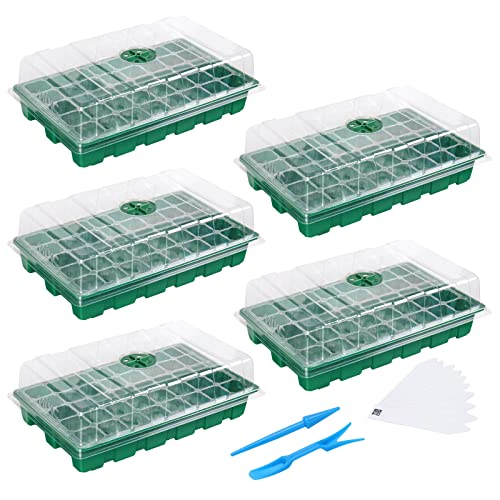
The MIXC seedling tray set delivers a total of 200 cells across five trays, each with an evenly spaced grid and clear observation capability. The domes feature adjustable vents to regulate temperature and humidity, providing a controlled germination environment. The high transparency of the plastic enables gardeners to monitor root growth without disturbing the plants, a practical advantage for sensitive seeds. The compact design helps maximize space for indoor setups while supporting a broad seed range, from herbs to vegetables and ornamentals.
When evaluating MIXC trays, consider your light exposure and watering routine. The 200-cell configuration is ideal for ambitious indoor projects or community gardens where multiple seed types are started simultaneously. Durability and ease of cleaning also factor into long-term usage, especially if you plan to reuse the trays across seasons.
Buying Guide: Key Purchase Considerations And Comparisons
- Cell size and count: Choose cell dimensions appropriate for your seed types. Larger seeds may benefit from XL or bigger cells, while microgreens fit well in standard 1.5-inch cells.
- Ventilation and humidity control: Adjustable vents help manage humidity and temperature, promoting uniform germination. Look for domes with reliable seals and easy vent operation.
- Durability and reuse: Premium plastic, sturdy bases, and dishwasher-safe components extend tray life and reduce waste over time.
- Transplant ease: Silicone or flexible cells that pop out lessen root disturbance during transplantation, supporting seedling health.
- Observation and monitoring: Transparent materials enable you to monitor root growth and moisture without disturbing seedlings.
- Compatibility with space: Consider the footprint and stacking ability if you have limited counter or shelf space.
- Seed range versatility: Some trays are more suitable for a broad range of seeds (herbs, vegetables, flowers), while others excel with larger seeds.
Selecting the right starter tray involves balancing capacity, space, and plant goals. For high-volume starting or shared projects, a larger set with multiple trays is advantageous. If you begin with a small indoor garden, a compact XL or standard 40- or 50-cell kit can fit neatly on a windowsill or shelf. Finally, consider whether you will transplant outdoors soon and whether your trays support easy root-friendly removal.