Gardening success often hinges on knowing when to water and how much moisture your soil actually holds. A soil meter helps you move beyond guesswork by delivering quick, actionable readings for moisture, pH, light, and more. Below is a curated guide to five reliable meters that American gardeners rely on to protect houseplants, lawns, and garden beds. Each option is designed for easy use, accurate readings, and practical value for everyday plant care.
Summary Of Selected Products
| Product | Brand | Key Feature | Best For |
|---|---|---|---|
| XLUX Soil Moisture Meter, Plant Water Monitor | XLUX | Deep soil moisture reading, long probe, two-tone dial | Deep pots and planters |
| SONKIR Soil pH Meter, MS02 3-in-1 | SONKIR | Moisture, pH, and sunlight, no batteries | Multi-parameter monitoring |
| GROWIT Soil Moisture Meter for Plants | Craft911 | Moisture detection plus hydrophobic soil insight | Houseplants and containers |
| YAMRON 4-in-1 Soil Moisture Meter | YAMRON | Moisture, pH, temperature, sunlight, backlit display | Smart, all-in-one readings |
| VIVOSUN Soil Tester, 3-in-1 | VIVOSUN | Moisture, light, and pH with one-button use | All-around garden testing |
XLUX Soil Moisture Meter: Deep Soil Reading
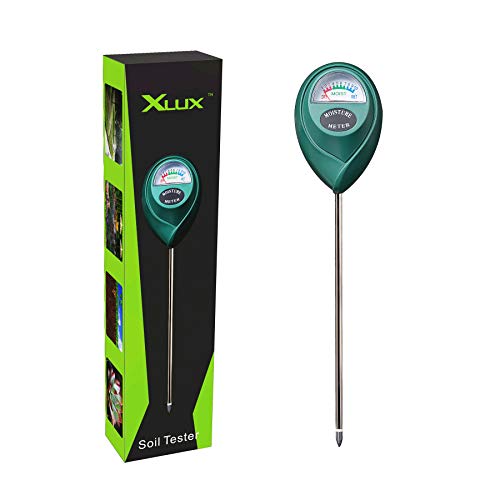
The XLUX meter provides quick, accurate detection of soil moisture levels—dry, moist, or wet—by inserting a probe into the soil. Its large dial shows three zones across ten scales for straightforward interpretation. This model is particularly suited for deeper pots due to its extended probe length. The device offers immediate readings but should not be left in soil for more than five minutes to prevent corrosion of the metal tip.
SONKIR 3-in-1 Soil Meter: Moisture, pH, Light

This 3-in-1 tester measures soil moisture, pH, and sunlight. It is battery-free and designed for ease of use; simply insert the meter into the soil and wait a few minutes for the readout to stabilize. Note that dry soil may cause the indicator to stay still, so pre-watering is recommended before testing. It is suitable for garden beds, lawns, and potted plants alike.
GROWIT Soil Moisture Meter for Plants

GROWIT’s meter emphasizes accurate moisture detection in tricky, water-repelling soils. It helps gardeners identify hydrophobic soil conditions where the surface looks wet but roots stay dry. With easy usage, the meter supports better watering decisions to prevent overwatering and plant stress, especially in pots and raised beds.
YAMRON 4-in-1 Soil Tester

This multifunction tester covers moisture, pH, temperature, and sunlight with a backlit LCD display. It’s designed for quick, digital reads in both day and night conditions. While it requires batteries, the updated probe technology supports fast, accurate measurements, helping users adjust watering schedules and light exposure for healthy plant growth.
VIVOSUN 3-in-1 Soil Tester

VIVOSUN combines moisture, light, and pH measurements in a compact unit. Its three-in-one approach streamlines garden care, making it a practical choice for home gardeners who want quick, all-around insights without switching devices. The meter’s compact length suits several indoor and outdoor setups, from pots to lawn borders.
Buying Guide: Key Purchase Considerations
Where to start depends on your gardening goals and your plants’ needs. Here are essential factors to consider when selecting a soil meter:
- Single- vs multi-function meters: If you mainly need moisture readings, a dedicated meter may be simplest. For broader monitoring (moisture, pH, light, temperature), multi-function models save space and time.
- Probe length and depth: Deeper pots require longer probes to reach relevant soil zones. Short probes may misread central or bottom soil moisture.
- Readout type: Analog dials are quick and battery-free but may require interpretation. Digital LCD displays offer precise values and often backlighting for nighttime use.
- Battery life and maintenance: Battery-free options are maintenance-light but may lack some features. For digital models, consider battery replacement costs and durability of the probe.
- Soil compatibility: Some meters are optimized for potting mixes, sandy soils, or clay-heavy soils. Look for a device that aligns with your soil type and plant choices.
- Durability: Outdoor use can expose meters to moisture and soil. Metal probes and robust housings help extend the tool’s life in garden environments.
- Calibration and accuracy: While many meters are calibrated to general ranges, accuracy varies. For sensitive plants, corroborate readings with multiple tests or supplemental tools.
In practice, combining a moisture-focused meter with a 3-in-1 option provides broader insight for most American households, supporting both indoor plant care and outdoor garden maintenance. Consider your typical plant collection, pot sizes, and preferred reading method to pick the best fit.
For ongoing plant health, use the meter readings to inform a watering schedule—and adjust for seasonal changes, rainfall, and indoor humidity. Always ensure proper drainage and avoid leaving probes in soil longer than recommended to preserve device longevity.