When you need reliable pulling power for arborist tasks, selecting the right rope is essential. This guide highlights top-rated ropes designed for tree work, outdoor rigging, and rescue-inspired scenarios. Each option balances strength, durability, and ease of use to help you choose the best rope for pulling trees in both professional and home settings.
| Product | Brand | Diameter x Length | ||
|---|---|---|---|---|
| VEVOR Double Braided Polyester Rope | VEVOR | 3/4 in x 220 ft | 20000 LBS | Double braided, 10% longer, versatile outdoor use |
| Arborist Rigging Rope Bull Rope Black | Ezjsdltech | 1/2 in x 150 ft | 9000 LBS | 48 strands, flexible, hot melt fray prevention |
| Climbing Rope 3/4 in x 150 Ft Blue Bull Rope | Glfcai | 3/4 in x 150 ft | 20,000 LBS | High tensile strength, anti-slip design |
| Double Braided Arborist Rigging Rope | HOKINETY | 3/4 in x 120 ft | 8200 LBS | 24-strand outer, 48-strand inner core, durability |
| TINVHY 3/4 Inch x 200 Feet Rope | TINVHY | 3/4 in x 200 ft | 20000 LBS | Double braided, smooth surface, low stretch |
The products listed below are selected to cover a range of sizes, strengths, and constructions. They are suitable for tree rigging, pulling tasks, and maneuvering loads in outdoor environments. Each entry includes a direct product focus, practical attributes, and how the rope can be used in real-world scenarios.
VEVOR Double Braided Rope For Rigging And Rescue

The VEVOR rope is a heavy-duty, double-braided polyester line designed for arborist rigging and outdoor tasks. With a diameter of 3/4 inch and a 220-foot length, it delivers a substantial 20000 pounds breaking strength. The dual braided construction combines a rugged outer sheath with a strong inner core, providing reliability for pulling, hoisting, and emergency scenarios. The extended length helps reach higher anchor points, and the material’s flexibility aids knot tying without compromising strength. This rope is well-suited for professional use in tree care, rock climbing, and camping setups where dependable performance matters.
Ezjsdltech Arborist Rigging Rope Bull Rope

This 1/2 inch diameter, 150-foot length rope is built for strength and flexibility. It features a 9000-pound breaking strength and uses a tightly woven 48-strand polyester inner core with a robust polyester sheath. A twisting process and hot-melt cutting technology help prevent fraying, making it practical for uprigging, tree work, and camping applications where rope integrity is paramount. The combination of abrasion resistance and knot-friendly handling makes it a solid choice for arborists and outdoor enthusiasts alike.
Glfcai Climbing Rope 3/4 Inch Blue

Glfcai offers a 3/4-inch diameter rope with a 150-foot length and a tensile strength rated around 20000 pounds. The rope’s static design emphasizes stability during climbing and rigging tasks, including tree pulling and nautical rigging. An anti-slip construction provides a secure grip, helping workers maintain control during ascent, lowering, or load transfer. Its versatility spans tree felling, rope swings, and other outdoor activities where a strong, dependable rope is essential.
HOKINETY Double Braided Arborist Rope Orange
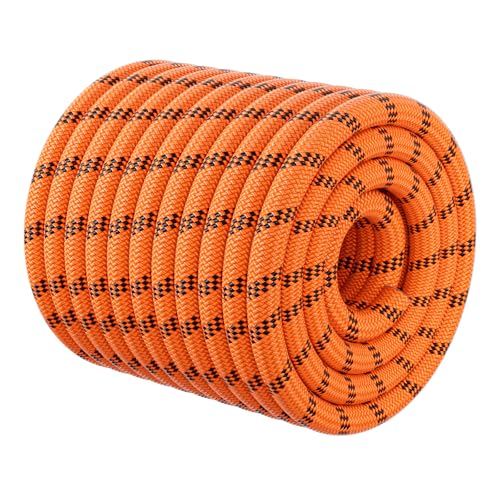
HOKINETY’s orange double-braided rope focuses on high-strength performance for outdoor pulling, tree work, and camping. With a 3/4-inch diameter and a breaking strength of 8200 pounds across a 120-foot length, it delivers dependable performance in various weather conditions. The 24-strand outer layer paired with a 48-strand inner core offers durability, abrasion resistance, and reliable knot stability for rugged applications such as rescue, hiking, and forestry tasks.
TINVHY 3/4 Inch x 200 Feet Rope

The TINVHY rope combines double-braided polyester construction with a 20000-pound breaking strength. At 3/4 inch diameter and 200 feet in length, this rope is crafted for heavy-duty tree work, camping setups, and bull pulling applications. The surface is described as smooth with low stretch to minimize hand wear and debris contact. A tightly woven braid improves knotting efficiency and overall handling in demanding outdoor tasks.
Buying Guide: Key Purchase Considerations
- Strength and diameter: For tree pulling and rigging, look for ropes in the 1/2 to 3/4 inch range with breaking strengths of at least 8000–20000 pounds, depending on load requirements and safety margins.
- Construction: Double-braided ropes offer enhanced durability and abrasion resistance, while braided cores can provide flexibility and knot stability. Outer sheath quality and inner core composition influence longevity and performance.
- Length: Longer ropes increase reach for high anchors and large trees, but can be heavier. Consider your typical work height and transportation constraints when choosing length.
- Material: Polyester ropes provide good strength, UV resistance, and moisture tolerance. Nylon offers elasticity; for static pulling, low stretch is usually preferred to maintain control during pulls and rigging.
- Handling and knot-ability: Look for ropes with smooth surfaces, low fraying tendencies, and designs that support secure knotting and easy tying under field conditions.
- Weather and environment: Consider exposure to moisture, heat, UV light, and chemicals. Durability and abrasion resistance are critical for outdoor arborist tasks and rescue scenarios.
- Safety considerations: Always follow manufacturer load ratings, use appropriate PPE, inspect rope before use, and replace if signs of wear or damage are present. Plan loads with a conservative safety factor and have backup anchors when rigging.
- Maintenance: Clean ropes after use, store in a cool, dry place away from direct sunlight, and avoid sharp edges that can cause fraying or cuts. Periodic inspection of sheath integrity and core condition is recommended.
In summary, selecting a rope for pulling trees involves balancing strength, length, construction, and handling. The options listed offer strong performance for arborist work, rigging, and outdoor tasks. Always assess your specific use case, including load requirements, environmental conditions, and user safety, to determine the best rope for your needs.