For lawn care, a pull-behind rake or dethatcher can dramatically improve soil and thatch management when used with riding mowers or ATVs. The right attachment helps remove dead thatch, lift compacted soil, and prepare your lawn for seeding or overseeding. Below are five top-rated options that fit a range of mower setups, focusing on durability, ease of use, and compatibility with common riding mowers and ATVs. Each product section highlights key features to help you compare at a glance.
| Product | Width | Tines | |
|---|---|---|---|
| Agri-Fab 45-0295 48in Tow Behind Dethatcher | 48 in | 24 | Wide coverage and US-made build |
| VEVOR Tow Behind Dethatcher 40in | 40 in | 20 | Durable steel construction; easy tine replacement |
| Agri-Fab 45-0294 40in Tow Behind Dethatcher | 40 in | 20 | Compact width with solid thatch removal |
| Suchtale 48in Tow Behind Dethatcher | 48 in | 24 | Heavy-duty frame and rust-proof tines |
| Suchtale 40in Tow Behind Dethatcher | 40 in | 20 | Balanced design with transport wheels |
Agri-Fab 45-0295 Tow Behind Dethatcher (48in)
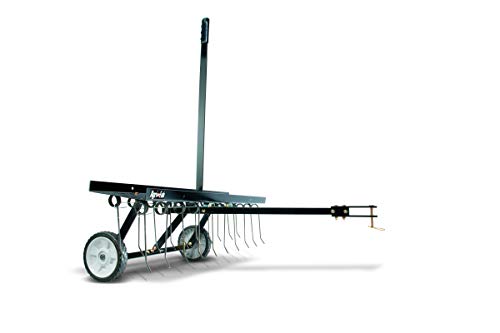
The Agri-Fab 45-0295 dethatcher is designed for pulling behind lawn and garden tractors. It uses 24 durable spring steel tines to uproot dead, matted grass and dislodge hard-packed dirt, creating a ready surface for planting. With a 48-inch width, it covers more ground per pass, increasing efficiency on medium to large lawns. The unit is described as Made in the USA, signaling a traditional build approach favored by many homeowners and pros alike. Operators should be mindful of adjusting tine height to avoid excessive soil disruption on delicate turf.
Key points
- Wide 48″ dethatching width for faster coverage
- 24 spring steel tines for effective thatch removal
- Designed to attach to riding tractors and similar equipment
VEVOR Tow Behind Dethatcher (40in)

The VEVOR 40-inch tow-behind dethatcher uses 20 sturdy spring steel tines and a 40″ working width. It is marketed as an efficient solution for removing thatch, weed material, and debris such as leaves. The construction emphasizes thickened steel tines and heat-treated durability, with a welded connection to minimize deformation. The dethatcher is described as widely compatible through a 1.18″ pin spacing, making it a flexible option for attaching to ATVs or riding mowers. Replacement tines are relatively straightforward to service.
Key points
- 40″ working width with 20 tines
- Heavy-duty steel and heat-treated tines for longevity
- Simple tine replacement and broad compatibility
Agri-Fab 45-0294 Tow Behind Dethatcher (40in)
This 40-inch dethatcher from Agri-Fab balances compact size with effective thatch removal. Featuring 20 durable spring steel tines, it is designed to pull behind lawn and garden tractors for use in mid-to-large lawns. The product emphasizes its US-made construction and capability to penetrate and turn up dried grass, weeds, and soil within a 40-inch swath. It’s positioned as a practical option for homeowners who want to upgrade from manual raking to powered dethatching.
Key points
- 40″ width offers a tidy balance of coverage and maneuverability
- 20 spring steel tines provide consistent thatch lifting
- US-made build aligns with strong domestic manufacturing standards
Suchtale 48in Tow Behind Dethatcher

The Suchtale 48-inch dethatcher features 24 spring steel tines and a robust full-steel frame. It’s designed to uproot dead, matted grass and dislodge hard-packed dirt, making way for new growth. The product highlights a rust-proof, replaceable tine design and a transport-oriented wheel system to minimize lawn interference during operation. A 70 lb ballast platform contributes to stable performance, particularly on uneven terrain. The manufacturer notes that dethatching is most effective in fall, when moisture and nutrients can better reach the roots in spring.
Key points
- 24 spring tines on a strong 48″ frame
- Rust-proof, replaceable tines for long-term use
- Transport wheels help navigate lawn obstacles
Suchtale 40in Tow Behind Dethatcher

This 40-inch Suchtale dethatcher provides a similar 20-tine configuration in a lighter package. It emphasizes rust-proof, heat-treated, replaceable tines, and a wheel-assisted transport design to reduce obstacle interference. The 70 lb steel frame enhances stability during dragging, making it suitable for mid-sized lawns and yards with surface irregularities. The product notes that its performance improves with regular cleaning of soil residue after use.
Key points
- 20 spring tines on a sturdy frame
- Wheel-assisted operation for easier maneuvering
- Transport-friendly design with easy tine maintenance
Buying Guide: Tow-Behind Dethatchers And Lawn Rakes
When selecting a pull-behind rake for a riding mower, consider the following factors to match your lawn, equipment, and climate:
- Working width: Larger widths cover more ground but require a mower or ATV with enough power and weight to pull the attachment. Choose a width that aligns with your mowing deck and yard size.
- Tine material and count: Spring steel tines are common for thatching. More tines can increase thatch removal but also add resistance and drag. Look for replaceable tines to extend life.
- Durability and construction: Steel frames with protective coatings resist rust and weather exposure. Welded connections reduce wobble and breakage.
- Attachment compatibility: Check pin spacing and hitch type to ensure compatibility with your riding mower or ATV. Some models specify universal fit with standard hitch pins.
- Adjustability and ease of use: Height or depth adjustments help tailor dethatching aggressiveness to lawn conditions. Wheels and transport handles can improve maneuverability.
- Maintenance: Consider ease of cleaning, tine replacement, and lubrication access. Rust-resistant finishes extend service life in wet climates.
- Seasonal timing: Fall is often ideal for dethatching as it prepares roots for spring growth; however, moderate dethatching can be done in spring in dry conditions.
- Budget and value: Compare life expectancy, warranty, and replacement tine availability. A slightly higher upfront cost may yield longer-term savings on maintenance.
For homeowners with riding mowers, these attachments offer a practical upgrade to lawn health by facilitating better air and water penetration, reducing compaction, and promoting vigorous turf growth. Always follow the manufacturer’s installation and safety guidelines, and start with lighter detachment settings to avoid turf damage on sensitive lawns.