Poly tubing is a cornerstone of reliable drip irrigation, delivering water precisely where plants need it most. This guide highlights five durable options suitable for home gardens, landscapes, and containers. Each product supports main lines or feeder runs, connects with common drip components, and stands up to outdoor conditions. The following selections emphasize versatility, flexibility, and ease of use in American gardens.
| Product | Brand | Size / Diameter | Length |
|---|---|---|---|
| Raindrip 016010T 1/4-Inch Drip Tubing | Raindrip | 1/4 in | 100 ft |
| Raindrip 052020P 1/2-Inch Drip Irrigation Tubing | Raindrip | 1/2 in | 100 ft |
| Rain Bird T63-100 Distribution Tubing | Rain Bird | 1/2 in | 100 ft |
| LASCO Mainline Drip Tubing 1/2″ | LASCO | 1/2 in | 100 ft |
| Raindrip 061005P 5/8 in Supply Tubing | Raindrip | 5/8 in | 50 ft |
Raindrip 1/4-Inch Drip Tubing (100 ft)

Use as a feeder line or main line in compact drip systems. This 1/4-inch tubing is designed to supply low-flow devices or connect directly to emitters for precise watering. It’s suitable for trees, shrubs, flower beds, groundcovers, vegetables, and containers. The tubing coil is shrink-wrapped for convenient access in garden sheds or tool boxes. It pairs with standard 1/4-inch micro fittings to form a complete drip irrigation loop.
Raindrip 1/2-Inch Drip Irrigation Tubing (100 ft)
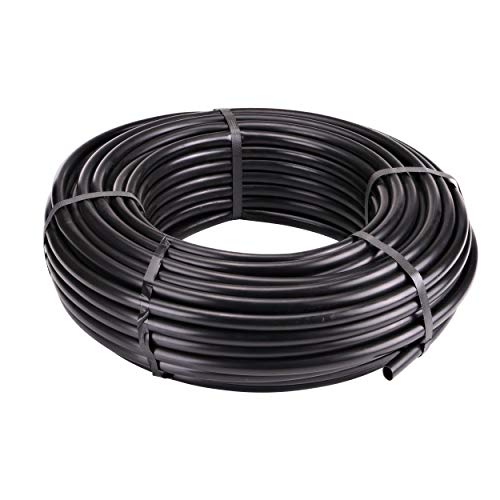
Designed as a main supply or feeder line, this 1/2-inch tubing supports drip systems with emitters positioned along the run. It connects to water sources for full-line use and accommodates multiple applications such as trees, shrubs, beds, and container plantings. The product supports a robust, versatile layout for landscaped areas both small and large.
Rain Bird 1/2″ Distribution Tubing (100 ft)

Professional-grade distribution tubing known for rugged flexibility and long-term reliability. It unrolls easily for garden beds, ground covers, or other landscaped areas, and is compatible with faucets, hoses, or Rain Bird conversion kits. It minimizes clogs and requires minimal maintenance, making it suitable for diverse irrigation layouts.
LASCO Mainline Drip Tubing 1/2″
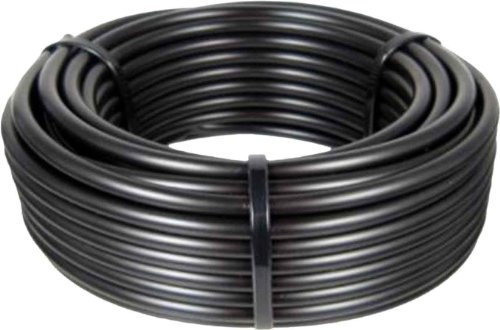
100-foot mainline tubing designed for use with 1/2-inch barb drip fittings or .620 green end fittings. This commercially manufactured polyethylene tubing is suitable for linear drip layouts and larger plantings. High-quality construction supports durability in outdoor environments and extended service life for drip irrigation systems.
ZY-hosetube 1/2″ Black Vinyl Tubing

Black vinyl tubing with 1/2 inch inner diameter, 100 feet long, offering good flexibility, resistance to aging, and easy handling. Suitable for low-pressure irrigation needs and other garden water transfer tasks, it accepts cutting tools for length customization and rolls easily for storage.
Raindrip 5/8 in. Supply Tubing (50 ft)

Polyethylene supply tubing for main lines or feeder runs, with the ability to punch emitters along the length for targeted irrigation. It supports watering a variety of areas—from small plantings to larger landscapes—and includes a layered construction for added durability in outdoor settings.
Buying Guide
Key considerations when choosing poly tubing for irrigation include diameter, length, durability, and compatibility with fittings and emitters. Thinner walls may be adequate for small systems, but larger landscaping projects benefit from higher-density tubing and longer runs. Consider the following perspectives:
- System size and layout: Smaller systems may use 1/4-inch tubing for localized lines, while larger installations typically employ 1/2-inch or 5/8-inch mainline tubing to reduce pressure loss and support longer runs.
- Durability and exposure: Outdoor tubing should resist sun exposure, temperature fluctuations, and physical wear. Look for polyethylene or vinyl tubing with UV resistance and robust wall thickness.
- Fittings and connectors: Ensure compatibility with existing emitters, drip lines, and connectors. Most 1/4-inch and 1/2-inch lines use common barbed fittings, clamps, and adapters.
- Pressure and flow requirements: Verify that tubing can handle the water pressure of your system and the desired flow rate to avoid leaks or uneven watering.
- Flexibility and ease of installation: Flexible tubing reduces installation time around curves and beds, while kink resistance helps maintain consistent water delivery.
- Maintenance and replacement: Consider tubing that is easy to clean, flush, or replace along segments of the system to minimize downtime.
- Cost and availability: Bulk or distributor-grade tubing may offer cost savings for larger projects, while consumer-grade tubing is often sufficient for small gardens.
Across these options, the five products featured provide a balance of mainline and feeder capabilities, durable materials, and compatibility with standard drip irrigation components. When selecting tubing for irrigation, assess your garden’s size, plant types, water source, and climate to choose tubing that ensures consistent moisture delivery with minimal maintenance over time.