Choosing the right netting can boost germination and save your grass seed from birds, squirrels, and other animals. This guide highlights five top options, detailing coverage, durability, and suitability for various lawns. Whether you’re seeding a new lawn, overseeding, or protecting young sprouts, these netting choices offer practical protection and easy reuse.
| Product | Brand | Size / Coverage | Best For | Notes |
|---|---|---|---|---|
| UWIOFF Garden Netting, 7 x 100 FT | UWIOFF | 7 ft x 100 ft | Birds, deer, small animals | 3/4″ mesh; reusable, UV resistant |
| Jevrench Garden Netting, Ultra Fine 4×25 ft | Jevrench | 4 ft x 25 ft | Orchards, gardens, pastures | 0.8 mm x 1 mm mesh; durable |
| Feitore Deer Fence Netting, 7 x 100 ft | Feitore | 7 ft x 100 ft | Birds, deer, small animals | 3/4″ square mesh; includes nails & ties |
| KLEWEE Garden Netting, 10 x 50 ft | KLEWEE | 10 ft x 50 ft | Rabbits, deer, birds | 0.8 mm x 0.8 mm mesh; large, clear |
| Sukh Bird Netting, 13×33 ft | Sukh | 13 ft x 33 ft | Plants, trees, vegetable beds | 0.8″ mesh; easy to cut |
UWIOFF Garden Netting 7 x 100 FT

The UWIOFF garden netting provides substantial coverage with a 7 ft by 100 ft span. Its 3/4-inch square mesh acts as a barrier against birds, hawks, rabbits, squirrels, and other small animals while leaving sunlight and rain accessible to the soil. The polypropylene construction offers UV resistance and weather durability, enabling reuse across seasons. This option is easy to customize by trimming to fit irregular lawn edges or seed beds, reducing waste and improving germination rates for newly seeded lawns.
Ideal for protecting fruit trees, vegetable plots, and ornamental grasses during establishment, this netting balances robust defense with a light, unobtrusive appearance. It resists tearing and won’t rust, making it a practical long-term solution for DIY lawn projects.
Jevrench Ultra Fine Garden Netting

The Jevrench netting offers an ultra-fine 0.8 mm x 1 mm mesh on a 4 ft by 25 ft sheet. Its tighter weave provides a stronger barrier against smaller pests and birds while still letting air and light through to support plant growth. The material is a durable PE fabric designed to withstand sunlight exposure, with enough elasticity to minimize tearing as plants grow. This size is well-suited for protecting individual rows of vegetables, strawberries, or delicate seedlings in raised beds, allowing gardeners to remove and reapply netting with ease as seedlings mature.
Reusable and easy to maintain, Jevrench netting helps reduce pest pressure without relying on chemical deterrents. The transparent appearance keeps the garden visually accessible while maintaining an effective shield for germinating seeds and early growth stages.
Feitore Deer Fence Netting 7 x 100 FT
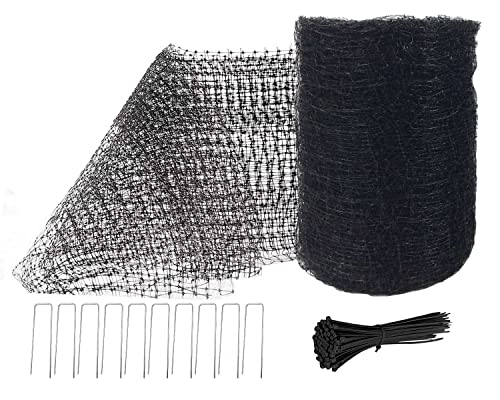
Feitore’s 7 x 100-foot deer fence netting uses a 3/4-inch mesh to deter deer, birds, rabbits, and other small animals from protected areas. The kit includes installation nails and cable ties for straightforward setup around seed beds or young grass plots. The polypropylene composition provides durability, lightness, and resistance to tearing, rust, or rot, ensuring repeat use across seasons. This netting’s open mesh design supports natural light and airflow, supporting seed germination while maintaining a protective barrier during critical growth stages.
Its versatility extends to repurposing as a barrier for fruit trees, shrubs, and small landscape plants. The visible, dark color blends into most lawns without creating a heavy visual intrusion.
KLEWEE Garden Netting 10 x 50 FT

KLEWEE’s 10 x 50-foot netting provides a larger coverage area with a fine 0.8 mm x 0.8 mm mesh. This size is practical for covering larger seed beds or multi-plant rows, minimizing gaps where pests might breach the barrier. The mesh is designed to be cut to fit irregular shapes without sacrificing integrity, and the material permits essential sunlight and moisture to reach the soil. Gardeners can protect broccoli, tomatoes, blueberries, and other high-value crops while still enabling routine watering and light exposure.
Designed for durability, the netting resists tearing and maintains clarity for ongoing garden management. It’s a strong option for gardeners who seed large lawn sections or maintain multiple plots adjacent to one another.
Sukh Bird Netting 13×33 ft

The Sukh bird netting measures 13 by 33 feet, offering substantial coverage with a relatively dense 0.8-inch mesh. The larger sheet size makes it suitable for guarding extended seed lines or installing around small lawn sections without stitching multiple pieces together. The polyethylene construction provides weather resistance while remaining light enough to handle and reposition as grass sprouts emerge. Gardeners can cut the netting to length, creating a custom shield for seed beds or young turf without restricting air and water flow.
In addition to bird protection, this netting can deter a range of small fauna that might disturb germinating seed, helping establish a uniform lawn more efficiently than smaller, piecemeal nets.
Buying Guide: Key Considerations For Netting Grass Seed
Mesh size matters. Smaller mesh (around 0.8 mm to 1 mm) blocks smaller pests and birds without overly restricting air, light, or moisture. Consider a size that fits your seed bed while allowing easy removal during watering.
Coverage and scalability. Large lawns benefit from wide rolls (7 ft or more in width) that can be cut to fit irregular shapes. For smaller seed beds, 4 ft x 25 ft sections may provide better manageability.
Material durability. Polypropylene and polyethylene nets balance cost, strength, and weather resistance. Look for UV resistance and the ability to withstand sun, rain, and wind without tearing or tangling.
Reusability and maintenance. A reusable netting solution reduces long-term costs and waste. Check for easy cleaning, drying, and storage between seasons.
Installation accessories. Nets that come with nails, ties, or clips simplify setup, especially around uneven ground or curved edges.
Plant health considerations. Opt for breathable nets that do not trap excessive heat or moisture around young seedlings. The ability to remove the netting quickly for watering cycles is a practical advantage.
Environmental impact. Biodegradable options exist (e.g., certain jute-based or organic blends), which may be preferable for perennial plantings or eco-conscious yards, though they can offer different performance traits than plastic nets.
Ease of use. Larger sheets reduce the number of seams where pests might slip through. However, larger nets can be harder to handle; balance size with your physical workspace and storage options.
Specific use case. For seed germination stages, a lighter touch with clear visibility is helpful, whereas for mature turf protection, more robust meshes may be desirable to deter larger foragers.
In short, selecting the right grass-seed protection netting involves evaluating mesh density, coverage area, material durability, and the ease of use. The options above cover a range of lawn sizes and pest pressures, enabling you to protect germination, preserve seed quality, and maintain a healthy, even lawn.