Horticultural charcoal, also known as biochar or plant charcoal, is widely used to improve soil structure, drainage, and nutrient retention for a variety of indoor and outdoor plants. This guide highlights top aroma-free options that support healthy roots, better aeration, and longer-lasting moisture balance. Below you’ll find concise product snapshots and a buying guide to help you choose the right charcoal for your bonsai, orchids, terrariums, succulents, and more.
Summary Of Selected Products
| Product | Brand | Size | Highlights |
|---|---|---|---|
| Legigo 2 QT Horticultural Charcoal | Legigo | 2 Qt | Lightweight, great for drainage, suitable for orchids and terrariums |
| Horticultural Charcoal by Perfect Plants | PERFECT PLANTS | 4 Qts | Drains excess moisture, neutralizes odors, natural filter |
| Sukh Horticultural Charcoal | Sukh | 1 Qt | Temperature regulation, stores water/nutrients, improves aeration |
| Soil Sunrise Horticultural Charcoal | Soil Sunrise | 2 Quarts | All-natural hardwood, porosity aids drainage |
| Legigo 4QT All Natural Horticultural Charcoal | Legigo | 4 Qt | 3-7 mm particles, good for houseplants, terrariums, and bonsai |
Legigo 2 Qt Horticultural Charcoal
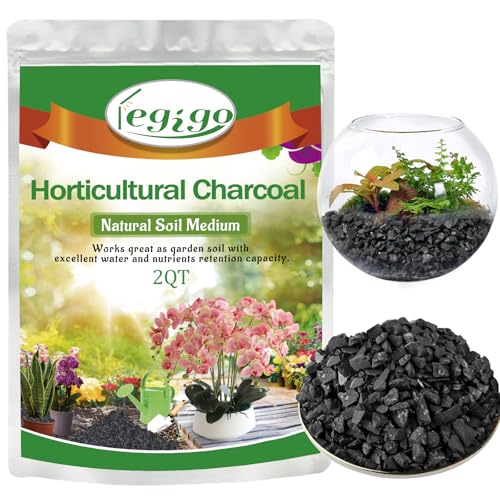
Legigo’s 2-quart bag offers natural hardwood charcoal ideal for drainage and aeration. It’s described as lightweight and mild, making it suitable for orchid soils, bonsai mixes, and terrarium substrates. The material is designed to prevent soil compaction and create air pockets around roots, while absorbing excess heat to support germination and healthy root development. Use as a soil amendment by blending into potting mixes or terrarium substrates to improve porosity and root health.
Horticultural Charcoal By Perfect Plants
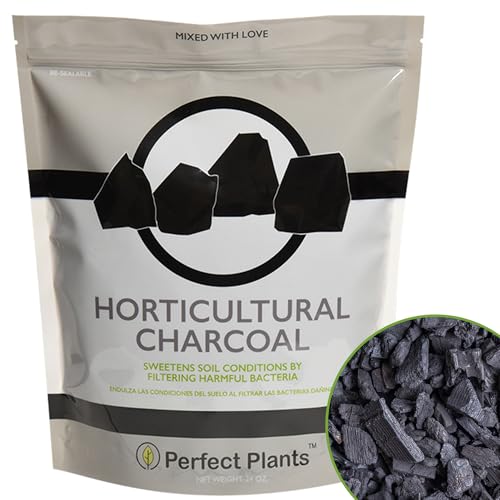
This 4-quart charcoal product emphasizes drainage support and soil conditioning. The material’s porosity helps drain excess moisture from containers while functioning as a natural filter to reduce odor-causing bacteria. It’s suitable for terrariums, orchid mixes, bonsai soil, and general potted plants, promoting healthier root environments without chemical additives.
Sukh Horticultural Charcoal for Plants

Sukh offers a 1-quart option described as a regulated, natural earth-based supplement for potting soil, indoor plants, succulents, and terrariums. It highlights temperature regulation through heat absorption, improved water and nutrient storage, and enhanced soil aeration—especially in containers without drainage holes. This makes it suitable for a variety of indoor plant setups seeking steadier moisture and healthier root zones.
Soil Sunrise Horticultural Charcoal

Soil Sunrise markets a 2-quart hardwood charcoal suitable for orchids, terrariums, and general gardening. It emphasizes all-natural composition with no chemicals or additives, focusing on enhancing drainage and preventing soil compaction. Its coarse to small particle range supports better soil structure and root aeration in a variety of pots or terrarium environments.
Char Bliss (8 Qts) By Plantonix

Char Bliss is an 8-quart organic biochar designed to improve nutrient availability, soil fertility, and water retention while promoting carbon sequestration. It acts as a long-term soil amendment, absorbing nutrients like a sponge to reduce leaching and providing sustained release to plant roots. It also supports broader environmental goals by contributing to soil carbon storage and climate-friendly gardening practices.
Legigo 4QT All Natural Horticultural Charcoal

This four-quart Legigo option emphasizes a 3-7 mm particle size, designed for easy mixing into soil and providing strong drainage. It highlights benefits such as preventing compaction, increasing root oxygen, and supporting seed germination through slightly warmed soil. The product is marketed for use in bonsai, orchids, succulents, terrariums, and general indoor potting soils.
Legigo 6QT All Natural Horticultural Charcoal

The 6-quart Legigo option expands on particle size and volume for larger applications or multiple pots. It emphasizes porous, lightweight charcoal that improves soil structure, drainage, and root oxygen in a range of indoor and outdoor setups. The product is suitable for terrariums, bonsai, orchids, and general potting soils requiring enhanced aeration.
DANGKELILI Horticultural Charcoal For Plants
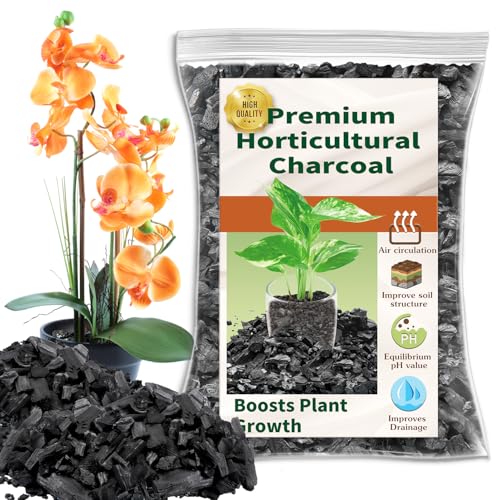
The DANGKELILI option describes a premium 1-quart premium activated charcoal for indoor and outdoor use. It emphasizes excellent drainage in containers without drainage holes and a particle size range intended to balance moisture retention with breathable soil. It is positioned as a versatile amendment for succulents, orchids, terrariums, and general houseplant soil.
Buying Guide: Key Considerations For Choosing Horticultural Charcoal
Purpose and plant type: For orchids, terrariums, bonsai, or cacti, select charcoal with appropriate particle size to balance drainage and root aeration. Smaller particles improve porosity in tight soils, while larger particles aid in bulk drainage for bigger pots.
Material source and processing: Look for 100% hardwood or bamboo-based charcoal processed at high temperatures to maximize porosity and purity. Avoid additives or chemical treatments that could affect soil microbiology or plant health.
Particle size and blend: Many products advertise a mix of small to medium particles (roughly 3-7 mm or 6-12 mm). A mixed particle size generally improves soil structure, reduces compaction, and creates air channels for roots.
Environmental impact and sustainability: Biochar products marketed as carbon sequestering or sustainable soil amendments align with eco-friendly gardening. Consider brands that emphasize responsible sourcing and low environmental impact.
Application rates: Use charcoal as a soil amendment by blending into existing potting mixes at recommended ratios (often a portion of soil volume). For terrariums or bonsai, incorporate charcoal into substrate layers rather than top-dressing alone to maximize contact with roots.
Odor and safety: Charcoal used for horticultural purposes is typically odorless and safe for most houseplants. Avoid products with synthetic scents or added chemicals that could disrupt soil biology or irritate sensitive plants.