Growing indoors can be challenging without reliable lighting. The following budget-friendly grow lights combine full-spectrum LEDs, adjustable brightness, timers, and easy setups to help seedlings, herbs, and small plants thrive. Each option is designed to maximize photosynthesis while keeping energy use in check, offering practical performance without breaking the bank.
Summary Table of Selected Products
| Product | Brand | Key Feature | Approx Lighting Type |
|---|---|---|---|
| GYTF Halo Plant Grow Light | GYTF | Full spectrum with 6000K white circle lights; height adjustable; dimmable with timer | Standalone lamp |
| bseah Grow Light Plant Lights | bseah | Full spectrum with auto on/off timer; 10 dimmable levels | Panel lamp |
| Juhefa Grow Light For Indoor Plants | Juhefa | 6000K full spectrum; gooseneck design; auto on/off timing; 5 levels dimming | Gooseneck lamp |
| Otryad LED Grow Lights | Otryad | Full spectrum; 9 dimmable levels; auto on/off with 3/9/12H timers | Desk clip-on lamp |
| Rocoking 40W Panel Grow Lights | Rocoking | Four ultra-thin panels; full spectrum; 3/9/12H timer | Panel grid |
GYTF Halo Plant Grow Light

The GYTF Halo Plant Grow Light uses a 6000K white circle LED array complemented by a mix of red, blue, and white LEDs to deliver a broad spectrum similar to natural sunlight. This configuration supports seed starting, vegetative growth, and compact foliage for small houseplants, succulents, and bonsai. The stand is height-adjustable from 7 to 18 inches and can rotate up to 180 degrees, enabling precise light placement for uneven plant canopies. A built-in timer provides four options (4/8/12/18 hours) to automate daily lighting, reducing manual chores for busy gardeners.
Key features include a sturdy aluminum pole for stability and easy height adjustments, a dimmable control to suit plant stages, and a compact footprint suitable for desks, shelves, and windowsills. This light is appropriate for micro-gardens and indoor plant corners where space efficiency matters. For best results, position the light to illuminate the top half of plant canopies while avoiding direct intense exposure to sensitive young sprouts.
bseah Grow Light Plant Lights
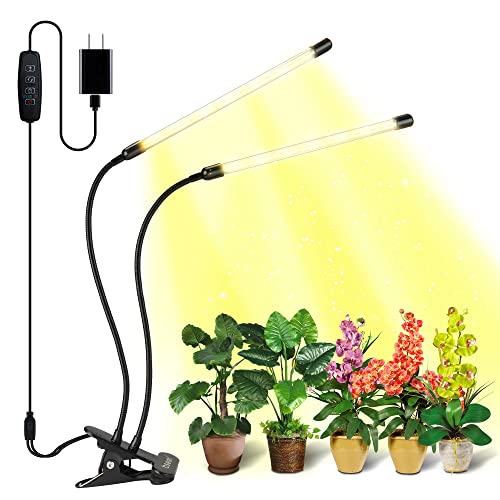
The bseah grow light offers a full-spectrum LED array designed to support photosynthesis from germination through flowering. Its auto turn-on/off timer runs on a consistent daily cycle (3/9/12 hours), making it well-suited for hobbyists who maintain a regular schedule. With 10 dimmable levels and 3 switch modes, the light adapts to varying plant needs—lower brightness for seedlings and higher intensity for more mature specimens. This flexibility helps optimize energy use while meeting the photobiology requirements of common indoor crops.
Placement matters; mount over a bench, shelf, or small tent. While compact, the fixture provides broad coverage to support multiple small plants simultaneously. Pay attention to the recommended distance from foliage to avoid leaf burn at higher brightness settings, especially for delicate seedlings.
Juhefa Grow Light For Indoor Plants
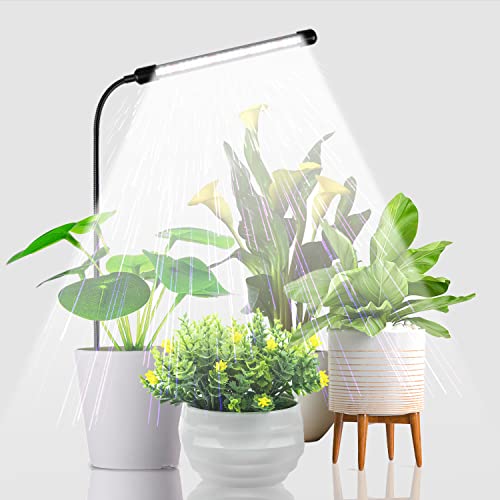
The Juhefa gooseneck grow light is designed for flexibility and targeted lighting. A 6000K full-spectrum setup includes 40 white and 8 red LEDs to emulate daylight, supporting seed starting, herbs, and small houseplants. The gooseneck arm allows precise positioning over a variety of pot shapes and cabinet heights, while the automatic on/off timer and five brightness levels help match light exposure to plant growth stages. This option is particularly appealing for users seeking a lightweight, desk-friendly light that can be repositioned as plants mature.
With a high color rendering index (up to 95%), the Juhefa lamp doubles as a functional work light when not used for horticulture. Ensure the light is positioned to deliver even coverage without creating hotspots on a single plant. The 1-pack design is ideal for gardeners expanding a micro-collection or experimenting with a single-species seedling tray.
Otryad LED Grow Lights
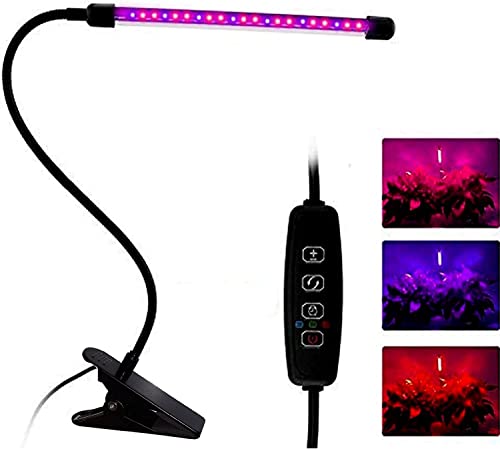
The Otryad LED Grow Lights provide a full-spectrum output with three lighting options (Red/Blue/Blue & Red) to support different plant stages. The fixture includes a timing function with 3/9/12-hour cycles and 9 dimmable levels, enabling more precise photoperiod and intensity control for germination, growth, flowering, and fruiting. Its compact clip-on desk form makes it suitable for small workstations or plant shelves where space is at a premium. A recommended setup involves placing the light slightly above the canopy to ensure even distribution across thin stems and emerging leaves.
Consider the included dimming and timer features as ways to reduce energy use while maintaining consistent daylight cues. For longer-term use, verify the power supply compatibility and ensure the USB or DC adapter delivers adequate current for sustained operation. This model is a practical option for hobbyists who want a straightforward, adjustable system without a large footprint.
Rocoking 40W Panel Grow Lights

The Rocoking 40W panel grow lights feature a four-panel, ultra-thin design that covers a wider area with a full-spectrum output from 380 to 780 nm. The modular panels provide versatile installations for greenhouses, grow tents, and workspace environments. Their built-in 3/9/12-hour timer cycles automate daily lighting, which helps with consistency in plant development even when gardeners are away. The panels are lightweight and easy to arrange for various plant arrangements, from seedlings to leafy greens.
This system is suitable for users seeking scalable lighting that can be adjusted by mounting distance and arrangement to suit plant density. The DIY-friendly setup supports creative configurations in compact rooms or apartments lacking dedicated grow spaces. For best results, pair with reflective surfaces to maximize light utilization and maintain even intensity across the canopy.
Buying Guide: Key Purchase Considerations
- Light spectrum and intensity: Look for full-spectrum LEDs (roughly 400–740 nm) that cover blue and red bands to support germination and flowering. Consider brightness options or dimming to tailor output for seedlings versus mature plants.
- Adjustability: Height-adjustable stands, gooseneck arms, or flexible panels help optimize light placement for different pot sizes and plant heights. A rotatable head improves angle coverage for uneven canopies.
- Timers and automation: Built-in timers (3/9/12 hours, etc.) reduce manual operation and ensure consistent photoperiods. Auto on/off is especially helpful for plant trays or busy schedules.
- Energy efficiency: Compare lumen output to wattage to gauge efficiency. Budget-friendly options often deliver adequate PPFD for small to mid-size indoor gardens without high electricity costs.
- Setup and footprint: If space is tight, prefer compact lamps, clip-on designs, or panel grids that can be arranged to maximize coverage without crowding your desk or shelf.
- Durability and safety: Opt for aluminum housings and stable bases, with secure cable management. Ensure there is no overheating and that components are rated for continuous operation.
- Expansion potential: For growing a small collection, consider models that can be combined or stacked to widen coverage as plants spread or increase in number.
- Cost of ownership: Besides initial price, factor in replacement bulbs or modules and any required adapters. Long-term efficiency often yields greater savings than low upfront cost.
In evaluating these options, match your plant types, space, and routine to a light with reliable timers, adequate spectrum, and practical adjustability. For beginners, a compact, adjustable lamp with a timer offers a balance of simplicity and effectiveness. For compact setups with several small plants, a panel-based system can provide broad coverage and flexibility. Always monitor plant response—adjust distance and intensity if leaves appear bleached or stretched—and tailor your setup to the growth stage and species.