Finding the right grass seed for shaded lawns helps transform dim, unused areas into healthy, attractive turf. The following selections are tailored to low-light conditions while delivering a dark-green, dense appearance. This guide compares shade-tolerant blends, germination rates, and establishment times so you can choose seeds that perform well under trees, near structures, or in other shaded spots.
Summary of chosen products
| Product | Brand | Germination / Establishment | Shade Tolerance | Notable Benefit |
|—|—|—|—|—|
| Jonathan Green 10600 Black Beauty Dense Shade Grass Seed (3 lb) | Jonathan Green | 14 – 21 days | High | Dark green, quick establishment |
| Jonathan Green 10622 Black Beauty Dense Shade Grass Seed (1 lb) | Jonathan Green | 14 – 21 days | High | Dense, shade-tolerant mix |
| Pennington Kentucky 31 Tall Fescue Penkoted (3 lb) | Pennington | – | Moderate to high | Durable, economical lawn |
| Scotts Turf Builder Sun & Shade Mix (5.6 lb) | Scotts | – | Full sun to shade | Root-building, versatile under varied light |
| Jonathan Green 10820 Fast Grow Grass Seed (3 lb) | Jonathan Green | 7 – 10 days | Full sun to medium shade | Rapid turf establishment |
| Pennington Smart Seed Sun and Shade Tall Fescue (7 lb) | Pennington | – | Sun and moderate shade | Balanced fertilizer for success |
Jonathan Green Black Beauty Dense Shade Seed (3 lb) Overview

This shade-tolerant blend is designed for areas with limited sunlight, such as lawns beneath trees or next to structures. The mix aims for a dark-green lawn with dense coverage, providing a robust look even in partial shade. Germination typically occurs within 14–21 days, helping establish a quick, healthy turf. The seed mix also includes endophytes, which can aid plant health and resilience in challenging environments.
Jonathan Green Black Beauty Dense Shade Seed (1 lb)

This smaller package offers the same shade-tolerant qualities as the 3-lb option, making it suitable for spot seeding or smaller lawns with persistent shade. Expect a dark-green, dense lawn once established, with a germination window of about 14–21 days. Endophytes in the mix support turf health in shaded conditions.
Pennington Kentucky 31 Tall Fescue (3 lb)

Kentucky 31 Tall Fescue is a classic turf choice for home lawns, offering durability and economical growth. While tall fescue can perform well in partial shade, its blades are thick and resilient, standing up to heat and heavy rainfall. This makes it suitable for mixed-light conditions and varied climate patterns, contributing to a dependable lawn foundation.
Scotts Turf Builder Sun & Shade Mix (5.6 lb)

This blend combines seed, fertilizer, and soil improver to support turf establishment in sun and shade. It emphasizes deep root growth to build a resilient lawn capable of withstanding partial shade and drought. The mix is designed for versatility across different light conditions, making it a practical option for lawns with mixed sun exposure.
Jonathan Green Fast Grow Seed (3 lb)

This fast-establishing seed mix is designed to fill problem areas quickly. While it supports full sun to medium shade, its rapid germination (7–10 days) can help kick-start turf in shaded zones that require quicker coverage. The blend also aims for a dark-green lawn with dense growth once established.
Pennington Smart Seed Sun and Shade Tall Fescue (7 lb)
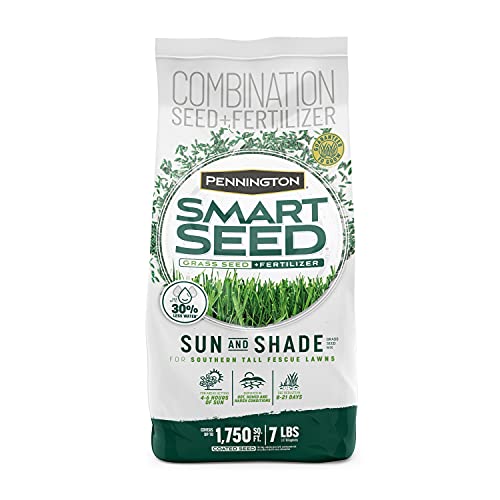
This tall fescue blend is formulated for lawns with sun in some parts and moderate shade in others. It includes a balanced fertilizer to support establishment, making it a versatile option for mixed-light landscapes. It emphasizes adaptability for southern climates while maintaining resilience in shade.
Buying Guide: Key Considerations For Grass Seed In Shaded Areas
- Shade tolerance: Look for blends explicitly designed for low light conditions. Seed mixes labeled as shade-tolerant typically include fine fescues and other varieties that tolerate limited sun.
- Germination and establishment: Shorter germination windows (7–21 days) can lead to quicker establishment in shaded zones, though local climate and moisture matter.
- Grass type selection: Fine fescues and tall fescue generally perform well in partial shade. Kentucky 31 tall fescue offers durability, while blends from Jonathan Green emphasize dense, dark-green turf.
- Root structure and drought resistance: Deep-rooting blends establish better in varied shade, reducing stress during dry periods. Fertilizer blends within product mixes can support root growth.
- Seasonal timing: The best planting window depends on climate. Cool-season seeds often establish in fall or early spring, while certain mixes support faster growth in late summer through autumn.
- Soil preparation: Aeration, proper soil pH, and moisture management enhance germination and turf health in shaded lawns.
- Maintenance considerations: Shade lawns may require reduced mowing height, careful irrigation to avoid waterlogging, and occasional overseeding to maintain density in patchy areas.
- Longevity and cost: Consider long-term durability of the seed mix and the total area to seed. Larger bags may offer cost efficiency, while smaller bags are useful for spot repairs.
- Endophytes and health factors: Some blends include endophytes that may improve resistance to pests and stress—an option to consider for challenging shade conditions.