Drip irrigation systems rely on clean water to prevent clogs and ensure even moisture delivery. The right inline and Y-filter solutions can dramatically reduce maintenance, extend component life, and improve overall system efficiency. This article highlights five top-rated drip irrigation filters, explaining how each one works, what to consider when buying, and how they fit into common irrigation setups. A concise buying guide at the end helps you compare filtration options for a reliable watering rhythm across gardens, grow beds, and hydroponic zones.
Summary at a glance:
- One Stop Outdoor 3/4″ Drip Irrigation/Hydroponics Y Filter — 155 mesh screen, robust all-purpose filtration
- Rain Bird PRF07530S Drip In-Line Y Filter — 30 psi regulator and filtration combo
- Drip Depot Irritec 3/4″ Hose Thread Filter — compact inline filtration
- DIG P09-155 3/4″ Inline Y Filter — 155 mesh, large filtration area
- Rain Bird FCKIT-1PK Easy Fit Faucet Connection Kit — includes filter and regulator
One Stop Outdoor 3/4″ Drip Filter With 155 Mesh Screen

The One Stop Outdoor filter is designed for universal use in drip irrigation or micro sprinkler networks. Its all-purpose screen resists common chemicals encountered in home irrigation. The large filtration area minimizes pressure drop and reduces cleaning frequency, enabling longer intervals between maintenance. This model supports 3/4″ connections with hose-thread fittings, making it compatible with common residential systems. Its simple inline design can be installed near the main line or at a branch to protect downstream emitters.
Rain Bird PRF07530S Drip In-Line Y Filter With Regulator

This Rain Bird unit combines filtration with a 30 psi pressure regulator in a single inline Y configuration. The compact design reduces the number of components, simplifying installation and minimizing potential leak points. By removing particulates before they reach downstream drip components, it helps prevent clogging of emitters, micro-sprinklers, and valves. The 3/4″ male pipe thread connections align with typical drip lines and faucet adapters found in residential irrigation systems.
Drip Depot Irritec 3/4″ Hose Thread Filter
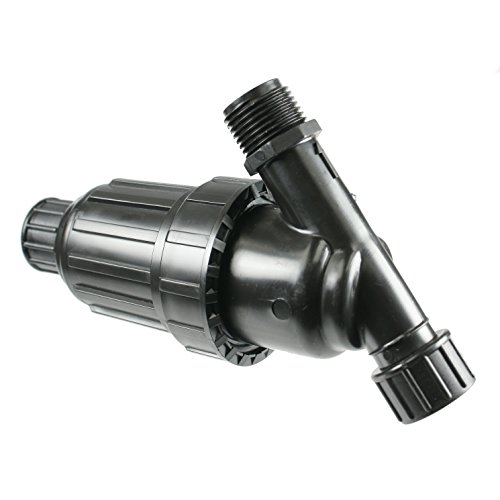
Drip Depot’s filter offers straightforward inline filtration with hose-thread compatibility. While compact, its filtration focus makes it suitable for residential drip lines where particulate contaminants are a concern. This unit is easy to install and suitable for use with standard 3/4″ hoses and tubing. Regular checks ensure the screen remains clear, preserving steady flow to emitters and micro-sprinklers.
DIG P09-155 3/4″ Inline Y Filter With 155 Mesh Screen
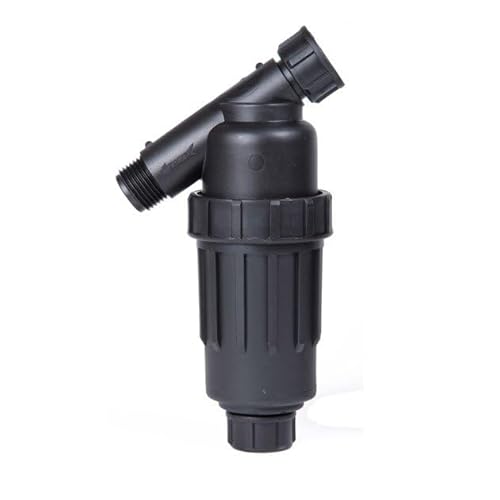
The DIG inline Y filter emphasizes high filtration performance with a 155 mesh polyester screen option. It features a large 14.9 square inch filtration surface, designed to minimize cleaning frequency and reduce pressure loss across filtration events. It supports up to 120 psi and flows up to 13 GPM, making it robust enough for mid-sized systems. The included 3/4″ male and female thread connections fit a wide range of drip layouts, including hydroponic runs and micro sprinkler networks.
Rain Bird FCKIT-1PK Drip Faucet Connection Kit

The Rain Bird kit provides a practical faucet connection solution for 1/2″ tubing, pairing a pressure regulator and filter with a backflow preventer. It’s designed to connect to 3/4″ male pipe threaded faucets or garden hoses, consolidating key filtration and regulation steps into one assembly. This kit helps ensure stable operation and reduces the risk of contaminant ingress into drip lines, which is especially important for setups that draw water from non-pressurized sources or shared irrigation spigots.
Buying Guide: Filtration For Drip Irrigation Systems
Choosing the right filter involves evaluating system size, water quality, pressure, and maintenance preferences. Consider these key factors to select a matching solution:
- Filtration mesh size: Mesh ratings of 155 or 200 are common; finer meshes trap smaller particles but may slow flow and require more frequent cleaning. Larger meshes are easier to maintain but may miss micro-debris.
- Flow and pressure compatibility: Match the filter’s maximum flow (GPM) and operating pressure (psi) to your system’s requirements. Systems with multiple emitters or high flow rates benefit from filters with higher capacity.
- Inline vs. Y-filter design: Inline filters are straightforward line additions; Y-filters integrate additional components like regulators or backflow prevention. Your setup dictates the most convenient form factor.
- Material compatibility: Ensure filters resist irrigation-suitable chemicals and resist corrosion from chlorine-treated or mineral-rich water sources.
- Maintenance scheduling: Larger filtration areas reduce cleaning frequency. If your water has frequent particulates (silt, sand), a larger surface area and finer mesh can be beneficial.
- System integration: For hydroponics or micro-sprinkler zones, prioritize filters with wide compatibility and minimal pressure loss to avoid uneven distribution.
- Protection strategy: Filters placed before emitters protect inline components but may require backflushing or periodic flushing to prevent clog buildup.
Practical considerations include whether you need integrated regulation and backflow protection, how far your water source is from the garden, and whether your system uses a garden hose faucet as a water feed. For larger or more complex irrigation networks, using a combination of filters and regulators can simplify maintenance and improve system reliability. Always ensure that installation adheres to local codes and manufacturer guidance to maintain warranty validity and ensure safe operation.