Finding the right wireless irrigation valve controller can simplify yard watering, reduce water waste, and keep lawns and gardens thriving. The following hand-picked products cover battery-powered, Bluetooth, and app-controlled options for residential drip and sprinkler systems. Each model is chosen for reliability, ease of installation, and outdoor durability.
The quick comparison below highlights five strong choices, their brands, and key features to help you choose the right setup for your landscape needs.
| Product | Brand | Key Features |
|---|---|---|
| Orbit 57865 Outdoor Battery-Powered Water Sprinkler Controller | Orbit | Battery-powered; supports 4 valves; 1″ FPT valve; timer-based scheduling |
| Hunter Node 100 Battery Operated Sprinkler Timer | Hunter Industries | Solenoid-ready; single/dual 9V batteries; IP68; easy DIY install |
| Hunter NODE-BT-100 Bluetooth Battery Operated Controller | Hunter Industries | Smart Bluetooth control; 50 ft range; fully waterproof; quick solenoid install |
| DIG RBC 8000 Battery Powered Irrigation Controller | DIG | AA battery powered; multiple start times; user-friendly keypad |
| Orbit 57946 B-hyve 6-Zone Smart Indoor/Outdoor Controller | Orbit | Indoor/outdoor placement; automated watering; drip irrigation friendly |
Orbit 57865 Outdoor Battery-Powered Water Sprinkler Controller

The Orbit 57865 is a battery-powered wireless controller designed for yard sprinklers. It supports multiple valves through a timer-based system, making it suitable for zone-specific irrigation schedules. A 1-inch FPT jar-top valve is compatible for easy integration with common irrigation setups. This model offers straightforward setup and reliable remote operation without wiring, ideal for yards with limited power access.
Hunter Node 100 Battery Operated Sprinkler Timer
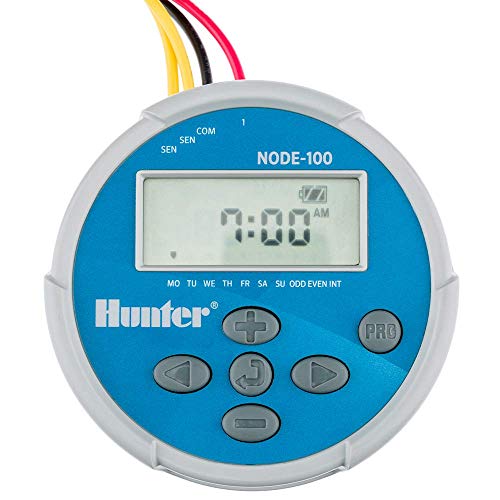
This model installs quickly with a pre-wired solenoid, eliminating the need for trenching or extra components. It runs on one or two 9V batteries and includes a battery-life indicator for year-round outdoor use. The IP68 waterproof housing and direct valve mounting make it suitable for valve boxes, gardens, and isolated zones, ensuring durable performance in challenging conditions.
Hunter NODE-BT-100 Bluetooth Battery Operated Controller

With Bluetooth app control, this Hunter unit lets users program and monitor irrigation schedules from a smartphone within range. It operates on two 9V batteries and uses a sealed waterproof enclosure for outdoor reliability. Five mounting options and a pre-installed solenoid simplify installation, especially for DIY projects in gardens, lawns, or greenhouses where power wiring is impractical.
DIG RBC 8000 Battery Powered Irrigation Controller

The DIG RBC 8000 offers flexible watering with multiple start times and frequency settings. Powered by two AA batteries, it includes a high-resolution display and seven buttons for straightforward control. The device is designed for drip or sprinkler systems, providing a practical solution for small to mid-sized irrigation zones with reliable battery-powered operation.
Orbit 57946 B-hyve 6-Zone Smart Indoor/Outdoor Controller

The Orbit B-hyve 6-zone controller supports both indoor and outdoor installation, offering smart scheduling, weather intelligence, and drip irrigation compatibility. Automatic weather skips help conserve water during rain or freezing conditions. This model suits homeowners seeking a centralized smart irrigation hub with flexible zone management and remote scheduling capabilities.
Buying Guide: Key Considerations For Wireless Valve Controllers
- Power source and location: Battery-powered units work well where exterior outlets are unavailable or where wiring is impractical. Consider IP ratings for outdoor exposure and whether the device needs direct valve box mounting or can sit remotely.
- Number of zones and valve compatibility: Assess how many zones you need now and in the future. Verify compatibility with your valves (e.g., 1″ FPT or standard sprinkler valves) and whether the controller supports the required flow and valve types.
- Connectivity and control method: Bluetooth offers simple local control, while app-based or cloud-enabled systems provide remote scheduling and weather-based automation. Determine whether you want offline operation or internet-enabled features.
- Weather and environmental resilience: Look for units with waterproof or IP-rated housings, vibration resistance, and safe operation in freezing temperatures if you have seasonal weather changes.
- Ease of installation and maintenance: Pre-wired solenoids, plug-and-play mounting, and clear displays reduce setup time. Battery life indicators and easy battery replacement help minimize maintenance.
- Smart features and automation: Some systems offer weather intelligence, rain skips, soil-moisture preferences, and drip irrigation compatibility. Decide if you want adaptive scheduling and water-saving capabilities.
- Security and firmware updates: Bluetooth-only devices may not receive remote updates, while app-controlled models should have a straightforward update path to fix bugs and improve performance.
- Cost of ownership: Consider upfront hardware costs alongside ongoing battery replacements or subscription services for cloud features. Compare total ownership over several seasons.
Across these options, users gain varied benefits: battery-powered models ease installation in power-scarce areas; Bluetooth and app-connected controllers enable more precise scheduling and remote monitoring; and rugged, weatherproof designs ensure reliable performance in outdoor environments. Selecting the right wireless irrigation valve controller involves matching features to your yard size, valve configuration, and preferred control method, while prioritizing durability and water efficiency.