For American gardeners seeking reliable power and easier garden prep, walk behind tillers deliver a practical mix of maneuverability and soil-breaking power. This guide highlights five top walk behind garden tillers, spanning gas and electric options, to help you choose the right model for plowing, tilling, and cultivating beds of any size. Each pick is evaluated on power, working width, depth, and notable design features to support efficient soil preparation.
Summary of chosen products
| Product | Type | Power | Working Width / Depth | Notable Features |
|---|---|---|---|---|
| ZERNEIL Gas Powered Tiller Cultivator Rototiller | Gas | 1.9 kW, 6500–7000 RPM | 1.18–3.94 in depth, up to 13.78 in wide | Four 8.86″ blades; adjustable wheels; air filter |
| Wild Badger Power Garden Tiller 53cc | Gas | 1.9 kW | Not specified; liftable booster rod | Easy start; detachable hand push bar |
| FUJAOPS Rototiller, 52cc | Gas | 1700W, 6500–7000 RPM | ~1.18–4.72 in depth, ~11.8 in width | Four blades; adjustable wheels |
| Sun Joe TJ603E Corded Electric Tiller | Electric | 12-Amp | Up to 16 in wide, 8 in deep | Folding handle; rust-proof tines |
| DOVAMAN 18-Inch Electric Tiller | Electric | 15 Amp | 18 in wide, up to 9 in depth | 4-position wheels; foldable handle |
ZERNEIL Gas Powered Tiller Cultivator Rototiller
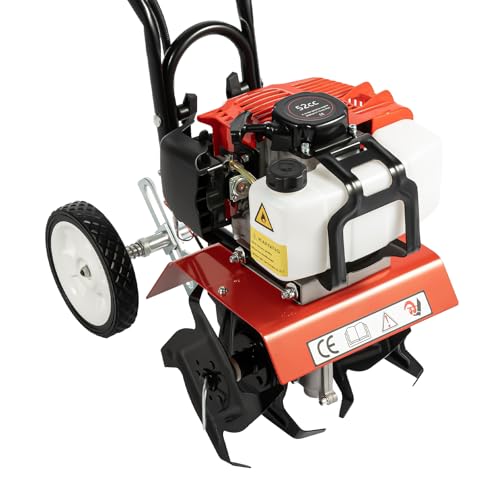
The ZERNEIL tiller uses a 1.9 kW two-stroke engine delivering 6500–7000 RPM for rapid soil disruption. Four manganese steel blades and a narrow blade design support deep tilling (approximately 1.18–3.94 inches) and a wide working sweep of up to 13.78 inches, making it capable of medium-size garden beds and plots. The model includes two height-adjustable wheels for ergonomic control in varied terrains and an integrated air filter to maintain fuel efficiency and reduce emissions. Its compact construction aims at field mobility, reducing user fatigue during long sessions.
Key features include a high-revving motor for faster tilling, a robust blade arrangement designed for tougher soils, and mobility aids that adapt to the user’s height. This model is suitable for garden beds, farm plots, and furrowed rows that require consistent soil turnover. The design emphasizes durability with accessible maintenance in mind, though as with most gas tillers, routine fuel management and engine care are important for longevity.
Wild Badger Power Garden Tiller 53cc

This 53cc gas-powered tiller delivers solid mid-range performance with a peak power output around 1.9 kW, designed to handle standard lawn and garden beds. It emphasizes ease of use with a straightforward starting procedure, enabling a quick start in the field. A detachable hand push bar contributes to convenient storage and transport, which is particularly beneficial for gardeners who move equipment between different work areas. The model’s compact footprint suits small- to medium-sized plots and tight spaces where larger tillers would be impractical.
Users benefit from simpler maintenance, reduced complexity in starting, and a design orientation toward accessible handling. While it offers comfortable operation and portability, the power capacity is best suited for regular soil, not relentlessly dense or rocky substrates. For standard garden beds, it provides a balance of mobility, power, and maneuverability that many home gardeners seek in a walk-behind tiller.
FUJAOPS Rototiller, Gas Powered
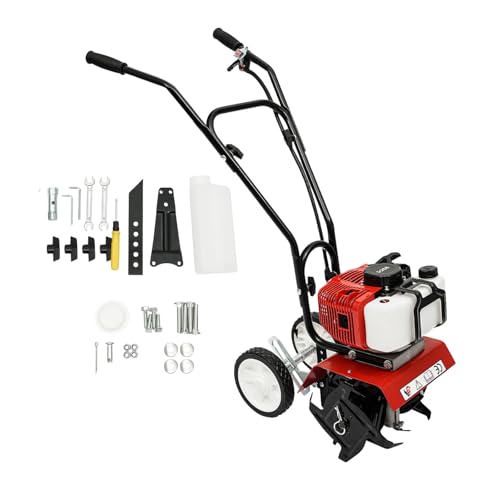
The FUJAOPS rototiller combines a 52cc displacement and a 1700W engine to deliver 6500–7000 RPM, providing robust soil disruption for expansive garden tasks. Four blades with an 8.6-inch diameter and an approximate tilling width of 11.8 inches create a broad working footprint that reduces the number of passes required for bed preparation. It supports a tilting depth range from 1.18 to 4.72 inches, enabling thorough soil loosening in various soil conditions. The tiller includes adjustable wheels to optimize maneuverability on uneven ground and in larger plots.
Design emphasis centers on deep tilling capabilities and wide working range, which are beneficial for transforming compacted soils into workable beds. The model’s power-to-weight ratio supports efficient workflows, though users should factor in fuel management and routine engine maintenance typical of gas-powered tools. For farmers or avid gardeners tending sizable plots, this battery of features can improve overall cultivation efficiency.
Sun Joe TJ603E Corded Electric Garden Tiller

The Sun Joe TJ603E provides a corded electric option with a 12-Amp motor and 16-inch working width. It includes a 3-position wheel adjustment to tailor depth, along with a folding handle for compact storage. The 6 steel-angled tines ensure durability and steady performance across lawn and garden tasks, reducing maintenance needs associated with gas engines. Electric operation eliminates fuel handling and exhaust, appealing to users prioritizing cleaner operation and quieter performance in residential environments.
With a broader tilling width, this model accelerates bed preparation in moderate-sized plots. However, being corded, it requires access to outlets or extension cords at the worksite. The balance of power, reach, and ease of maintenance makes it a strong contender for gardeners seeking a straightforward, low-emission tiller with dependable performance for routine garden upkeep.
DOVAMAN 18-Inch Electric Garden Tiller
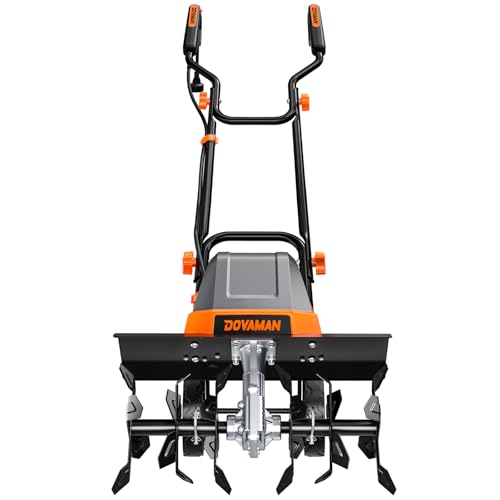
The DOVAMAN 18-Inch Electric Tiller expands coverage with an 18-inch tilling width and up to 9 inches of depth. Powered by a 15-Amp motor, it yields substantial torque for fast, thorough soil turnover. Four-position adjustable wheels enhance control and enable efficient operation across different soils and bed shapes. The foldable handle design helps with storage and transport, making it suitable for home gardeners who need a larger tilling footprint without a gas engine’s maintenance requirements.
For larger garden beds or raised bed foundations, this model’s expansive width and adjustable wheels simplify initial bed preparation. It is best suited for gardeners prioritizing high-tinish coverage and quick turnaround on substantial plots, while maintaining a compact form factor for residential use.
Buying Guide: Key Purchase Considerations And Comparisons
Power source and fuel considerations
Gas-powered tillers deliver strong torque and longer runtime, suitable for heavy soils and larger plots. They require fuel management, maintenance, and exhaust consideration. Electric tillers offer lower noise, zero emissions during use, and simpler maintenance, but corded models restrict range and require access to outlets or batteries for cordless variants. When choosing, assess your soil type, plot size, and preferred maintenance level.
Working width and tilling depth
A wider tilling width reduces the number of passes but can be harder to maneuver in tight spaces. Depth capability determines soil loosening quality; deeper tilling is beneficial for compact beds or heavy clay soils but may require more power or pass planning to avoid residue buildup or plant damage.
Weight, maneuverability, and wheels
Heavier machines provide more power but can be tiring to operate. Adjustable wheels and foldable handles enhance ergonomics and transport. Consider your physical comfort, garden layout, and storage space when selecting weight and wheel options.
Durability and maintenance
Look for durable tines (steel or manganese steel) with corrosion resistance. Gas engines demand routine maintenance, including spark plugs, air filters, and fuel stabilization. Electric models require battery management (for cordless) and motor cooling awareness. A model with accessible service intervals and replacement parts improves long-term value.
Use-case variety and versatility
For mixed soil types (sandy, loam, clay) and varied beds (rows, raised beds, plots with borders), models offering adjustable depth, width, and easy storage are advantageous. Consider whether you need a tool primarily for light garden chores or for more intensive seasonal tilling on larger plots.
Safety and user friendliness
All tillers require caution: protect hands and feet, avoid loose clothing, and follow manufacturer guidelines for starting and operating in different soils. Look for protective guards, intuitive controls, and clear maintenance instructions to ensure safe, reliable performance.