Choosing the right sprinkler system pressure reducing valve helps protect plumbing, improve irrigation efficiency, and extend the life of outdoor systems. This guide highlights five market-tested options, focusing on brass build quality, compatibility, and adjustable pressure control. Each product is evaluated for durability, installation versatility, and suitability for residential, commercial, or agricultural settings. Read on to compare features, gauge access, and installation considerations to match your water pressure needs with reliability and long-term value.
| Product | Brand | Key Benefit | Approximate Use |
|---|---|---|---|
| Water Pressure Regulator 3/4 inch with Gauge | FASBET | Brass construction with gauge for monitoring | Residential/Light Commercial |
| Senninger Pressure Regulator 25 PSI 3/4″ | Senninger Irrigation Inc. | Consistent 25 PSI output for drip and low-flow | Drip, landscape |
| 1″ NR3XLDU Pressure Reducing Valve | Hlieoar | Double union, space-saving | Home and commercial |
| Zurn Wilkins NR3XL Valve | Zurn | Compact design, easy repairs | Tight spaces |
| Watts LF25AUB-Z3 | Watts | Low lead, adjustable 25–75 psi | Commercial/Residential |
Water Pressure Regulator 3/4 Inch With Gauge (DN20)

This FASBET 3/4″ pressure reducing valve is crafted from 100% high-hardness brass, offering robust resistance to rust and corrosion and lasting performance under high pressure and temperature. The package includes a pressure gauge, plus a wrench and sealing tape, enabling straightforward setup and ongoing monitoring. The valve supports up to 1.6 MPa (about 232 psi) and fits before most household water-using appliances, making it suitable for sprinkler systems, laundry rooms, and outdoor taps. A free replacement option is offered if the gauge is damaged, ensuring continued monitoring capability. Installation versatility is enhanced by a gauge that helps verify stable operation across irrigation cycles and seasonal changes.
Key features: durable brass body, included gauge for real-time monitoring, and a complete packing list for quick setup. The regulator is designed for DN20 (3/4″) lines, making it a solid choice for residential sprinkler installations seeking reliable pressure control without frequent maintenance.
YEE 1″ 720A Pressure Vacuum Breaker Assembly
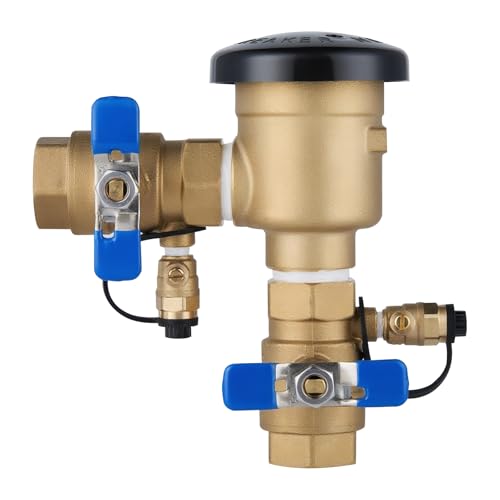
YEE’s 1″ 720A Pressure Vacuum Breaker Assembly is built from heavy-duty brass, delivering strong corrosion resistance and dependable backflow protection for irrigation systems. It is rated to withstand operating pressures up to 400 PSI, making it suitable for both commercial and residential installations. The unit uses advanced PVB technology to automatically respond to pressure changes, opening an air inlet to prevent back-siphon and contamination of the clean water supply. The compact unit—measuring about 8″ x 3.5″ x 7.9″—is designed for straightforward centerline installation with clear flow direction indicators. This model is ideal for ensuring code-compliant backflow prevention in sprinkler setups that may be subjected to fluctuating water pressures.
Considerations include setting height above the highest downstream outlet and ensuring compatibility with existing piping configurations. While it provides reliable anti-siphon protection, users should confirm that a vacuum breaker is appropriate for their local codes and water supply conditions.
Senninger Pressure Regulator 25 PSI 3/4″ PRLG
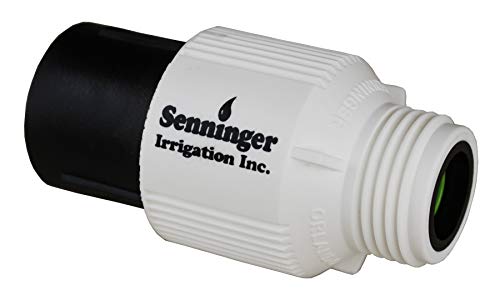
The Senninger PRLG is a landscape-grade regulator engineered for low-flow systems. It maintains a constant outlet of 25 PSI within a flow range of 0.5–7 GPM, making it well-suited for drip lines, solid-set systems, soaker hoses, and other low-pressure irrigation. Each unit is 100% water tested for accuracy and built to a high standard of durability, ensuring long service life in both residential and commercial environments. The regulator helps preserve uniform distribution and overall system efficiency by preventing pressure spikes that could stress emitters or sprinklers. It works with standard 3/4″ outdoor faucets and hoses, enabling flexible integration in existing irrigation layouts.
It is important to verify the regulator’s compatibility with downstream components and to confirm that 25 PSI is appropriate for the specific irrigation layout. Using the right regulator reduces waste, improves sprinkler uniformity, and can extend the life of pumps and hoses by delivering stable operating pressure.
1″ NR3XLDU Pressure Reducing Valve

The Hlieoar 1″ NR3XLDU valve features a double-union FNPT connection, designed for easy removal and maintenance in both home and commercial plumbing. It addresses high-pressure inflows by regulating to an optimal downstream pressure, contributing to significant water savings and reduced energy use. The bronze construction offers corrosion resistance and strength suitable for outdoor and indoor installations. Its compact, dual-connection layout facilitates quick assembly and future servicing in tight spaces, making it a practical choice where access is limited or the system requires frequent partial disassembly for repairs.
Consider the valve’s downstream pressure setting, compatibility with downstream devices, and the overall footprint in the plumbing layout. The model’s space-saving design supports more efficient installation in crowded basements, utility rooms, or under concrete slabs where room is at a premium.
Zurn Wilkins 34-NR3XLDULU 3/4″ NR3XL Valve
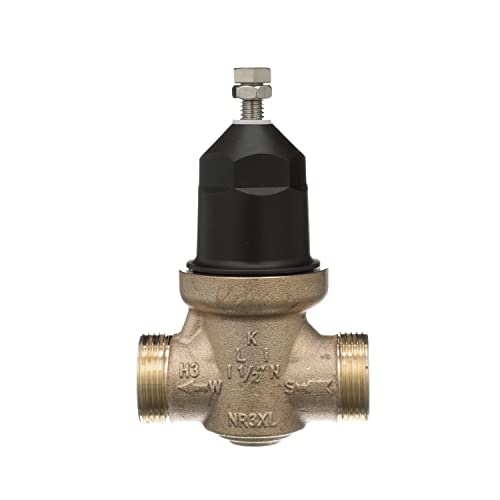
The Zurn Wilkins NR3XL valve is designed for tight spaces, featuring a short lay length and compact profile that simplifies installation in restricted areas. A cartridge-loaded design makes repairs straightforward, reducing downtime and labor during maintenance. The model offers flexible tailpiece options, including threaded, PEX, copper sweat, and CPVC connections, enabling compatibility with a wide range of piping configurations. This flexibility supports installers who need reliable pressure regulation without extensive rework of existing plumbing, particularly in retrofits or compact irrigation stations.
Watts LF25AUB-Z3 Pressure Reducing Valve

The Watts LF25AUB-Z3 is a lead-free pressure reducing valve with a polymer seat and a 3/4 inch NPT female union x NPT female connection. It features a high-temperature diaphragm, a replaceable seat module, and a stainless steel strainer, focusing on reliability across a wide range of pressures. The standard setting typically sits around 50 psi, with a 25 to 75 psi adjustment range to accommodate different irrigation demands. This model is well-suited for commercial or residential installations that require durable materials, dependable performance, and ease of maintenance in environments with variable incoming pressures.
Buying Guide: Key Considerations For Choosing A Sprinkler System Pressure Reducing Valve
When selecting a pressure reducing valve for a sprinkler system, consider the following aspects to ensure optimal performance and long-term savings:
- Pressure range and regulation stability: Determine the typical incoming water pressure and desired downstream pressure. Choose a model with a range that covers your target, and a regulator known for stable output under fluctuating supply.
- Valve material and durability: Brass or bronze bodies resist outdoor weather and corrosion. For high-heat or high-pressure environments, consider models with robust diaphragms and reinforced seats.
- Installation compatibility: Check thread type (NPT, union), connection size (1/2″, 3/4″, 1″), and whether your plumbing layout benefits from a dual- or single-union design for maintenance.
- Gauge and monitoring: Gauges help you verify pressure at a glance, especially in irrigation zones with multiple emitters or valves. If included, gauge quality and readability matter.
- Backflow and anti-siphon features: For outdoor irrigation, backflow preventers (vacuum breakers) can be critical to meet code requirements and protect drinking water supplies. Assess whether a separate backflow device is needed for your system.
- Maintenance and serviceability: Look for models with cartridge or seal accessibility and readily available replacement parts to minimize downtime during repairs.
- Local codes and compatibility: Some regions require specific backflow protection or pressure settings. Confirm that the chosen valve complies with local plumbing codes and irrigation standards.
- Cost of ownership: While initial price matters, factor in durability, maintenance frequency, and the potential for water savings when evaluating long-term value.
In practice, residential systems often prioritize compact size and ease of installation in tight spaces, while commercial setups may emphasize higher durability, wider pressure ranges, and more robust backflow protection. By aligning product specs with your irrigation design—drip vs. spray, zone count, and available water pressure—you can optimize efficiency, reduce wear on pumps and emitters, and achieve consistent sprinkler performance across seasons.