Blue spring bulbs bring calm color and early-season cheer to beds, borders, containers, and indoor spaces. This guide highlights small blue bulbs that are easy to grow and reliable year after year. Whether you’re starting a new bed or filling a balcony with cool, cobalt tones, these options offer striking blue blooms from late winter to early spring. Below you’ll find selected bulbs with practical growing notes and distinct blue shades to suit various settings.
| Product | Brand | Blue Shade | Ideal Use |
|---|---|---|---|
| Blue Muscari Bulbs for Planting – 20 Bulbs | CZ Grain | Deep blue clusters | Beds, borders, containers |
| Delft Blue Grape Hyacinth Mix | CZ Grain | Grape-blue hues | Mass plantings, borders |
| Pre-Chilled Indoor Striped Squill Bulbs | CZ Grain | Blue stripes on white | Indoor forcing, pots, windowsills |
| Votaniki Anemone Blanda Blue Shades | Votaniki | Soft blue, pale tones | Ground cover, borders, containers |
| Blue Moon Mix Crocus 20 Bulbs | Hirt’s Gardens | Blue to purple blooms | Rock gardens, borders, pots |
These selections cover a range of blue tones, growth habits, and garden uses. Each option offers reliable spring color and adaptable planting decisions, helping you plan a cohesive blue-focused display. Consider bloom duration, sun exposure, and whether you want a compact ground cover or a bright border accent when choosing your bulbs.
Blue Muscari Bulbs For Planting

Blue Muscari bulbs are a beginner-friendly choice that delivers dependable blue blooms each spring. Plant in rich, well-drained soil in full sun to part shade for best results. They form dense clusters of small, bell-shaped blooms that create a striking blue carpet as they naturalize over time. The compact height makes them ideal for borders or container plantings. Muscari are hardy perennials, returning year after year with minimal care, and they pair well with other early bloomers for a layered spring display.
Pre-Chilled Indoor Striped Squill Bulbs

Striped squill, Puschkinia scilloides, offers a delicate early bloom with pale blue flowers accented by striking blue stripes on white petals. These ten bulbs are well-suited for indoor forcing in containers or for outdoor beds and rock gardens. They thrive in cooler springs and prefer well-drained soil. For indoor forcing, start a few weeks before the last frost to enjoy early blue-and-white blooms. Outdoors, plant in a sunny or lightly shaded area for a charming spring display that grows into a low, lasting ground cover in the right conditions.
Blue Moon Mix Crocus
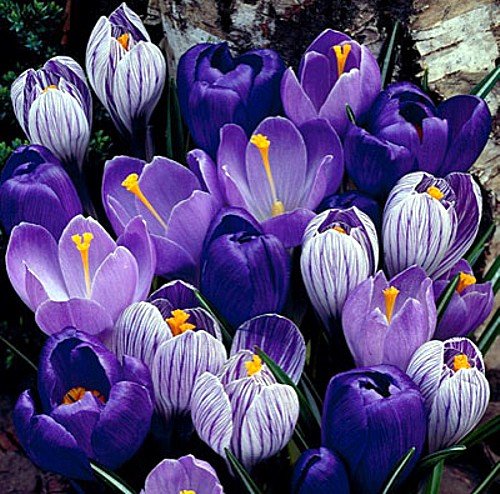
The Blue Moon mix combines blues and purples in crocuses, delivering early spring color in dense, vibrant blooms. Crocus are among the first to emerge after winter, signaling the transition to warmer days. They prefer full sun and well-drained soil, making them an excellent pick for soil in containers or the front of borders. The mix allows for a lively display even when individual plants are modest in height, and many varieties are perennial with consistent yearly returns when conditions are suitable.
Votaniki Anemone Blanda Blue Shades

Blue Shades Anemone Blanda (Grecian Windflower) provides compact, resilient blue blossoms with fern-like foliage. Growing to about 4-6 inches, these perennials work well as ground cover, in rock gardens, or along borders. They establish gradually, expanding over time to form a blue carpet that extends their bloom season. The plants tolerate a range of soils and light exposures, making them versatile for both sunny borders and container plantings. Their repeat flowering adds depth to a blue-themed garden, often complementing hyacinths and crocuses nearby.
Indoor Pre-Chilled Blue Allium Bulbs

This selection offers pre-chilled options that are ready to grow indoors in a pot or bowl of soil. While allium blooms can be larger, this blue-toned set emphasizes compact color and early-season performance, suitable for indoor forcing or outdoor planting in mass for a bold effect. The pre-chilled nature helps jump-start bloom time, making them a practical choice for indoor displays or early spring patios. They’re sold as a small batch suitable for mass planting or container arrangements with visible blue tones when they flower.
Buying Guide: Key Considerations For Blue Spring Bulbs
- Bloom Time And Color Range: Choose bulbs that align with your preferred early-season window and the exact shade of blue you want, from pale sky blues to deep cobalt tones. Some mixes provide a broader palette, while singles offer a more uniform display.
- Size And Growth Habit: If you want a low ground cover, look for diminutive species like Anemone Blanda Blue Shades. For borders or containers, Muscari and crocus provide height variety and structure.
- Sun Exposure And Soil: Most blue spring bulbs prefer full sun to light shade and well-drained soil. Improve drainage in heavy soils to prevent bulb rot, and amend with compost for better growth.
- Container vs. Garden Planting: For indoor forcing, pre-chilled bulbs work best. Outdoor plantings benefit from proper spacing and depth recommendations, typically deeper for larger bulbs and shallower for small, bulbous species.
- Perennial Value and Naturalizing: Perennial blue bulbs like muscari and some anemones can naturalize, creating repeated displays with modest maintenance. Plan for future blooms in successive seasons.
- Watering And Maintenance: Water newly planted bulbs deeply after planting and keep soil moderately moist during establishment. Avoid overwatering, especially in containers with limited drainage.
- Pollinators: Many blue flowers attract bees and butterflies. Grouping bulbs with early bloomers can enhance pollinator activity and overall garden health in the spring.
- Indoor Forcing Considerations: Pre-chilled bulbs are designed for indoor forcing; follow product-specific chilling and potting instructions to achieve timely blooms.