Raised self-watering planters simplify outdoor and indoor gardening by delivering steady moisture to roots while reducing maintenance. This guide highlights five standout options, covering varying sizes, self-watering features, and built-in drainage. Whether you’re growing vegetables, herbs, or ornamental plants, these raised beds help optimize soil conditions and plant health with minimal effort.
| Product | Brand | Key Feature | Approximate Capacity* |
|---|---|---|---|
| Giantex Raised Garden Beds Outdoor | Giantex | Self-watering with 1.1-gallon reservoir | 7.7 gallons |
| Keter Urban Bloomer Raised Garden Bed | Keter | Built-in water gauge for moisture monitoring | 12.7 gallons |
| Keter Splendor Raised Garden Bed | Keter | Self-watering design with drainage plug | 31.7 gallons |
| The Home Cult Raised Garden Bed with Legs | The Home Cult | Wicking, bottom-water delivery | Varies by model |
| VINGLI Self-Watering Planter | VINGLI | Modular, all-weather plastic planters | 6-pack set (individual units) |
Giantex Raised Garden Beds Outdoor

The Giantex raised bed offers a roomy 7.7-gallon growing space and a built-in self-watering reservoir of 1.1 gallons. Its detachable legs enable quick assembly without special tools, and a drainage hole helps prevent overwatering. This model supports vegetables, fruits, herbs, and flowers with a simple, accessible design suitable for beginners and experienced gardeners alike.
Keter Urban Bloomer Raised Garden Bed

This compact bed features a built-in water gauge to indicate when moisture is needed and a drainage system that can be opened or closed for precise watering control. Its dimensions, 32.3 inches long by 14.7 inches wide and 30.7 inches high, suit balcony or small garden spaces while accommodating herbs and compact vegetables with ease.
Keter Splendor Raised Garden Bed

With a 31.7-gallon capacity, the Keter Splendor bed includes a water gauge and a simple drainage system for controlled watering. Its wide footprint supports larger plantings, making it a versatile option for vegetables, flowers, and herbs in traditional gardens, patios, or decks.
The Home Cult Raised Garden Bed with Legs

The Home Cult bed features a foldable stand for quick setup and a bottom water delivery system that promotes deeper root growth. The built-in wicking system helps maintain steady soil moisture, reducing the need for frequent manual irrigation. It is designed to support healthy root development for vegetables, herbs, and flowers in indoor or outdoor settings.
VINGLI Square Raised Garden Bed
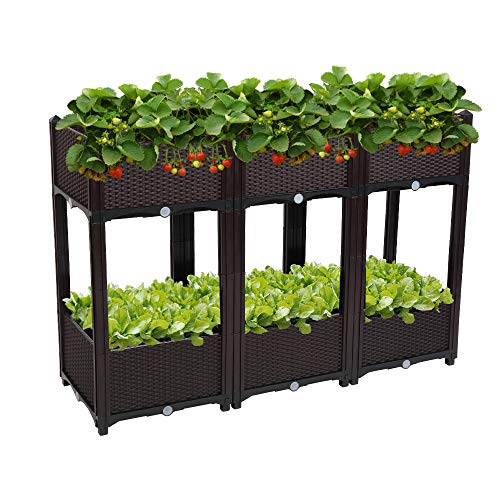
This set of square beds emphasizes modular flexibility, with a self-watering design and a drainage system to manage moisture. Made from reinforced plastic, the planters are lightweight, weather-resistant, and suitable for all-season gardening in both indoor and outdoor environments.
Buying Guide: Key Considerations For Choosing Raised Self-Watering Planters
- Watering system type: Self-watering reservoirs, wicking beds, and moisture gauges all offer different maintenance levels. Choose based on how often you can water and your preferred moisture management approach.
- Capacity and footprint: Determine the available space and crop needs. Larger beds support more diverse plantings but require more soil and space.
- Ease of assembly: Look for tool-free or minimal-assembly designs if you want quick setup or frequent relocation.
- Drainage and moisture control: A reliable drainage plug or adjustable drainage ensures roots don’t stay waterlogged, reducing disease risk.
- Materials and durability: UV-resistant, weatherproof plastics or metal with liners extend lifespan in sun and rain. Consider weight when moving.
- Root health features: Bottom watering and wicking systems promote deeper root growth and stable moisture, benefiting plant vigor over time.
- Mobility features: Leg or stand designs can raise beds to reduce bending, improve airflow, and simplify maintenance; consider portability if you plan seasonal repositioning.
- Assembly environment: Some models offer modular components that allow you to expand or reconfigure your garden as your space changes.
- Price-to-value ratio: Compare capacity, features, and warranty to ensure long-term benefits align with budget.