Gardeners who want to grow vegetables in a controlled, soil-friendly space often turn to raised beds. They improve drainage, reduce soil compaction, and make planting and maintenance easier. Below are five standout raised bed options designed for veggies, fruits, and herbs. Each bed emphasizes durable materials, straightforward assembly, and ample planting area to support productive vegetable gardens in backyards, balconies, or patios.
| Product | Brand | Material / Style | Approximate Size |
|---|---|---|---|
| JERIA Raised Garden Bed | JERIA | Galvanized metal, 4×2×1 ft | 4×2×1 ft |
| DUMOS Raised Garden Bed With Legs | DUMOS | All-natural fir wood, elevated | 48×24×30 in |
| Foxlang 8x4x1ft Galvanized Bed | Foxlang | Galvanized metal, two-pack option | 8×4×1 ft |
| Land Guard Galvanized Raised Bed Kit | Land Guard | Galvanized metal, oval design | 4×2×1 ft |
| Vengarus Galvanized Raised Garden Bed With Legs | Vengarus | Galvanized metal, leg-supported | 48×18×30 in |
Note: Each bed is designed to accommodate vegetables, herbs, and other plants with a focus on durability, ease of assembly, and long-term use in outdoor settings.
JERIA Galvanized Raised Bed With Easy Assembly

The JERIA raised garden bed combines a sturdy galvanized metal frame with practical accessories that simplify setup. Included are rubber edge strips, safety gloves, and a wrench with galvanized nuts and bolts, making assembly straightforward for gardeners who value durability and long-term weather resistance. The bed measures 4×2×1 ft, offering ample space for a variety of vegetables, fruits, herbs, and flowers. Its thickened galvanized metal resists rust and corrosion, ensuring a lasting garden solution in rain or sun. The comprehensive kit supports versatile placement, whether on a patio or in a traditional garden space.
DUMOS Elevated Raised Garden Bed With Legs

The DUMOS raised garden bed offers 4.4 cubic feet of planting space in a wood elevated design. Constructed from all-natural fir wood, it provides a warm, natural aesthetic while delivering sturdy support for vegetables, herbs, and flowers. Drainage holes and gaps help prevent waterlogging, promoting healthy root growth. The elevated design reduces ground pests and makes gardening easier on the back, with a bed liner included to protect soil and plants from moisture fluctuation. This option suits patios, balconies, and backyards where a traditional ground plot isn’t feasible.
Foxlang Galvanized Raised Bed Kit

The Foxlang 8x4x1 ft raised bed comes as a galvanized metal planter that provides a deep, stable environment for root crops and leafy vegetables. The design emphasizes an open base and thickened sheets for structural integrity, with a 12-inch depth that accommodates deeper-rooted plants. Its modular nature allows multiple beds to be arranged to fit yard spaces or patios, and it is relatively easy to assemble with included heavy-duty middle rods and screws. Its metal construction offers durability against weather and pests, making it suitable for long-term outdoor use.
Land Guard Galvanized Raised Bed Kit
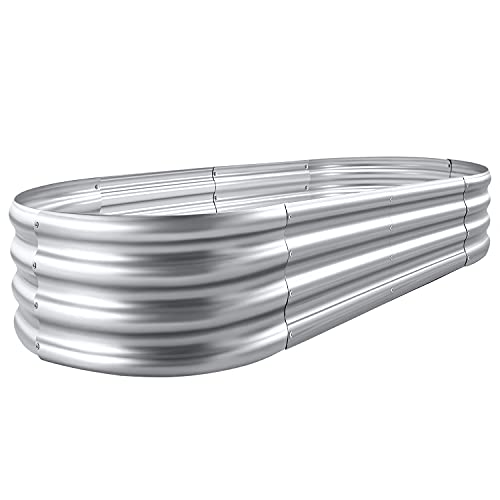
The Land Guard raised bed kit features a 4×2×1 ft galvanized metal frame with an oval design for added aesthetic appeal. Built to withstand outdoor conditions, it incorporates double-layer anti-corrosion galvanizing and a robust interface that resists deformation. The oval shape can offer improved drainage flow around plants, and the unit is designed for quick assembly, typically under five minutes. This option suits vegetable plots in backyards or larger balconies where space efficiency and durability are priorities.
Vengarus Galvanized Raised Bed With Legs
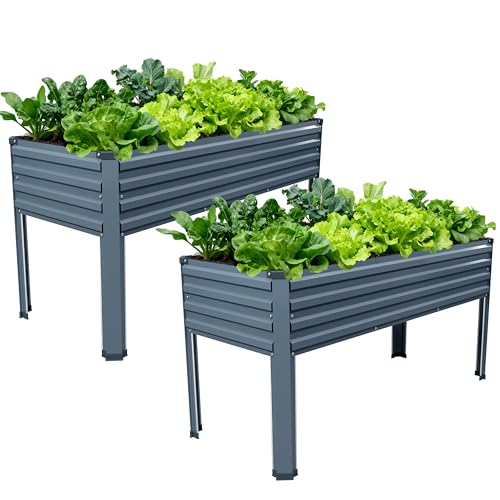
The Vengarus raised garden bed provides leg-supported planting space measuring 48×18×30 inches, offering a generous 300-pound capacity. The raised design reduces ground moisture fluctuations and makes planting and weeding more accessible. Safety considerations include padded corners and smooth edges to minimize injury during handling, while the included assembly tools help simplify setup. This bed is suitable for patios, balconies, or lawns where a modern, stylish planting solution is desired and height improves accessibility for users of varying mobility.
DIIYIV Galvanized Raised Bed With Legs

The DIIYIV two-piece galvanized raised bed with legs provides a 48×18×30-inch footprint and 300-pound capacity, with protective pads at the corners to prevent injuries. The two-piece design supports flexible placement and pairing with other beds, enabling expanded vegetable plots. Its sturdy steel construction and leg-supported frame make it suitable for outdoor use on decks, patios, or garden edges. Easy assembly without specialized tools helps gardeners set up quickly and start planting a diverse vegetable assortment.
Buying Guide: Key Considerations For Choosing A Raised Bed For Vegetables
- Material and durability: Galvanized metal beds resist rust and weathering, offering long-term use. Wood beds provide a natural look but may require maintenance and treatment to prevent rot.
- Size and depth: For vegetables, a depth of at least 12 inches supports many root crops; wider beds allow multiple crop zones and easier access for tending.
- Assembly and hardware: Look for included tools, bolts, and ergonomic screws. A kit with clear instructions saves time and reduces the risk of leaks or instability.
- Drainage and soil health: Beds with proper drainage holes or liners help prevent waterlogging and support healthy root systems.
- Mobility and placement: Elevated or leg-supported beds reduce back strain and can be placed on hard surfaces or uneven ground, expanding placement options.
- Maintenance: Galvanized metal requires minimal maintenance; wood may need sealing or staining over time to extend life.
- Weight capacity: Ensure the bed and soil mix can support the intended plants, especially with heavier crops like tomatoes.
- Cost vs. longevity: While metal beds often cost more upfront, their durability can offset long-term replacement costs compared with wood.
- Assembly time: Consider whether you want a quick-assemble option or a more modular design that allows future expansions.
In choosing the right raised bed, balance budget, space, and the types of vegetables you plan to grow. For small patios, elevated or leg-supported units offer accessibility and compact footprint. For larger yards, deeper or wider beds provide more room for diverse crops and successive plantings. All options in this list emphasize straightforward assembly, durable materials, and practical garden-ready features designed to support productive vegetable growing throughout the growing season.