Plant growth regulators (PGRs) for lawns help manage turfgrass height, improve density, and reduce mowing frequency. This article highlights top lawn-focused PGR products, explains how they work, and offers practical guidance for selecting the right product for your yard. Each option below is chosen for relevance to residential and professional lawn care, with considerations for climate, grass type, and maintenance goals.
| Product | Brand | Use Case |
|---|---|---|
| Primo Maxx Plant Growth Regulator | Syngenta | Overall turf height control and drought tolerance |
| Quali-Pro T-Nex Plant Growth Regulator (Primo Maxx) 128oz | Quali-Pro | Growth management, color, and quality for turf |
| Atticus Pramaxis MEC Plant Growth Regulator (8 oz) | Atticus | Labor savings and stress tolerance in turfgrasses |
| Monterey Florel Brand Growth Regulator Residential | Monterey | Residential lawn and tree/shrub applications |
| Atticus Travek 2 SC Plant Growth Regulator (128 OZ) | Atticus | Extended growth suppression and Poa annua control |
Primo Maxx Plant Growth Regulator

Product overview: Primo Maxx is a widely used plant growth regulator based on trinexapac-ethyl designed to slow vertical shoot growth in turfgrasses. This action helps create denser turf, reduces mowing frequency, and can improve drought resilience by lowering leaf area. It is commonly utilized in difficult-to-mow areas and to minimize edging needs in turf. For ongoing maintenance, multiple applications may contribute to more efficient water use and healthier overall turf structure.
Key features include: established performance among professional turf managers, compatibility with cool- and warm-season grasses, and practical benefits in aesthetics and labor management. When applying, follow label directions for rate and timing, and consider irrigation or rainfall after treatment to ensure even distribution.
Quali-Pro T-Nex Plant Growth Regulator (Primo Maxx) 128oz
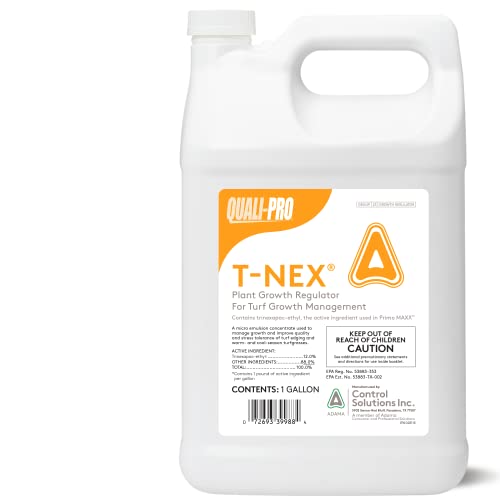
Product overview: This 128-ounce formulation mirrors Primo Maxx’s active principles, focusing on growth management to improve turf quality and stress tolerance. It is intended for use on turfgrass in golf courses, athletic fields, and lawns alike, with benefits such as deeper color, improved lateral growth, and healthier blade structure.
Key features include: compatibility with warm- and cool-season grasses, enhanced root mass development, and support for resilience during heat, drought, and mowing stress. Application guidance should be followed to optimize growth control and avoid over-application, which can affect mowing frequency and turf density.
Atticus Pramaxis MEC Plant Growth Regulator (8 oz)

Product overview: Pramaxis MEC uses trinexapac-ethyl (11.3%), the same active ingredient trusted by professional turf managers for quality and growth management. It promotes below-ground root and rhizome development, supporting overall turfgrass health while reducing mowing and clipping requirements. The product is labeled for a broad range of cool- and warm-season grasses, making it suitable for many lawns and managed fields.
Key features include: stress tolerance enhancement, long-lasting growth control, and labor-saving benefits. When using Pramaxis MEC, integrate with sound cultural practices to maximize root development and turf density while maintaining color and vigor.
Monterey Florel Brand Growth Regulator Residential

Product overview: Monterey Florel is a growth regulator marketed for residential use, with applications targeted at lawn maintenance and related vegetation. The product is designed to assist with growth control and overall plant performance in home landscapes.
Key features include: suitability for household lawn care, a straightforward approach to growth management, and compatibility with common lawn care practices. As with any PGR, adherence to label directions is essential to maintain lawn health and avoid over-application that could impact turf density or color.
Monterey Florel Plant Growth Regulator Bundled with Measuring Spoon

Product overview: This bundle includes Florel Growth Regulator and a measuring spoon, designed for home orchard and landscape use. It can prevent unwanted fruit formation on many trees and prune shoot growth, while also supporting branch development in ornamentals. Although primarily marketed for trees, the toolset helps homeowners manage growth patterns across a mixed landscape.
Key features include: fruit suppression on labeled trees, mistletoe shoot abscission in ornamentals, and enhanced branching in shrubs. When used on trees and ornamentals, careful label reading ensures appropriate concentration and timing for desired outcomes.
Atticus Travek 2 SC Plant Growth Regulator For Lawn

Product overview: Travek 2 SC uses paclobutrazol (22.9%), a commonly used PGR active ingredient that slows vertical growth and can suppress Poa annua. This provides a longer window of regulation, reducing mowing needs and promoting denser turf. It is favored by professional turf managers for frequent-regulation scenarios and difficult-to-mow lawns.
Key features include: extended extension of growth suppression (up to eight weeks in some cases), reduced labor from mowing, and targeted control of Poa annua to help neighboring grasses compete effectively. Follow label directions for rate, timing, and compatibility with local grasses and climate.
Buying Guide: Key Purchase Considerations And Comparisons
When selecting a plant growth regulator for lawns, consider grass species, climate, mowing regime, and maintenance goals. Below are practical considerations to help you compare options:
- Active ingredients and modes of action: Common PGR actives include trinexapac-ethyl and paclobutrazol. These ingredients slow vertical growth, encourage lateral spreading, and can reduce mowing demands. Check compatibility with your grass type (cool-season vs warm-season).
- Target application areas: Some products are formulated for residential lawns, while others are designed for larger turf areas like golf courses or athletic fields. Choose a product sized appropriately for your space and application frequency.
- Labor and maintenance impact: PGRs that slow growth can reduce mowing time and fuel usage. Consider how often you plan to apply and whether the product fits your equipment and workload.
- Stress tolerance and health benefits: Certain PGRs improve root development and drought tolerance, contributing to turf resilience during heat and water restrictions. This can influence long-term lawn health beyond height control.
- Label directions and safety: Always follow label instructions regarding rates, timing, and re-entry intervals. Ensure applications are compatible with existing lawn care practices and nearby ornamentals or trees.
- Climate compatibility: Some formulations are more suitable for cool-season grasses, others for warm-season varieties. Review local climate patterns and how your lawn grows in summer heat or winter dormancy.
- Cost and product availability: Compare product concentrations, coverage per bottle, and whether bundled measuring tools are included. Consider the total cost of ownership for the season based on your lawn size.
- Environmental considerations: Use products with careful stewardship to minimize runoff and non-target exposure, especially near gardens or water features.
The right choice depends on your lawn’s grass type, mowing intensity, and desired maintenance level. For households facing frequent mowing challenges or difficult-to-mow zones, PGRs such as Primo Maxx and Travek 2 SC offer extended control and labor savings. For large turf areas or professional settings, products with proven track records in stress tolerance and root development can provide broader benefits. Always integrate PGR use with proper fertilization, irrigation, and mowing practices to support overall turf health.