Parents and educators increasingly seek engaging, educational kits that teach science, responsibility, and healthy habits. A kids vegetable garden kit combines hands-on gardening with STEM concepts, helping kids observe growth, root development, and plant life cycles. Below are five top-rated picks that emphasize transparency, observation, and interactive learning. Each entry highlights what makes the kit educational, how it supports curiosity, and practical tips for use at home or in the classroom.
| Product | Key Benefit | Age Range | Format |
|---|---|---|---|
| Discovery™ Edible Veggie Garden Watch-It-Grow Kit | See roots and stems grow; includes seeds, soil, root ruler | 6+ | All-in-one STEM kit |
| DUYOYU Kids Plant Growing Kit | Full plant cycle with greenhouse and grow light | 5-12 | Mini greenhouse with irrigation |
| Root Viewer Kit for Kids (6 Varieties) | Transparent planter reveals underground growth | 5-12 | Seed varieties plus viewing box |
| Dan&Darci Root Viewer Kit | See roots using a transparent design; complete kit | 4-8 | Educational gardening set |
| National Geographic Flower & Herb Gardening Kit | Decorate pots, plant flowers and herbs | 4-12 | Creative gardening kit |
Discovery™ Edible Veggie Garden Watch-It-Grow Kit

The Discovery Kids kit offers a transparent garden container that lets children observe root growth from seed to sprout. It includes a clear garden container, drainage tray, seed packets, potting mix, a root ruler, and seed ID flags. This all-inclusive STEM activity supports hands-on biology, botany, and agriculture concepts, making the growth process visible and exciting for curious learners. Ideal for classroom demonstrations or interactive at-home science time, the kit encourages observational skills and questions about plant life cycles.
Educational highlights include growing carrots, radishes, and spring onions, plus the chance to track root development with the included root ruler. The open-view design helps kids notice how water, light, and time influence plant health, reinforcing core scientific principles in an approachable format.
DUYOYU Kids Plant Growing Kit

DUYOYU’s kit centers on a kid-friendly greenhouse and upgraded irrigation with a grow light, supporting a full plant growth cycle from seed to flowering. The setup helps children understand environmental controls—light, water, and timing—while fostering responsibility through daily care routines. It’s a practical introduction to horticulture science and greenhouse operations, giving kids a tangible sense of how plants respond to different conditions. The kit’s design emphasizes engagement, making it suitable for family projects and classroom experiments alike.
Root Viewer Kit for Kids (6 Seed Varieties)

This kit combines six different seed varieties—kidney bean, pea, soya-bean, radish, chili, and carrot—within a transparent planter that showcases root and shoot growth. The variation in species offers opportunities to compare germination rates, growth speeds, colors, and root shapes, turning each plant into a mini science mini-project. Weekly observations can teach patience and data tracking, while the see-through design makes the unseen world of plant roots accessible and engaging for young learners.
Dan&Darci Root Viewer Kit for Kids

The Dan&Darci Root Viewer kit emphasizes an innovative transparent design that reveals the underground world of plant roots. It includes a root-viewing box with lid, nutrient-rich soil, high-germination seeds (spring onion and cilantro), stickers for personalization, and a user-friendly instruction guide. The kit combines practical gardening with scientific exploration, supporting early science literacy through hands-on observation of root growth, soil health, and plant development.
National Geographic Flower & Herb Gardening Kit
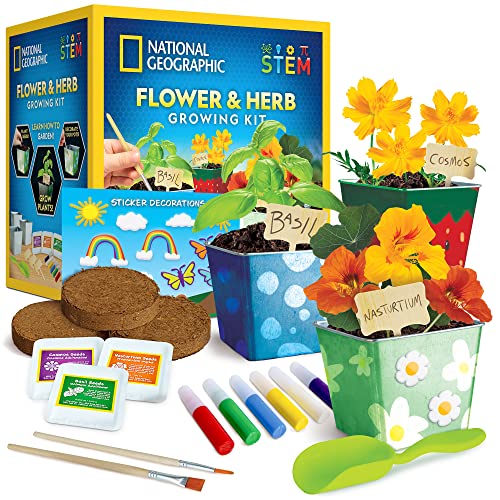
The National Geographic kit focuses on decorating and growing a small garden with cosmos, nasturtium, and basil seeds. It includes three stainless steel pots for decorating, seeds, wooden labels, tools, paint supplies, and a detailed learning guide. This option blends art with science, encouraging creativity while teaching plant care, pollinators, and herb gardening basics. It’s well-suited for kids who enjoy hands-on projects that combine crafts with botanical science.
Buying Guide: Key Purchase Considerations and Comparisons
- Learning goals: Choose a kit that aligns with your child’s interests—root observation, full plant life cycles, or a decorative garden that teaches basics of botany and care.
- Observation vs. hands-on: Transparent or root-view designs emphasize observation; greenhouse kits emphasize long-term growth and environmental control.
- Age appropriateness: Consider age ranges to ensure activities are challenging but not frustrating. Look for kits with guided instructions for younger children and open-ended tasks for older kids.
- All-in-one vs. modular: All-in-one kits simplify setup and provide more control over outcomes, while modular kits offer flexibility to swap seeds or expand with add-ons.
- Materials and sustainability: Durable pots, child-safe tools, and washable components support long-term use and environmental considerations.
- Learning depth: Some kits include scientific guides and root-focused lessons; others emphasize creativity and decorating, which can still reinforce plant care concepts.
- Classroom suitability: For classroom use, consider kits with multiple seeds and components that support group activities, data collection, and discussion prompts.
- Maintenance requirements: Assess watering needs, light exposure, and space requirements to ensure feasible ongoing care at home or in a classroom.
- Longevity of engagement: Choose kits with seeds that germinate reliably and provide visible growth over several weeks to maintain sustained interest.
- Supplemental activities: Look for kits that pair with simple science journals, observation sheets, or DIY experiments to extend learning beyond planting.