The rising appeal of indoor hydroponics combined with fish farming offers a compact, low-maintenance way to grow herbs, greens, and microgreens year-round. This article highlights five top all-in-one systems that integrate an aquaponics ecosystem, where fish waste nourishes plants and plants help purify water. Each product section includes a concise overview, key features, and practical considerations to help you choose a setup that matches your space and goals.
| Product | Brand | Key Benefit | Platform |
|---|---|---|---|
| Hydroponic Garden Aquaponic Fish Tank Plants Growing System Self-Cleaning Seed Sprouter Tray | Huamuyu | Self-cleaning, natural oxygenation, efficient waste-to-nutrient cycle | Amazon |
| AquaSprouts Aquaponics Garden | AquaSprouts | Self-sustaining ecosystem for home, office, or school | Amazon |
| MFYDPP Hydroponics Growing System | MFYDPP | LED grow light, touch-screen control, dual purpose (plants + fish) | Amazon |
| URUQ Hydroponics Growing System Garden | URUQ | Eight pods, adjustable height, quiet operation | Amazon |
| Back to the Roots Indoor Aquaponic Garden | Back to the Roots | Self-watering, self-cleaning fish tank, compact design | Amazon |
Huamuyu Hydroponic Garden Aquaponic System
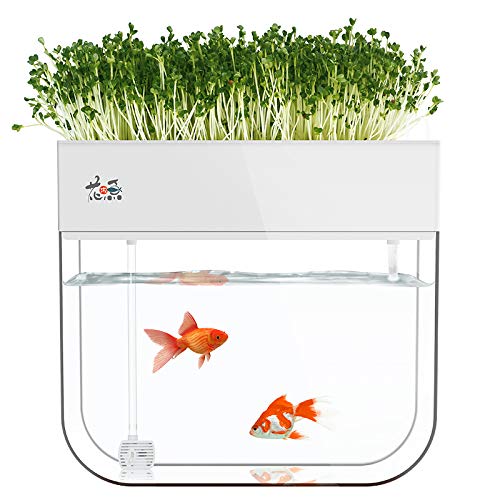
The Huamuyu system combines a fish tank with a seed sprouter tray. Fish waste acts as plant fertilizer, while plants help purify the water. The setup emphasizes a self-cleaning design, reducing routine maintenance by about half compared with traditional tanks. A tidal-like water level supports plant roots’ access to oxygen, promoting healthier growth for both fish and plants. This integrated approach is suited for compact apartments or classrooms where space is limited.
AquaSprouts Aquaponics Garden

The AquaSprouts Garden provides a self-sustaining aquarium and aquaponics kit designed for homes, offices, or schools. In this system, fish fertilize the plants, and the plants, in turn, help clean the water. Once established, the setup typically requires minimal water changes and no filter replacements. It enables growing herbs, greens, and vegetables year-round, relying on fish as a natural nutrient source without added fertilizers.
MFYDPP Hydroponics Growing System With Aquaponic Fish Tank

The MFYDPP system combines a 12-pod hydroponic garden with an integrated aquaponic fish tank and a touch screen panel. It emphasizes full-spectrum LED lighting and automated control for pump timing and growth cycles. The design aims to simplify maintenance while enabling users to cultivate leafy greens, herbs, and other edible plants alongside small fish in a compact footprint.
URUQ Hydroponics Growing System Garden

URQG’s eight-pod design combines a grow light with an adjustable-height system. It features a quiet circulation pump and a water shortage indicator, helping users manage water levels without constant monitoring. The setup supports rapid growth for herbs and greens and is intended for placement on a kitchen windowsill or shelf, making it a practical option for apartment dwellers seeking quick yields.
Back to the Roots Indoor Aquaponic Garden

The Back to the Roots Indoor Aquaponic Garden blends a 3-gallon self-watering fish tank with a planter above. The fish waste fertilizes the upper plant bed, while the plants help keep the water clean—creating a self-cleaning, low-effort ecosystem. The compact form makes it suitable for desktops, countertops, or small living spaces, and it supports herbs, microgreens, bamboo, succulents, and houseplants.
Buying Guide: Key Purchase Considerations
When evaluating an indoor aquaponics garden, consider system size, fish compatibility, plant variety, and maintenance needs. Look for a model with a reliable filtration or self-cleaning mechanism to reduce chores. Lighting should be adequate for the types of plants you want to grow, ideally with adjustable or full-spectrum LEDs. A transparent water tank or indicator alerts you to water levels and required refills, which helps prevent fish stress and plant dehydration. Noise level, power consumption, and setup complexity also matter, especially for smaller living spaces.
System compatibility with standard tank sizes matters if you want to expand later. Some setups are better suited for herbs and greens, while others support a broader range of vegetables and microgreens. Consider whether you prefer a plug-and-play unit with smart controls or a more hands-on system that provides deeper learning about aquaponics. Finally, assess materials and build quality to ensure the kit remains durable with regular use and occasional partial water changes.
In choosing the right 1-week to 3-month plan, weigh the balance between aquaponics complexity and your culinary goals. If space is limited, a compact, self-contained unit with clear water indicators may be ideal. For hobbyists aiming to maximize yields and experiment with fish species, a larger system with modular pods and robust lighting could be preferable. Regardless of choice, an indoor aquaponics garden can deliver fresh greens and herbs while teaching ecological farming concepts in a compact environment.