The market for plant propagation powders and liquids has grown, offering options for rooting cuttings and accelerating root development. This article highlights five well-regarded products that focus on growth hormones for plants, emphasizing how they work, where they’re best used, and practical application tips. Whether you propagate houseplants, ornamentals, or fruiting varieties, these products provide practitioners with reliable rooting assistance.
| Product | Brand | Format | Best For |
|---|---|---|---|
| Bonide Bontone II Rooting Powder | Bonide | Powder | Hardwood and softwood cuttings |
| Garden Safe TakeRoot Rooting Hormone | Garden Safe | Powder | Most home, garden, and greenhouse varieties |
| Hormex Rooting Powder #16 | Hormex | Powder (IBA 1.60%) | Difficult hardwood cuttings; cloning |
| Houseplant Prop Drops | Houseplant Resource Center | Liquid | Water and soil propagation for indoor plants |
| Doff Hormone Rooting Powder | Doff | Powder | General rooting of cuttings |
Bonide Bontone II Rooting Powder

Bonide Bontone II is a ready-to-use rooting powder designed to promote quick root development from cuttings. The product is suitable for ornamentals, vegetables, fruit trees, and berries. To use, dip the end of a clipping into the powder and place it in moist soil to support the rooting process. It can also be applied to seeds or bulbs by coating and lightly shaking to cover, then planting. This broad-use formula stimulates root production in both hardwood and softwood cuttings, helping establish plant starts in a range of environments.
Key considerations include compatibility with a wide spectrum of plants, ease of use for beginners, and a practical shelf life. Users should ensure cuttings are healthy and kept in appropriate moisture conditions after dipping. Because it’s a powder, it blends well with traditional potting mixes and media. For best results, pair with stable soil moisture and clean trimming practices to minimize stress on cuttings.
Garden Safe TakeRoot Rooting Hormone
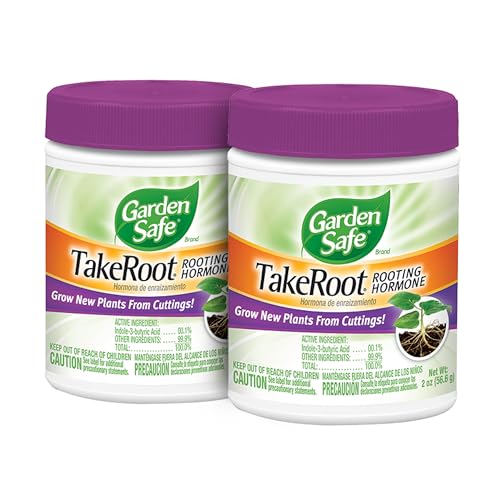
Garden Safe TakeRoot Rooting Hormone is a two-pack powder designed to promote rooting for a broad range of cuttings. Its active ingredient, indole-3-butyric acid (IBA), mirrors natural plant rooting signals to encourage root formation. The product is applied by moistening the cut end of the stem, dipping it into the powder, and then planting the treated end. This approach helps improve rooting success across many home, garden, and greenhouse varieties, making it a practical option for hobbyists and small-scale propagators alike.
Considerations include the straightforward “dip and plant” application, the familiarity of IBA-based propagation across common species, and the importance of avoiding over-application which could cause tissue burn. For best outcomes, use with fresh cuts and provide stable moisture after planting, plus a supportive rooting environment to reduce stress on new roots.
Hormex Rooting Powder #16

Hormex Rooting Powder #16 features a higher concentration of Indole-3-Butyric Acid (IBA) at 1.6%, targeting difficult hardwood cuttings and challenging propagation scenarios. The product is marketed for hardwood, semi-hardwood, and softwood cuttings, offering four strength options (0.1, 0.3, 0.8, 1.6 IBA) to match species and propagation goals. This maximum-strength option is designed to accelerate root growth and improve cloning success in both hydroponic and soil-based systems.
When selecting this product, consider plant type, cutting age, and environmental conditions. Higher IBA levels can be advantageous for stubborn species but may require careful handling to avoid excessive callus formation. Combining Hormex with compatible media and controlled humidity can enhance rooting outcomes for complex propagations.
Houseplant Prop Drops

Houseplant Prop Drops offer a liquid rooting hormone alternative designed for both water and soil propagation. The formula emphasizes seaweed extract and humic acids to nourish cuttings, promote rapid root growth, and reduce transplant shock. The liquid format provides uniform application across a range of indoor plants, including fiddle leaf figs, pothos, and Monsteras. Shelf-stable for up to two years, it also includes a digital Plant Guide to assist grower familiarity and technique.
Important considerations include the advantage of easy, mess-free dosing and the broad compatibility with various propagation substrates. However, liquids can require careful measurement to avoid over-concentration in water propagations. Users should follow recommended dilutions and monitor plant response during the rooting phase to minimize stress.
Doff Hormone Rooting Powder
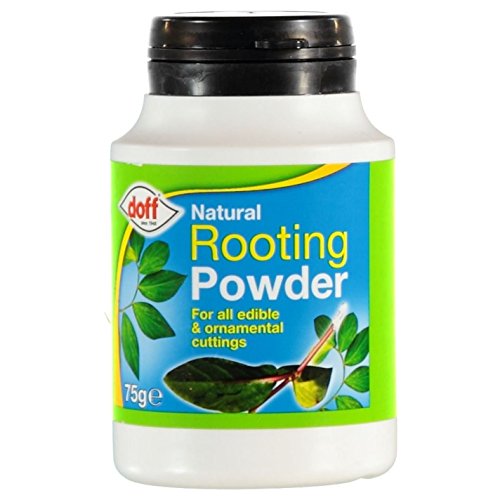
Doff Hormone Rooting Powder is a powder formulation designed to encourage rooting across a broad spectrum of cuttings. The product emphasizes strong healthy roots and provides a growth-hormone-based approach suitable for general propagation. The powder format is familiar to many propagators and integrates well with standard potting mixes or rooting media. It’s positioned as a reliable, broad-use rooting aid for both hobbyists and more serious gardeners.
Key factors to consider include species compatibility, the balance between speed and root quality, and storage conditions to maintain potency. Users should ensure clean cuts and consistent moisture after applying the powder to optimize callus formation and root establishment. Pairing with an appropriate rooting medium and light, steady environmental conditions will support successful propagation outcomes.
Buying Guide: Key Purchase Considerations And Comparisons
- Active ingredient and concentration: Indole-3-butyric acid (IBA) is the most common active ingredient. Powder products vary in IBA strength (from 0.1% to 1.6%), affecting suitability for different cuttings (softwood vs hardwood) and plant species. Higher concentrations are often reserved for difficult propagations, while lower strengths suit softwood cuttings and beginners.
- Form and method of application: Powders are easy for dipping cut ends, while liquids offer uniform coverage and can be used in water propagations. Consider your propagation method and media, as powders can coat surfaces more durably, and liquids can be easier to use in hydroponics.
- Plant compatibility: Most products are marketed as broad-spectrum, but some species respond better to specific formulations. If propagating exotic or rare plants, review user experiences or product documentation for species-specific guidance.
- Ease of use and cleanup: Powders may create dust and require careful handling, whereas liquids reduce mess but demand proper dilution. Shelf life and storage conditions (cool, dry) help maintain potency over time.
- Safety and handling: Follow label directions for handling and disposal. Some products require gloves and ventilation during use, especially powders and higher-IBA concentrations.
- Media and environment: Rooting success depends on compatible rooting media (soil, rockwool, coco, peat). Pair with appropriate humidity levels, temperature, and light to optimize root formation and minimize transplant shock.
- Cost and availability: Consider packaging size relative to your propagation volume. Powdered formats are often shelf-stable and economical for large projects, while liquids may offer convenience for small or irregular propagation tasks.