When selecting a commercial woven landscape fabric, durability, permeability, and coverage are paramount for roadways, erosion control, and large construction sites. This guide highlights five top options designed for heavy use, long-lasting performance, and easy installation. Each pick is evaluated on material weight, weave quality, load-bearing capacity, and environmental impact to help contractors, landscapers, and facility managers make informed decisions.
| Product | Size (W x L) | Weight | Key Benefit |
|---|---|---|---|
| Driveway Fabric 6×300 ft – DWALE | 6 ft x 300 ft | 3.5 oz | Heavy-duty, tear-resistant; gravel and erosion control |
| VEVOR Weed Fabric Barrier – 4×300 ft | 4 ft x 300 ft | 5.8 oz | Dual-layer, high-strength; improved nutrient capture |
| Sunocity 6 ft x 300 ft | 6 ft x 300 ft | 3.5 oz | Premium permeability; UV-resistant and durable |
| Happybuy 6.5 ft x 300 ft – 3 oz | 6.5 ft x 300 ft | 3 oz | Wide coverage; good weed suppression and soil moisture retention |
| iropro 4 ft x 300 ft – 3.2 oz | 4 ft x 300 ft | 3.2 oz | Space-saving design; easy storage and handling |
Note: All products are designed for outdoor use with weed suppression, soil moisture retention, and support for drainage and erosion control. Widths, lengths, and weight are approximate and can vary by packaging and production run.
DWALE Driveway Fabric 6×300 Ft
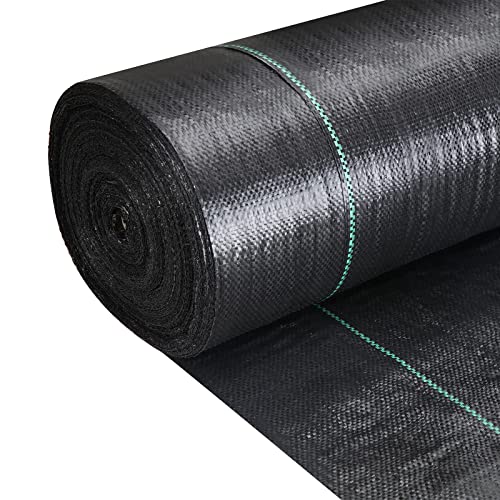
The DWALE commercial-grade driveway fabric is a 3.5-ounce geotextile designed for heavy-duty applications such as roadways, French drains, erosion control, and construction sites. The product is made from high-quality polyethylene material, offering tear resistance and durability under heavy loads. Packaging notes indicate folded packaging for a 3-foot width, with the actual product width being 6 feet and a length of 300 feet. This configuration supports large-scale coverage with fewer seams, which is advantageous for project efficiency and weed suppression in demanding environments.
Key considerations include load-bearing expectations, installation practice for folds and overlaps, and ensuring proper drainage while maintaining soil moisture. The black color aids shading to reduce light penetration, contributing to weed suppression. As with all heavy-duty fabrics, field testing for permeability and drainage under site-specific conditions is recommended to verify performance with chosen aggregate and fill materials.
VEVOR Weed Fabric Barrier – 4×300 Ft

VEVOR’s heavy-duty 5.8-ounce weed barrier is a dual-layer, woven PP geotextile designed to block weed growth while promoting soil permeability and nutrient exchange. Sized at 4 x 300 feet, this fabric is engineered for broad coverage across commercial landscapes, road shoulders, and underlayment for driveways or drainage projects. The higher weight supports heavier loads and longer service life, while the woven structure facilitates airflow and water movement to the root zone, supporting plant health where soil remains exposed to moisture.
Considerations include ensuring the woven layer orientation for maximum sun protection and permeability, evaluating the soil’s drainage needs, and planning for staples or anchors to prevent wind uplift on exposed slopes. For large-scale installations, factor in seam placement to minimize weed pathways and maintain consistent coverage across irregular terrain.
Sunocity 6×300 Ft Black Weed Barrier

Sunocity’s premium landscape fabric delivers a 3.5-ounce woven polypropylene barrier designed for weed control, UV resistance, and long-term outdoor performance. The roll is sized at 6 feet by 300 feet, suitable for large garden beds, parking areas, and pathways, with easy cut-to-fit versatility. Installation emphasizes secure anchoring with landscape staples to prevent movement, especially on slopes or under gravel and mulch layers. Permeability supports soil respiration and irrigation, helping maintain soil moisture while suppressing weed growth.
Potential considerations include exposure to UV over extended periods and compatibility with gravel or mulch substrates. The fabric’s durability makes it appropriate for commercial projects that require reliable filtration and stable ground cover across extended seasons and varying weather conditions.
VEVOR Dual-Layer 4×300 Ft – 5.8 Oz
Note: The product line includes models with a 5.8-ounce density and a dual-layer construction, designed to offer robust weed suppression while maintaining soil permeability. This configuration is well-suited for projects requiring high stability under heavy loads, such as driveways, construction roads, and erosion control installations. The dual-layer approach aims to reduce weed penetration and support structural integrity when covered with aggregate materials like gravel or stone. When selecting this option, verify shipping packaging and any fold accommodations to ensure the fabric spans as needed with minimal seams.
Buying Guide: Key Purchase Considerations
- Weight and durability: Heavier fabrics (3 oz to 5.8 oz) typically provide stronger weed suppression and resistance to tearing in demanding environments such as commercial driveways, French drains, and erosion control projects.
- Permeability and drainage: High permeability allows water and air to reach the soil, supporting plant health and preventing water pooling. Ensure the fabric is designed to balance weed control with adequate drainage for your site.
- Coverage and layout: Wide rolls (4 ft to 6 ft) reduce seams, but consider handling and storage constraints on your site. For large projects, multiple rolls may be needed; plan seam placement to minimize weed passage.
- UV resistance and longevity: Outdoor fabrics are exposed to sunlight; UV-resistant materials extend service life, particularly for long-term landscaping or permanent installations.
- Substrate compatibility: Evaluate compatibility with gravel, mulch, soil, and required underlayment. Some fabrics perform best beneath aggregate layers, while others work as standalone ground covers.
- Installation accessories: Staples, landscape pins, or ballast may be required to secure fabric, particularly on slopes or windy sites. Consider ease of installation and maintenance access.
- Environmental impact: Black or dark fabrics help shade soils and reduce light to weed seeds, with some fabrics designed to minimize chemical leaching and support sustainable landscapes.
- Cost and long-term value: Compare cost per square foot against expected service life, maintenance needs, and project duration. In commercial applications, longer-lasting fabrics may justify higher upfront costs.
When choosing among these options, map your project’s priorities: drainage performance, anticipated load, coverage area, and installation practicality. For large-scale sites such as roadways or erosion-control projects, selecting a heavier, high-permeability fabric with a wide coverage width can minimize seams and maintenance while providing dependable weed suppression and soil protection.