Protecting chickens and garden crops from birds and other small predators is a common concern for American homeowners. The right bird netting can guard coop runs, fruit trees, berry bushes, and vegetable beds without harming wildlife or stalling plant growth. This article highlights five well-reviewed options, explains how to choose the best fit for your setup, and provides practical tips for installation and maintenance.
Product overview
| Product | Use Case | Mesh Size | Materials | Notes |
|---|---|---|---|---|
| Feitore Deer Fence Netting (7 x 100 ft) | Garden protection including birds, deer, and small animals | 3/4 inch | Polypropylene | Reusable, lightweight, versatile for birds and small pests |
| RYHBETH Bird Netting For Chicken Coop (50×50 ft) | Chicken runs, garden protection, balcony cats | 2.4 inches | HDPE | Heavy duty, predator deterrence |
| ORIVOGAS Heavy Duty Bird Netting (19.5 x 19.5 ft) | Chicken coops, raised beds, fruit trees | 0.8 inch | HDPE | Reinforced edges, tangle-free |
| Webuys Bird Netting For Garden (13 x 40 ft) | Garden protection across beds and fruit trees | 1/2 inch | HDPE | Includes nails and zip ties, durable |
| Vocray Bird Netting For Chicken Coop (50×50 ft) | Large chicken runs and garden plots | 1 inch | HDPE | Wildlife-friendly, durable and reusable |
Feitore Deer Fence Netting: Versatile Garden Shield

The Feitore deer fence netting offers a broad 7 x 100 feet roll with a 3/4-inch square mesh. While marketed primarily for deer, its mesh size is well-suited to preventing small birds from accessing plant canopies and fruiting structures. The polypropylene construction is lightweight, yet durable enough to withstand outdoor conditions and repeated use. Accessories such as installation nails and cable ties are included to simplify setup. This netting can be repurposed as chicken netting or rabbit protection, making it a flexible option for mixed-use gardens.
Key advantages include easy handling and reusability, which help reduce long-term costs. The 3/4-inch mesh balances airflow and light penetration with robust bird exclusion, enabling healthy plant growth without shading or heat buildup. For chicken runs, ensure the mesh height and slope avoid gaps that larger birds could exploit. While not specifically labeled as predator-proof for poultry, the net’s design provides a practical barrier for birds and small mammals in many suburban settings.
RYHBETH Bird Netting For Chicken Coop

RYHBETH’s chicken coop netting uses 2.4-inch mesh in a 50×50 foot footprint, creating a robust barrier against birds, hawks, owls, and other aerial threats. In addition to poultry protection, this netting serves garden needs by shielding fruit bushes, trees, and vegetable beds from birds and small pests. The product description emphasizes multi-use versatility, extending to balconies and outdoor cat enclosures. The HDPE material contributes to durability, while the mesh size targets larger pests without unduly restricting airflow or sunlight to plants. Installation is straightforward with included hardware, though the larger mesh may require careful placement to avoid gaps at edges.
For chicken protection, consider the net’s height and anchoring strategy to deter climbing or gust-driven detours. It’s well-suited for covering runs during peak migration or fruit harvest periods. Maintenance involves checking for wear after storms and replacing sections as needed to maintain integrity around corners and posts.
ORIVOGAS Heavy Duty Bird Netting
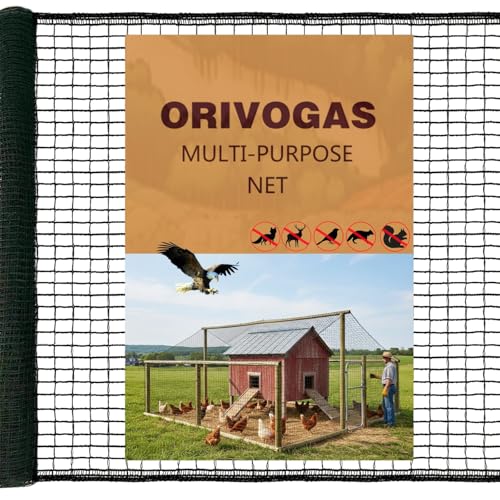
ORIVOGAS markets a heavy-duty 19.5 x 19.5 feet net with a tight 0.8-inch mesh and reinforced edges. This combination aims to offer durable, long-lasting protection for chicken coops, raised beds, and fruit trees while resisting tangling with leaves and debris. The woven HDPE material provides UV resistance and improved tear strength, making it a practical option for year-round use. A notable feature is the integrated rope along reinforced edges, supporting neat installation and easier storage. The netting is described as wildlife-friendly, excluding harm to birds while keeping out deer, hawks, and other threats.
Manufacturers emphasize the net’s ability to secure small birds without trapping them and to create a clean, unobtrusive enclosure. When deploying, ensure the net is tensioned properly to prevent loose sections that could attract birds or wildlife. This product is ideal for gardeners seeking a sturdy, reusable solution for chicken runs and fruiting zones that demand durable protection against multiple predators.
Webuys Bird Netting For Garden Protection

Webuys offers a 13 x 40 feet garden netting kit that includes ten U-shaped nails and fifty zip ties for quick installation. Made from high-density polyethylene, this netting is designed to resist sun exposure, wind, and weather across seasons. The 1/2-inch mesh size blocks the majority of birds while still allowing sunlight and spray to reach plants. The kit’s emphasis on ease of removal and storage makes it attractive for seasonal use, such as protecting fruit during ripening periods or shielding blueberries and strawberries from hungry birds. The product is described as easily reusable, supporting multiple growing seasons with proper care.
For poultry protection, Webuys netting can cover chicken runs or pens, provided the height and tension are adjusted to prevent sagging. The lightweight design reduces wind load, though higher wind areas may require additional anchoring. Overall, this option balances affordability, durability, and practical installation, suitable for hobbyists and small homesteads.
Vocray Bird Netting For Chicken Coop
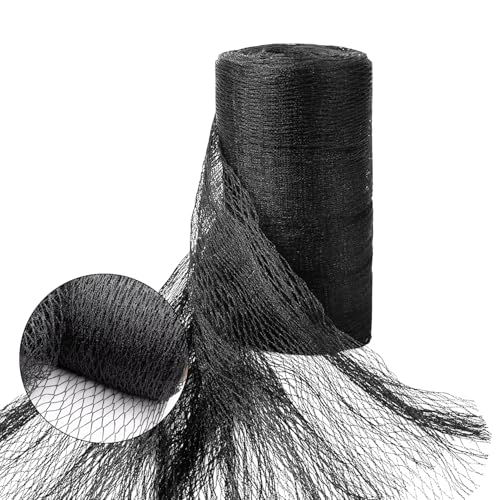
Vocray markets a 50×50 feet net with a 1-inch mesh, designed to protect chicken runs, fruit trees, and garden crops. The larger mesh size allows easier airflow and light penetration while still offering a barrier against larger birds, deer, and other small pests. The HDPE material is described as UV-resistant and durable, with a focus on long-term reuse. This option is particularly suitable for larger garden plots or sequences of chicken coops where a balance between predator protection and plant health is desired. Its larger mesh can also function as a weed barrier in some configurations, but users should monitor for potential gaps at edges that predators might exploit.
In practice, Vocray’s netting can be pulled taut over frames or posts to create a clear, unobtrusive barrier. Proper anchoring and periodic inspection after storms help maintain effectiveness. This choice is best for homeowners needing a robust, reusable net that covers substantial ground with a straightforward installation process.
Buying Guide: Key Considerations For Bird Netting To Protect Chickens
When selecting bird netting for chickens and garden protection, consider the following factors to ensure a good match for your setup.
- Mesh size: Smaller mesh (e.g., 1/2 inch to 3/4 inch) deters smaller birds and provides better protection for berries and seedlings. Larger mesh (1 inch or more) can allow better airflow but might let small pests through.
- Material and UV resistance: HDPE and polypropylene nets offer durability and weather resistance. UV stabilization helps prevent material degradation in sunny climates.
- Size and coverage: Measure the area to be protected, including fence height, coop run dimensions, and any obstructions. Longer rolls reduce seams but may be heavier to handle.
- Ease of installation: Accessories like nails, zip ties, and integrated ropes simplify mounting and tensioning. Consider nets with reinforced edges for durability at anchor points.
- Reuse and maintenance: Look for nets designed to be reused across seasons. Storeability, resistance to tangling, and ease of cleaning contribute to lower long-term costs.
- Wildlife safety: Choose nets that deter predators without trapping or harming animals. Wildlife-friendly designs help protect ecosystems while guarding crops.
- Applications: Some nets are versatile enough for chicken coops, berry bushes, fruit trees, and vegetable beds. Determine whether you need a single solution or multiple tailored nets.
- Edge finishing and anchoring: Reinforced edges with integrated cords or rings improve wind resistance and reduce edge wear. Secure anchoring is essential in windy areas.
Installation tips: Position nets to cover vulnerable zones such as the top of runs, trellises, and fruit canopies. Keep nets taut to prevent sagging, which can create gaps for opportunistic birds. Regularly inspect seams, corners, and attachment points after storms or heavy winds, and repair any frayed sections promptly to maintain protection.
Perspective considerations include budget, local predator pressure, and future expansion plans. For urban or suburban yards with smaller fruit beds, a 13 x 40 ft kit may suffice. For larger plots or free-range coops, options with 50×50 ft or longer runs offer greater coverage and long-term cost effectiveness. Safety for plants and wildlife, ease of use, and durability should guide the final choice.