Keeping a lush, healthy lawn starts with proper soil air exchange. Hand aerators are a simple, effective way to loosen compacted soil, reduce thatch, and improve water, air, and nutrient penetration directly to the grassroots. This article highlights five top hand aerator options, detailing design features, materials, and user considerations to help American homeowners choose the right tool for their yard size and soil type.
Summary of chosen products:
| Product | Brand | Key Feature | Notes |
|---|---|---|---|
| Walensee Lawn Aerator Spike | Walensee | 15 spikes, 2.3″ tines, durable iron | Manual, long reach |
| Manual Push Core Aerator | hugeneroy | 3 hollow tines, replaceable | Semi-assembled |
| Manual Core Aerator Lawn Tool | LawnVigor | 3 hollow tines, non-clog design | Sturdy, durable |
| Jardineer Lawn Aerator Spike | Jardineer | 36″ length, 12-tip spikes | Back-saver design |
| Landzie Hollow Tine Aerator | Landzie | 3 solid tines, bevelled clog-free design | Professional-grade |
Walensee Lawn Aerator Spike Manual Dethatching Tool

Walensee’s tool uses 15 sharp iron spikes, each about 2.3 inches long, to pierce the soil and thatch simultaneously. The design claims to improve air, water, and fertilizer penetration to the lawn’s roots, promoting a thicker, healthier turf. The tool’s powder-coated iron construction resists rust, and a cushioned T-handle with a foot bar aims to reduce strain during use. Suitable for various soil types, this aerator emphasizes efficiency with multiple spikes working in concert for faster treatment.
Manual Push Core Aerator Lawn Tool

hugeneroy offers a semi-assembled aerator with three replaceable hollow tines. The hollow-tine design extracts soil plugs to create channels for air, water, and nutrients. The tool uses industrial-strength steel and reinforced tines intended for long-term use, making it appealing to serious gardeners. Guidance suggests watering dry areas before use, pushing and pulling vertically, and avoiding side-to-side motions to prevent damage.
Manual Core Aerator Lawn Tool
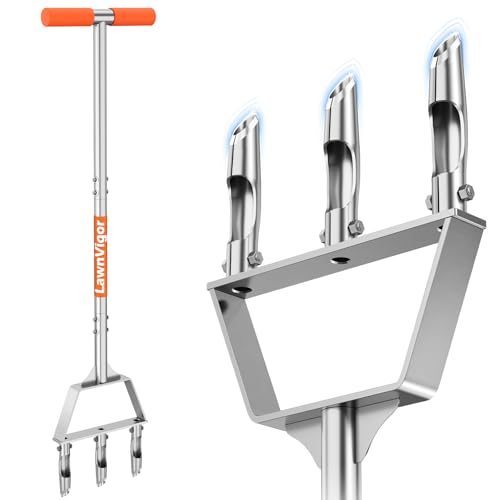
LawnVigor’s aerator emphasizes a three-tine hollow design to pull soil plugs while creating larger, deeper holes for water and nutrient uptake. The tool uses robust metal construction with heat-treated tines intended to resist bending. A non-clogging design helps maintain steady operation, and replaceable hollow tines support long-term use. User guidance includes pre-watering dry soil and avoiding twisting once tines are in the ground.
Jardineer Lawn Aerator Spike Tool

Jardineer’s 36-inch spike aerator features 12 spikes designed to work in unison, reducing back strain by allowing users to stand taller while treating the lawn. The tool comes with assembly hardware and an instruction guide, with emphasis on ease of disassembly for storage. It is positioned as a practical option for balconies, patios, and yards where larger tow-behind models aren’t feasible.
Landzie – The Original Hollow Tine Lawn Aerator Tool
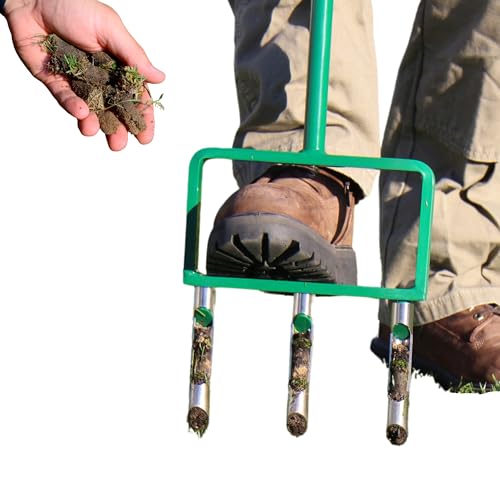
Landzie’s hollow-tine core aerator uses three solid tines to scoop soil and promote deeper penetration of air, water, and nutrients. The tool is built from powder-coated stainless steel for durability in demanding lawn care scenarios. Its clogs-free design helps maintain steady aeration, and Landzie’s branding emphasizes compatibility with other lawn care tools for a comprehensive yard care system.
Bluesea Lawn Aerator Tool
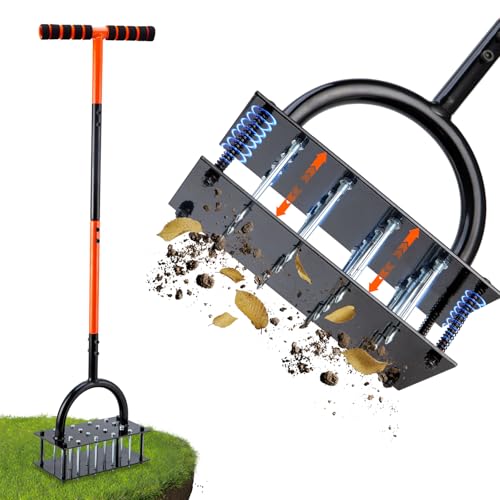
Bluesea’s aerator uses 16 iron spikes and features an ergonomic T-handle and a built-in spring mechanism to shake off soil after each pass. The design emphasizes durability with reinforced steel plates and a corrosion-protective coating, aiming to deliver years of rust-free performance. The tool’s spring design helps reduce jamming and makes repeated aeration smoother, particularly in moderately compacted soils.
Buying Guide: Key Purchase Considerations
- Soil type and compaction: Heavier clay soils may benefit from longer tines, while sandy soils could use standard-length spikes for adequate aeration depth.
- Spine vs hollow-tine design: Spike aerators (solid tines) break up surface thatch and loosen soil, while hollow-tine (core) aerators remove plugs to relieve compaction more deeply. Consider your lawn goals and maintenance routine.
- Length and reach: Longer handles reduce back strain and allow aeration of larger areas without bending. Tools range from 36 to 42 inches and beyond in some models.
- Durability and materials: Powder-coated iron or stainless steel offers rust resistance and longevity in outdoor environments. Look for robust construction and replaceable tines when possible.
- Ease of use and maintenance: Replacing tines, clearing clogs, and assembling/disassembling for storage affect long-term practicality. Some models include anti-clog or self-cleaning features.
- Size of the lawn and budget: For small yards, a lighter, manual tool may suffice; for larger lawns, models with more tines or longer reach can improve efficiency. Consider storage space and handling comfort as part of the decision.
- Usage guidance: Watering dry soil beforehand and avoiding twisting the tool when tines are underground can improve aeration results and reduce wear on the tool.
Overall, hand aerators offer a practical, low-cost way to improve lawn health by enhancing air, water, and nutrient delivery to the root zone. When selecting, prioritize the balance of longevity, ease of use, and suitability for your soil type and yard size. A combination approach—periodic core aeration for heavy compaction and supplemental spike aeration for regular maintenance—can yield a vibrant, resilient lawn.