Answer: Open bottom planter boxes are ideal for gardeners who want superior drainage, robust root growth, and long-lasting outdoor use. They’re best for small to medium spaces, raised-bed enthusiasts, and anyone who needs fast drainage to prevent overwatering. The following selections balance durability, open-base design, and ease of assembly. The table below quickly compares five top picks.
| Product | Size | Open Bottom? | Best For |
|---|---|---|---|
| ZXZYHFTY Raised Garden Bed | 2 x 2 x 1 ft | Yes | Compact, sturdy box for herbs and starter vegetables |
| Rakukiri Raised Garden Bed | 60×29×11 in | Yes | Large oval bed for vegetables and flowers |
| Land Guard Galvanized Raised Bed Kit | 4×2×1 ft | Yes | Solid, easy-to-assemble option for bigger runs |
| SnugNiture Round Bed Kit | 2x2x1 ft per bed (3-pack) | Yes | Multiple small rounds for modular layouts |
| Pattiumo Galvanized Raised Bed | 2×2×1 ft (2-pack) | Yes | Double-pack option for extended beds |
ZXZYHFTY Raised Garden Bed

Dimensions: 2 x 2 x 1 ft. Materials: 0.6 mm thick galvanized steel. The open bottom design promotes drainage and reduces water logging. The bed weighs about 2.8 kg, adding stability when filled with soil and plants. The finish is double-sided painted for a cleaner look and extra outdoor protection.
- Best for compact patios or balcony gardens that still need robust structure.
- Caution: The 0.6 mm steel is sturdy for most uses, but very heavy soil loads may flex slightly in windy areas.
Rakukiri Raised Garden Bed GRS Certified

Size: 60×29×11 in; capacity about 68 gallons of soil. Built from 0.8 mm galvanized metal with double-layer galvanizing and an oval shape for durability and weather resistance. The open bottom design helps avoid water accumulation and supports root absorption.
- Best for medium-to-large installations with deep root crops or dense plantings.
- Caution: Large footprint requires adequate space and stable surface for assembly.
Land Guard Galvanized Raised Bed Kit
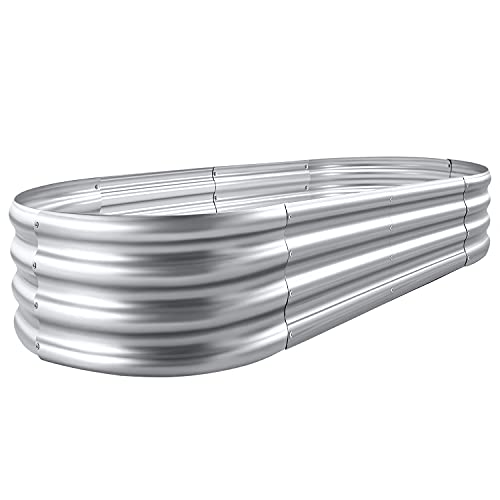
Size: 4×2×1 ft. Features a Q195 galvanized metal sheet with double-layer anti-corrosion galvanizing and an oval design. It emphasizes a sturdy build that resists deformation and holds shape under soil load. Quick, tool-free assembly is possible with included hardware.
- Best for larger garden lines or long rows of vegetables.
- Caution: Oval shapes may require more planning for corner fit in tight spaces.
Best Choice Products 8x4x2ft Bed

Size: 8x4x2 ft; depth 24 inches; capacity supports up to 478 gallons of soil. Made with non-toxic materials and designed for assembly without tools. The bottom panel is not included, which helps reduce overall weight and simplify transport and setup.
- Best for moderate to large gardens needing substantial soil volume.
- Caution: The absence of a bottom panel means drainage and soil containment depend on design alignment and placement.
SnugNiture Round Bed Kit (3 Pack)

Size: 2x2x1 ft per bed; kit includes three round planters. Made from thick galvanized steel with a wave design for durability and rust resistance. Open bottom improves drainage and allows freer root growth.
- Best for modular layouts and experimenting with plant groupings.
- Caution: Three-pack increases overall space requirements and may be overkill for a single plant type.
Pattiumo Galvanized Raised Bed Kit

Size: 2×2×1 ft per bed, sold as a 2-pack. Features galvanized steel panels with an open bottom design to boost drainage and root growth. Includes reinforced structure to help maintain shape under soil load and planting pressure.
- Best for pairing with multiple crops or expanding a small garden bed area.
- Caution: Open bottom design requires stable placement to prevent shifting in windy conditions.
Buying Guide: Open Bottom Planter Boxes
Open bottom planter boxes offer drainage advantages, improving root health and reducing soil compaction. When choosing, consider material thickness, overall durability, and size relative to your space. Open-bottom beds require stable placement and a suitable surface to prevent shifting or tipping in wind or heavy soil loads.
What size should you pick?
Ask how much space you have and what you intend to grow. For herbs and leafy greens, 2x2x1 ft beds are typically sufficient. For deeper-root crops like tomatoes or beans, a larger footprint such as 4×2 ft or multiple 2×2 ft modules can be more effective.
Material and durability considerations
Galvanized steel is common for open-bottom beds due to corrosion resistance and long life. Thicker metal (0.6 mm to 0.8 mm) generally offers more rigidity. Look for a double-layer galvanizing finish for extra protection against outdoor elements.
Ease of assembly
Many open-bottom beds are designed for tool-free assembly with bundled hardware. If you prefer quick setup, choose beds advertised as quick-assembly or those with simple screw-and-slot connections.
Drainage and placement tips
Open bottoms require a solid, level base and may benefit from a weed barrier or interior liner to control soil loss and keep roots from growing into the ground. Place beds on a stable surface to minimize movement and ensure even drainage.
Maintenance considerations
Regular inspection of seams and joints helps prevent deformation. A light coat of rust-preventive spray in early spring may extend life, especially in humid climates. Avoid placing near corrosive materials or fertilizers that can accelerate corrosion.
FAQ
- What is an open bottom planter box? An open bottom planter box lacks a bottom panel, allowing drainage and root growth to occur directly into the surrounding soil or a ground liner.
- Are open bottom beds reusable? Yes. With proper maintenance, galvanized steel open bottom beds can be reused for many growing seasons.
- Where should I place an open bottom bed? On a flat, stable surface with access to sunlight and good airflow. Avoid uneven ground that could tilt the bed.
- What crops are best in open bottom boxes? Root crops, leafy greens, herbs, and small vegetables often thrive due to improved drainage and root expansion.
- Do open bottom beds require liners? Liners aren’t always necessary, but they can help curb soil loss and improve moisture control in certain setups.
- Are these beds easy to assemble? Most listed options advertise tool-free or simple assembly with included hardware, suitable for quick setup.