The right fertilizer stakes can nourish tree roots directly where they need it most, supporting vibrant foliage, improved flowering, and stronger overall health. This article compares five leading options, highlighting how each product delivers nutrients below the surface for deciduous and evergreen trees alike. Evaluate formulation, release patterns, and suitability for acid-loving varieties to choose the best fit for your landscape.
| Product | Brand | Format | |
|---|---|---|---|
| Miracle-Gro Tree & Shrub Plant Food Spikes | Miracle-Gro | 12 spikes | Deciduous, flowering, evergreen trees |
| Jobe’s Slow Release Tree & Shrub Fertilizer Spikes (9 Count) | Jobe’s Organics | 9 spikes | Acid-loving trees and shrubs |
| Jobe’s Slow Release Tree & Shrub Fertilizer Spikes (5 Count) | Jobe’s Organics | 5 spikes | Acid-loving trees and shrubs |
| SimplyGro Fertilizer Spikes for Evergreen Trees & Shrubs | SimplyGro | 24 spikes | Evergreen trees and conifers |
| Miracle-Gro Fruit & Citrus Plant Food Spikes | Miracle-Gro | Spikes for fruit/citrus | Fruit-bearing trees and citrus |
Product sections below provide concise overviews, letting you compare nutrient mixes, release patterns, and application frequency at a glance. Each option is designed to feed roots directly, reducing waste and runoff while supporting long-term tree vigor.
Miracle-Gro Tree & Shrub Plant Food Spikes

Miracle-Gro Tree & Shrub Plant Food Spikes deliver nutrients directly to tree roots, promoting vibrant color and lush foliage. Suitable for deciduous, flowering, and evergreen trees, these spikes are easy to use and integrate into landscape care. The formulation supports sustained growth by supplying essential nutrients below ground, where active roots thrive. The product is positioned for use across a range of tree types, including flowering varieties and acid-loving plants, making it a versatile choice for mixed landscapes.
Jobe’s Slow Release Tree & Shrub Fertilizer Spikes (9 Count)

This 9-count package is designed to minimize wasteful runoff and odors while providing a steady nutrient supply. Formulated with a 15-3-3 NPK ratio, it feeds below the surface where active roots grow. Application is recommended twice yearly—in early spring and late fall—making it suitable for year-round maintenance of many acid-loving trees and shrubs such as oaks, maples, dogwoods, and boxwoods. The slow-release design helps reduce fertilizer burn and supports consistent nutrient availability.
Jobe’s Slow Release Tree & Shrub Fertilizer Spikes (5 Count)

The 5-count option provides a compact choice for smaller landscapes or selective feeding of acid-loving trees and shrubs. Like the larger 9-count, these spikes use a 15-3-3 NPK formula and intentionally minimize environmental impact by controlling release. Twice-yearly applications align with seasonal growth cycles in spring and fall, prioritizing nutrient delivery during peak root activity and winter storage periods.
SimplyGro Fertilizer Spikes for Evergreen Trees & Shrubs

Designed for evergreens, SimplyGro uses a 12-3-3 formulation to meet the nutrient needs of pines, firs, and other conifers. This 24-spike set is described as a “set it and forget it” solution, delivering nutrition for up to three months and supporting ongoing leaf, needle, or cone development. For best results, apply twice a year—in spring and fall—when evergreens are actively growing and storing energy for winter. The spikes’ pre-measured design aims to reduce overfeeding and nutrient leaching.
Miracle-Gro Fruit & Citrus Plant Food Spikes
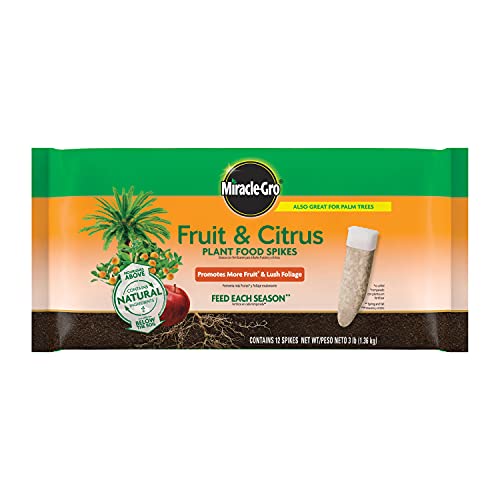
This fertilizer spike option focuses on fruiting and citrus trees, promoting more abundant fruit and lush foliage. The formulation includes natural ingredients and is fed seasonally—Spring and Fall—to align with typical fruiting cycles. Spikes provide a convenient, low-effort feeding method that targets root zones, supporting sustained nutrient availability during critical growth and production phases.
Buying Guide
Key considerations when selecting fertilizer stakes for trees include nutrient composition, release pattern, and tree compatibility. Below are essential factors to compare and how they influence long-term outcomes.
- NPK formulation: Look for balanced mixes such as 15-3-3 or 12-3-3, which provide nitrogen for lush growth and phosphorus/potassium for root and fruit development. For evergreen species, slightly higher nitrogen helps new growth without overloading the root zone.
- Release pattern: Slow-release spikes deliver nutrients gradually, reducing leaching and burn risk. Confirm whether the product is designed for biannual or seasonal feeding to match your tree’s growth cycle.
- Root-zone targeting: Spikes are intended to feed roots directly. Ensure placement guidelines align with your tree’s root spread and trunk size to optimize uptake.
- Tree type compatibility: Some formulas are optimized for acid-loving trees, fruiting varieties, or evergreens. Choose a formula that matches your specific species for best results.
- Environmental impact: Pre-measured spikes reduce the chance of overfeeding and nutrient runoff, supporting watershed protection and soil health.
- Ease of use and maintenance: Consider the number of spikes per tree and the recommended application frequency. Simpler, lower-maintenance options suit busy landscapes.
- Safety and storage: Follow label directions to avoid fertilizer burn and store spikes away from children and pets.
In selecting the right option, weigh your landscape goals—whether you want more fruit, richer foliage, or faster recovery after transplanting—against the specific needs of your tree species. For mixed landscapes with both evergreens and deciduous trees, a versatile spike with a balanced NPK ratio and straightforward application is typically most practical. Always inspect the soil condition and moisture before application to optimize nutrient uptake.