Choosing an eco friendly stain for garden beds helps protect wood, extend lifespans, and keep soil and plants safe. This guide highlights plant-based, non-toxic options suitable for raised beds, planters, and outdoor garden furniture. Each product here emphasizes low toxicity, safety for food-contact surfaces, and durable protection against sun and water. The selections focus on plant-based formulations, natural oils, and biodegradable binders designed to minimize chemical leach into soil while delivering lasting results for American gardens.
Summary Of Chosen Products
- Garden Box Sealer by Seal It Green — Plant-based, FDA food-contact safe, deep-penetrating protection for cedar and all woods used in raised beds and planters.
- Garden Box Sealer (Second Variant) — Similar plant-based formula for durable wood protection in garden environments.
- 32oz Garden Box Sealer — Large-volume, food-safe wood sealer with plant-based ingredients for outdoor wood protection.
- Vermont Natural Coatings PolyWhey Exterior Penetrating Stain — Whey-based, biobased penetrating stain providing UV and moisture protection.
- COLORBACK Black Dye — Eco-friendly mulch dye for restoring color and protecting landscape mulch and garden beds.
Garden Box Sealer For Raised Beds And Planters

This Garden Box Sealer is designed for cedar and all wood types used in raised bed gardens, planters, and even pet housing. It features a deep-penetrating blend of natural oils that bonds with wood fibers to provide protection for a decade or more. The formula is non-toxic and FDA food-contact Safe, making it suitable for garden applications where contact with soil and produce is possible. It uses plant-based ingredients without toxic chemicals that could leach into soil, accompanied by a natural citrus scent. The label warns against acrylics and silane/siloxane/silicone-based sealers in vegetable gardens, guiding users toward 100% plant-based options. It is described as plant-safe with ingredients you can understand and even notes suitability for pet projects like chicken coops or dog houses.
Key considerations: Plant-based, non-toxic, FDA safe, long-lasting, and citrus aroma. Ideal for cedar and other garden woods. Provides guidance against petrochemical sealants that can harm soil and plants.
Who benefits: Home gardeners seeking a safe, durable wood sealant that minimizes chemical exposure to vegetables, soil, and pets. Also suitable for decorative outdoor wood projects around gardens.
Garden Box Sealer Second Variant For Raised Beds

This second listing mirrors the same garden-friendly, plant-based approach focused on deep penetration and wood fiber bonding to protect garden beds for years. The product emphasizes FDA food contact-safe ingredients with no toxic leachables, reassuring gardeners about soil and produce safety. It repeats the warning against acrylics and solvent-based sealers in vegetable gardens, reinforcing the preference for plant-based options. The formula’s plant-safety claim extends to pets and households, making it a versatile choice for multi-use garden spaces.
Key considerations: Consistency with plant-based, non-toxic formulation; suitability for raised beds; emphasis on safety around food crops and pets.
Seal It Green Cedar Garden Box Sealer
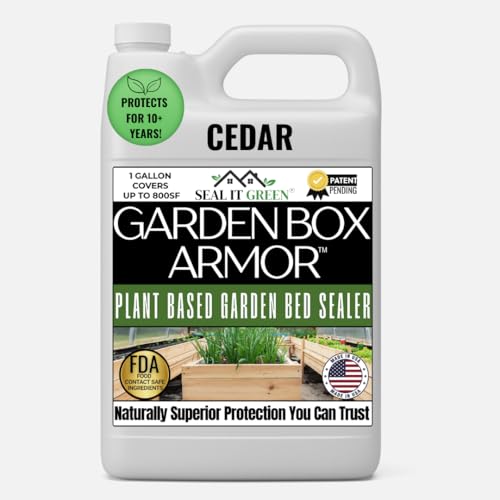
This cedar-focused garden box sealer from Seal It Green is a plant-based, non-toxic solution designed to protect raised-bed wood without leaching harmful chemicals. It offers deep penetration of natural oils to bond with wood fibers, delivering long-lasting protection—up to a decade in typical conditions. It is explicitly FDA food contact safe and free from toxic ingredients, which is important for garden beds that touch soil, vegetables, and herbs. It’s also marketed as suitable for pet projects, suggesting broad safety in outdoor settings.
Key considerations: Emphasis on cedar and wood types used in garden beds; long-lasting, non-toxic protection; pet and plant safety; clarity on ingredients and avoidance of petrochemical-based sealers.
Vermont Natural Coatings PolyWhey Exterior Stain — Garden Green

PolyWhey Exterior Penetrating Stain uses whey protein as a co-binder to deliver a biobased, non-toxic wood stain for exterior use. It penetrates deeply to provide a durable moisture barrier and UV protection, helping reduce wood rot and decay. The product emphasizes renewable resources and safer finishes for household use. While marketed as a stain rather than a sealer, its penetrating properties make it suitable for garden structures where natural color and protection are desired without harsh chemicals.
Key considerations: Biobased, whey protein binder, non-toxic, UV protection, and moisture resistance. Suitable for garden beds, trellises, and exterior wood surfaces where color and protection are desired without harmful solvents.
COLORBACK Black Dye For Mulch And Garden Beds

ColorBack Black Dye is designed to revitalize faded mulch with a deep, rich color while providing durable coverage. It treats large areas efficiently—one quart covers substantial square footage. The formula emphasizes eco-friendly binding agents that help the color adhere to mulch through rain, wind, and sun, preserving ground cover aesthetics with less maintenance. This product is positioned as an environmentally conscious option for garden beds, bark mulch, and similar garden surfaces that benefit from a refreshed appearance.
Key considerations: High coverage, long-lasting color through eco-friendly binders, usable for mulch restoration and decorative garden beds. Consider color choice and compatibility with existing mulch to avoid staining unintended surfaces.
COLORBACK Black Mulch Dye For Large Areas

This colorant offers a larger scale option for black mulch restoration, with a half-gallon size suitable for extensive landscaping projects. It emphasizes rapid, pigment-rich results that resist fading from weather. The dye is designed to stay adhered to mulch surfaces, providing a refreshed appearance while helping to maintain a uniform landscape color. As with COLORBACK products, it is positioned as an eco-friendly choice suitable for garden beds and surrounding plantings.
Key considerations: Large-area coverage, durable color retention, and eco-friendly composition. Best for large garden beds, parks, and professional landscape projects seeking consistent mulch color.
PETRA Brown Mulch Dye For Landscaping

Petra Brown Mulch Dye offers a deepest chocolate brown color with a focus on a professional, country club-quality landscape appearance. It uses a patented polymer binding technology to enhance adhesion and longevity, ensuring color remains vivid against weather exposure. The dye is marketed for mulch, garden beds, and wood mulch contexts, making it a versatile option for those looking to refresh and protect ground coverings while maintaining a natural look.
Key considerations: Deep color, long-lasting adhesion, and professional-grade aesthetics. Assess the color level and compatibility with existing mulch and landscape materials.
Buying Guide: Eco Friendly Stains And Garden Bed Protection
- Safety first: Prioritize plant-based, non-toxic formulations that are FDA food contact safe when used near edible crops. Look for explicit ingredient lists and certifications indicating no harmful solvents or petrochemicals.
- Penetration vs. film: Deep-penetrating oils and bio-based binders protect wood from within, reducing surface cracking and warping. Sealers that form an outer film may offer strong water resistance but could trap moisture if not breathable.
- Intended use: Choose products designed for raised beds, planters, cedar, and other garden wood commonly exposed to sun, rain, and soil moisture. Some products are safer for pet enclosures and children’s spaces.
- Durability and maintenance: Evaluate how long protection lasts under local climate conditions and how often reapplication is required. Longer intervals reduce maintenance but ensure safety and performance.
- Color vs. clarity: Decide whether you want a natural wood look, color-enhanced appearance, or mulch restoration. Some dyes and stains alter color significantly, while clear sealers preserve wood’s natural tone.
- Application and cleanup: Consider easy application methods, dry times, and cleanup requirements. Plant-based options typically require minimal ventilation and safer cleanup with soap and water.
- Environmental impact: Favor products with renewable, plant-based ingredients and those that avoid toxins known to leach into soil and groundwater. A lower ecological footprint supports sustainable gardening.
- Usage around food crops: For raised beds growing vegetables and herbs, emphasize FDA safety and non-toxic formulations to minimize risk of exposure.
These selections illustrate a range of eco friendly wood treatments and mulch dyes that align with garden safety, wood protection, and low environmental impact. When selecting an option, balance durability, safety, color preferences, and application needs to best support healthy garden soil and flourishing plant life.