Choosing the right selective herbicide to suppress grasses while protecting desirable lawn or crop plants requires understanding how products target weeds and how they interact with your soil and grass type. This guide reviews five Amazon-listed options suitable for American lawns, turf, and food plots, emphasizing selectivity, application timing, and practical use cases. Each product section includes a quick overview, what it targets, and how users can expect results. A concise buying guide at the end helps compare features, safety considerations, and performance expectations.
| Product | Target Area | Type | Notes |
|---|---|---|---|
| Ortho WeedClear Lawn Weed Killer | Lawns | Selective | Kills broadleaf weeds; safe for common grasses when used as directed |
| Atticus Torocity Herbicide | Lawns & turf | Selective | Broad-spectrum weed control; pre- and post-emerge activity |
| Spectracide 1 gal Grass & Weed Killer | Lawns & beds | Non-selective to some extent | Kills grasses and broadleaf weeds; fast results |
| Whitetail Institute Arrest Max | Deer food plots | Selective | Targets a broad range of grasses in plots |
| Ike’s X-Out Weed and Grass Killer | Weed control on various surfaces | Non-selective | Kills grass and weeds on contact; high coverage |
Ortho WeedClear Lawn Weed Killer Ready-To-Spray

Ortho WeedClear Lawn Weed Killer Ready-To-Spray targets common lawn weeds such as dandelion, chickweed, clover, crabgrass, and foxtail. The product is designed to be used on established turf grasses and is described as fast-acting, delivering visible results with a single application. It is important to apply as directed to ensure grasses are protected while broadleaf and certain grassy weeds are controlled. Suitable for Bermudagrass, Buffalagrass, Fescues, Kentucky bluegrass, Ryegrass, and Zoysiagrass when used according to label directions.
Atticus Torocity Herbicide (8oz)
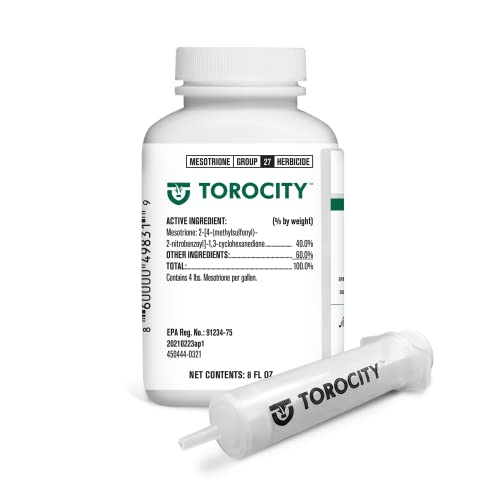
Torocity from Atticus provides selective broadleaf weed control with a 40% mesotrione formulation, the same active ingredient as the leading brand Tenacity. It offers timing flexibility with pre- and post-emerge activity, broad-spectrum weed control including crabgrass, ground ivy, clover, oxalis, and dandelion, and is designed for use on both newly seeded areas and established turf. The product expands the window for weed management, helping prevent new weeds while attacking existing growth.
Spectracide 1 Gal Ready-To-Use Grass & Weed Killer

Spectracide’s Ready-To-Use Grass & Weed Killer comes in a convenient 1-gallon jug with an AccuShot sprayer. The AccuShot is battery-powered and continuous, reducing pumping effort. Visible results can appear in as little as three hours, making it suitable for quick spot treatments in lawns and garden beds. While marketed for both grass and weed control, users should follow the label to avoid unintended damage to desirable grass species and to ensure safe application around ornamentals and garden areas.
Whitetail Institute Arrest Max Selective Grass Control
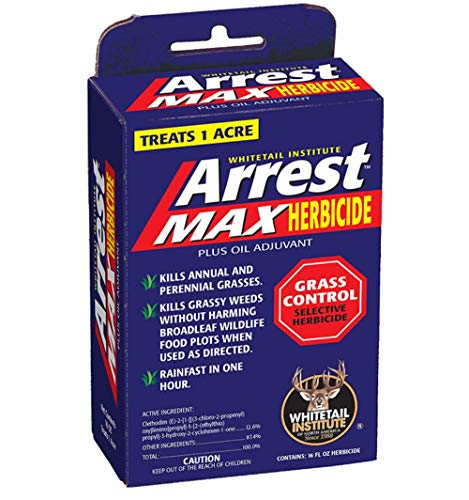
Arrest Max is purpose-built for deer food plots, targeting a broad range of grasses while remaining compatible with various forage plantings such as clover and alfalfa. This selective grass control product provides a practical option for land managers who need to reduce grass competition without harming beneficial forages. It supports weed management in plots designed for wildlife, with attention to timing and crop rotations to protect forage quality.
Ike’s X-Out Non-Selective Herbicide

X-Out from Ike’s provides broad, non-selective weed and grass killing action on contact. It covers a wide range of emerged annual and perennial weeds and grasses, delivering high coverage with the capability to treat large areas. This product is more suitable for areas where grass clearance is intended rather than preserving existing turf. It is important to manage drift and replanting windows as directed by the label.
Buying Guide: Key Considerations For Selecting A Grass-Targeted Herbicide
- Weed type and turf compatibility: Identify whether you’re targeting broadleaf weeds, grassy weeds, or both. Ensure the product label specifies compatibility with your grass type and any neighboring ornamentals or edibles.
- Selective versus non-selective: Selective herbicides kill specific weeds while sparing the grass, ideal for established lawns. Non-selective products kill a broad range of plants and may be necessary for spots or plots where vegetation is unwanted.
- Application timing: Some products work best pre-emergence, others post-emergence. Consider the weed life cycle and upcoming seeding or replanting windows to avoid damaging desired grasses or crops.
- Safety and replanting intervals: Check wait times before re-seeding or planting new turf or crops. Some products require a waiting period to avoid residual damage to new growth.
- Coverage and concentration: Larger areas benefit from concentrate formulas or products with higher coverage per bottle. Verify label directions for dilution and spray equipment compatibility.
- Environmental and usage considerations: Be mindful of runoff, nearby water sources, and non-target species. Follow label directions for pet, child, and pollinator safety where applicable.
- Plot or lawn goals: For food plots, products designed for selective grass control without harming forage plants may be preferred. For lawns, selectivity that protects your turf is crucial.
When selecting a grass-control product, always consult the label for specific usage instructions, including irrigation, mowing, and replanting guidelines. Combining a selective herbicide with proper mowing practices, soil health, and timely weed management typically yields the best long-term results for both lawns and plots.