Choosing the right irrigation pump can improve water delivery efficiency, protect crops, and reduce labor on the farm. This guide highlights five dependable irrigation and farming pumps from top brands, with key specs and practical considerations for field and home use. Each product section links to Amazon for quick access to product details and availability, while the buying guide helps compare performance, cost, and installation needs.
Quick Reference Table
| Product | Brand | Power/Voltage | Max Flow | Head (Max] |
|---|---|---|---|---|
| VEVOR Deep Well Submersible Pump, 1HP 230V | VEVOR | 230V | 37 GPM | 207 ft |
| VEVOR Deep Well Submersible Pump, 1HP 115V | VEVOR | 115V | 37 GPM | 207 ft |
| VEVOR Gasoline Powered Trash Pump | VEVOR | Gasoline engine | 265 GPM | 142 ft |
| 4-Stroke Diesel Engine Water Pump | Oiveinya | Diesel engine | 40 m³/h | 85.3 ft |
| IMOR 12V Diaphragm Water Pump | IMOR | 12V | 3 GPM | 115 ft |
VEVOR Deep Well Submersible Pump, 1HP 230V

The VEVOR 1HP 230V deep well submersible pump is built for demanding irrigation and home use. Its 4″ stainless steel body and 6-stage thermoplastic impellers deliver up to 37 GPM with a maximum head of 207 ft. A 33 ft cord supports installations without immediate power access, and the IP68 waterproof rating provides longevity in wet well environments. A copper motor and precision rotor support durable operation with built‑in overheat protection to guard against dry running. Note the unit requires water for proper operation.
Key features include a 1HP, 230V power rating, 1-1/4″ NPT discharge, and corrosion-resistant stainless steel construction. The combination of robust head height and steady flow makes it suitable for medium to deep wells and irrigation setups where elevated water delivery and reliability matter.
VEVOR Deep Well Submersible Pump, 1HP 115V

This model mirrors the 230V version in design and capability but runs on 115V, broadening compatibility with common household or farm electrical setups. It employs 6-stage thermoplastic impellers to achieve up to 37 GPM and a 207 ft head, with a 33 ft cord and stainless steel construction. The IP68 rating ensures durability in submerged conditions. The copper motor delivers reliable performance with automatic overheat protection to prevent damage in abnormal situations. Remember to avoid dry running.
Considerations for this variant include the lower voltage compatibility with standard pumps and the same robust head and flow profile, making it a strong choice for smaller wells or farms with standard 120V circuits.
VEVOR Gasoline Powered Trash Pump

The VEVOR gasoline-powered trash pump is designed for heavy-duty water transfer tasks, including irrigation drainage and cleanup. A 7HP 4-stroke OHV engine drives a 3-inch inlet/outlet pump capable of up to 265 GPM, with a maximum lift of 142 ft. The aluminum alloy pump body and cast iron impeller are built to handle sediments up to roughly 1/3 inch, reducing clogs in field conditions. It requires water at startup to properly submerge the impeller and avoid dry running, and uses a compact 22 ft suction hose for flexible setup.
Key considerations include fuel handling, noise level, and regular maintenance of the carbureted gasoline engine. It is well-suited for irrigation drainage, flood cleanup, and temporary pumping tasks where electric power is unavailable or impractical.
4-Stroke Diesel Engine Water Pump (Oiveinya)

This diesel-powered water pump from Oiveinya provides a compact, durable solution for agricultural irrigation and other water transfer needs. It uses a 2.3KW (196cc) engine to deliver up to 40 m³/h, with a suction height of 22.97 ft and a total lift of 85.3 ft. The aluminum construction resists corrosion and wear, helping it withstand harsh field conditions. A 2-hour runtime is supported by a 1.06-gallon fuel tank, and a 24.61 ft discharge hose reduces setup costs. The unit includes heat dissipation features to minimize overheating risk.
Consider diesel vs. electric options for off-grid or remote irrigation duties. This pump prioritizes robust flow for larger area coverage and tough pumping tasks where power reliability is a concern.
IMOR 12V Diaphragm Water Pump
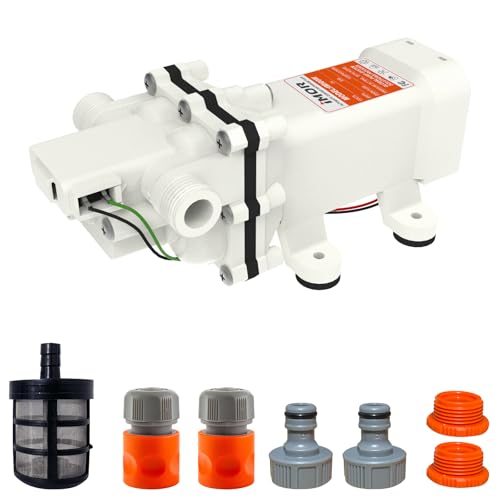
The IMOR 12V diaphragm pump is designed for compact water transfer and boosting in irrigation systems, RVs, marine setups, and light industrial tasks. It offers 3 GPM at up to 65 PSI, with self-priming capability up to 10 ft and a maximum vertical head of 115 ft. The pump supports dry running for short periods and includes a hose connector and strainer for versatile mounting. Its 12V operation makes it a practical choice for portable irrigation or off-grid scenarios, where a small, reliable flow is needed.
Buying Guide: Key Purchase Considerations
- Purpose and water source: Deep-well submersible pumps excel for bore wells, while surface pumps suit ponds, tanks, and shallow wells. For drainage or flooded fields, trash pumps handle solids more effectively.
- Power availability: Electric models (230V or 115V) require power proximity, while gasoline and diesel engines enable off-grid operation but require fuel management and maintenance.
- Flow rate and head: Match max flow (GPM) and head (ft) to your field area, column height, and total lift. Higher heads support deeper wells, but ensure your pump can sustain the flow without excessive cycling.
- Durability and material: Stainless steel bodies and IP68 ratings enhance longevity in wet environments, while copper motors support stable performance over time.
- Priming and safety: Self-priming features save time; overheat protection and dry-run safeguards protect the motor. Check for auto-shutoff features to prevent damage.
- Maintenance and serviceability: Access to spare parts, seals, and impellers, plus the ease of cleaning debris, impacts long-term reliability in irrigation settings.
- Portability vs. capability: Gas or diesel pumps offer mobility and raw power but require fuel logistics. Electric models tend to be quieter and easier to run in regulated facilities.
- Installability: Ensure hose sizes (1-1/4″ discharge here) and power cords fit your existing irrigation system and electrical setup.
Overall, selecting the right pump hinges on water source characteristics, power access, and the scale of irrigation tasks. The options above cover deep-well, shallow-well, portable drainage, and compact diaphragm applications to support diverse farming needs.