Introduction: Drip line irrigation kits offer a precise, water-efficient way to water flowers, vegetables, shrubs, and landscapes. This article reviews five top kits, highlighting what each provides, installation ease, and suitability for different garden sizes. Use the buying guide below to compare main features such as tubing length, emitter options, pressure tolerance, and expandability.
| Product | Key Benefit | Ideal For |
|---|---|---|
| 108-piece kit with drippers, micro-bubblers, and sprays | Flower beds, gardens, landscaped areas | |
| Complete premium system with adjustable emitters and dual tubing | Raised beds, lawns, greenhouses | |
| 200+ universal parts with 100′ self-dispensing tubing | Expansion, repairs, on-the-go setups | |
| Long mainline and quick-connect tubing with adjustable nozzles | Gardens, greenhouses, lawns | |
| Up to 80% water savings with 240 ft layout options | Large areas, multiple zones |
Rain Bird LNDDRIPKIT Drip Irrigation Landscape Kit
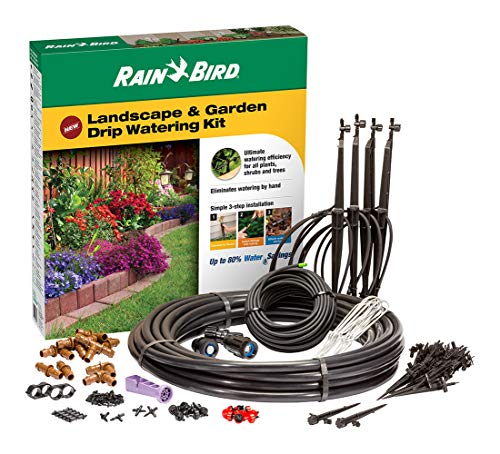
The Rain Bird LNDDRIPKIT is a comprehensive 108-piece drip irrigation kit designed for flower beds, gardens, and landscaped areas. It combines drippers, micro-bubblers, and micro-sprays to deliver water efficiently where plants need it most. Installation emphasizes a simple three-step process: connect to a faucet, insert fittings into tubing, and attach watering devices. The kit targets up to 80% water savings and is designed to reduce hand watering and time spent on garden maintenance.
CARPATHEN Drip Irrigation System Kit

The CARPATHEN kit is a complete premium watering system for raised beds, lawns, pots, and greenhouses. It includes 5/16″ and 1/4″ tubing, multiple drip emitters (both vortex and spray types), and a robust connector set. It supports up to 30 emitters in practical setups, with guidance on PSI ranges (20–45 PSI) and a maximum output per emitter. The design emphasizes flexibility, long-term durability, and a user-friendly assembly that helps gardeners optimize irrigation without frequent maintenance.
Rain Bird DRIPKITBAG Drip Irrigation Repair Kit

The Rain Bird DRIPKITBAG provides a portable, organized repair and expansion solution, featuring 102 professional-grade universal drip components and a 100′ self-dispensing 1/4″ distribution tubing. Inside, individual bags hold commonly needed parts such as emitters, connectors, plugs, couplings, and stakes. This kit is ideal for maintaining existing systems or expanding a layout as plantings evolve, with easy access to the parts that typically wear or clog over time.
MIXC 230FT Quick-Connect Drip Irrigation System Kit

MIXC’s kit provides a comprehensive drip system with 197 feet of 1/4″ tubing and 33 feet of 1/2″ tubing, plus a variety of emitters, misting nozzles, quick-connection tees, and faucet adapters. A standout feature is Quick Connector technology, which simplifies installation and reduces leaks. The setup supports up to 32 emitters and offers a straightforward, plug-and-play approach to delivering even irrigation across garden zones, making it suitable for mid-sized gardens and greenhouses.
Maotong 240FT Drip Irrigation System Kit
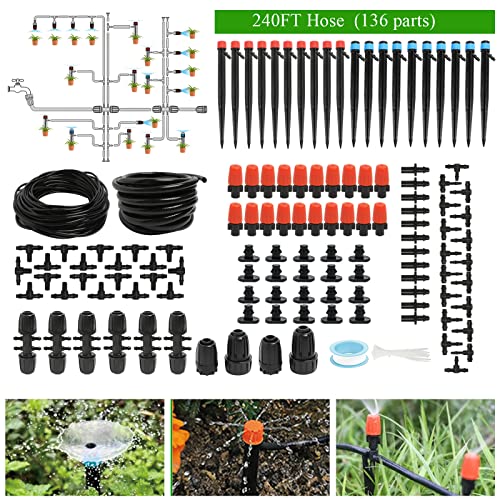
The Maotong kit offers 240 feet of tubing and up to 80% water savings, designed to cover large areas or multiple zones. It includes 40 feet of main 1/2″ tubing and 200 feet of 1/4″ distribution tubing, along with 136 components to build two smaller systems or one long run. The system supports high water pressure and aims to minimize clogging through detachable, easy-to-clean emitter heads. This kit targets homeowners expanding irrigation across sizable landscapes or agricultural plots.
Buying Guide: Key Considerations For Drip Line Kits
- Coverage and layout: Assess your garden size, plant spacing, and whether you need a single mainline with branches or multiple independent zones. Kits with longer mainlines and more distribution tubing offer greater flexibility for larger spaces.
- Emitter types and adjustability: Look for a mix of emitters (drippers, micro-sprays, cloud/mist nozzles) and adjustable options to tailor watering to different plant types and soil conditions.
- Pressure compatibility: Check the PSI range the kit supports. Most residential systems operate efficiently between 20 and 45 PSI; ensure your water source aligns with this range.
- Expandability and compatibility: Consider future growth or reconfiguration. A modular kit with extra fittings and connectors makes expansions easier without starting over.
- Maintenance features: Detachable emitter heads, easy-to-clean components, and spare parts accessibility reduce downtime and clog-related issues.
- Installation effort: Quick-connect tubing and clear instructions shorten setup time. Some kits promise 10 minutes to operation, while others may require more planning for complex layouts.
- Durability and materials: UV-resistant tubing, corrosion-resistant fittings, and robust stakes help ensure long-term performance in outdoor conditions.
- Accessories: A repair or expansion kit can be valuable for ongoing maintenance and adapting to seasonal changes in planting schemes.
For Different Garden Scenarios
Small container gardens or raised beds benefit from compact kits with adjustable drippers and easy-to-route tubing. For larger landscapes with varied plantings, choose kits that offer longer mainlines and more emitter options to create multiple watering zones. Greenhouses may require misting or high-flow emitters, so kits with flexible tubing lengths and a broad part assortment tend to perform best in controlled environments. Regardless of size, prioritize kits that clearly outline PSI requirements and provide reliable hardware for quick repairs.
Installation Tips And Best Practices
- Plan zones first: Map plant groups by water needs and design tubing paths to minimize pressure loss.
- Test before burying: Run the system with water on and check for leaks at joints and fittings.
- Label lines: Keep track of each zone to simplify future adjustments and repairs.
- Use a timer: Pair the system with a timer to automate watering, reduce waste, and ensure consistency.
- Seasonal adjustments: Re-check emitter coverage and flow rates as plants mature or when seasons change.