Protecting gardens, yards, and outdoor furniture from curious or nearby cats can be challenging. The right deterrent strategy combines humane methods with practical placement. This article reviews five effective cat deterrent products designed to keep cats away from fences, gardens, and entry points without harming them. Each option emphasizes ease of use, durability, and pet safety while covering indoor and outdoor needs.
The following table highlights the selected products, summarizing what each option offers for quick comparison. This helps you match a deterrent to your fence layout, climate, and how you prefer to deter cats from your property.
| Product | Brand | Main Use | Key Benefit |
|---|---|---|---|
| Yiteshi 10 Packs Scat Mat for Cats | YITESHI | Indoor/Outdoor, Fence and furniture | Self-adhesive, lightweight PET spikes with flexible sizing |
| Ley’s 12 Pack Cat Deterrent Mat | Ley’s | Garden beds, plants, furniture | Chemical-free, bendable plastic mats |
| Patorop Cat Repellent Balls | Patorop | Indoor/outdoor barriers, yards, lawns, patios | Natural essential oil formulation, long-lasting scent |
| Aqjbh Solar Ultrasonic Animal Repellent | Aqjbh | Garden perimeter, larger outdoor spaces | Solar powered, multi-mode ultrasonic deterrent with motion sensor |
| OCEANPAX Scat Mat With Spikes | OCEANPAX | Outdoor walkways, decks, fences | Biobased materials, weather resistant and durable |
Yiteshi 10 Packs Scat Mat for Cats
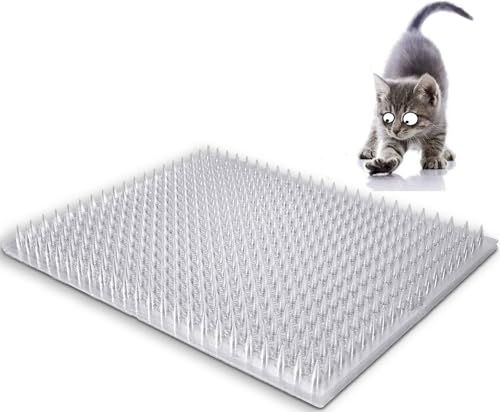
The Yiteshi scat mat is designed for flexible indoor and outdoor use. Made from high-density PET material, each mat measures 13 by 16 inches and can be cut to fit irregular spaces around fences, garden beds, or furniture legs. The spikes provide a clear deterrent without harming cats. This mat is suitable for installation around doors, balconies, and other entry points where cats may intrude. Users can tailor the size to cover specific zones, making it a versatile option for patchwork fencing or balcony rails.
Key features include easy customization, a humane approach to deterring cats, and broad applicability around homes. The lightweight construction simplifies placement, and cuts can be made without specialized tools. When used on fences or along perimeter edges, the mat can reduce cat traffic to sensitive areas. While the spikes are sharp to deter, they are designed to be non-lethal and safe for wildlife with careful installation and maintenance.
Ley’s 12 Pack Cat Deterrent Mat

Ley’s scat mat offers a lightweight, bendable plastic solution to keep cats away from specific areas like yards, pots, and furniture. The mats are designed to be placed near plants and garden borders, or around windows and counters where cats tend to scratch or dig. The approach relies on discomfort rather than harm, encouraging cats to seek quieter routes. The mat’s pliable material supports cutting or bending to fit irregular shapes and outdoor contours, making it adaptable for varied fence layouts or trellises.
Safety and usability are emphasized with a simple, chemical-free design. The lack of toxins makes it suitable for homes with children and other pets. As outdoor use can involve weather exposure, the plastic construction is chosen for resilience against UV light and temperature changes. Regular repositioning can maximize effectiveness and prevent cats from becoming accustomed to specific placements.
Patorop Cat Repellent Outdoor & Indoor

Patorop offers a natural, essential-oil-based cat deterrent in the form of ball dispensers. Formulated with grapefruit and peppermint essential oils, plus linalool, these balls release a scent unattractive to cats while remaining safe for humans, plants, and pets. The product is designed for indoor and outdoor use, making it versatile for patios, gardens, and sunlit borders adjacent to fences. The scent tends to last for 30–60 days per application, depending on weather conditions, ensuring extended protection with less frequent maintenance.
The plant-based formula aligns with eco-conscious households and avoids harsh chemicals. For fenced yards, distributing balls at intervals along the perimeter can create a scent barrier that discourages cats from approaching restricted zones. The aroma is generally more noticeable to felines than humans, so regular checks help maintain deterrent strength without overwhelming the space with fragrance.
Aqjbh Solar Ultrasonic Animal Repellent

This solar-powered deterrent features multiple working modes and a PIR motion sensor to target a range of animals, including cats, squirrels, and raccoons. The device operates without wires and uses ultrasonic waves to create an uncomfortable yet humane barrier. It includes adjustable detection ranges from 10 to 26 feet and frequency controls to tailor deterrence to specific animals. A flashing LED provides additional visibility and deterrence during nighttime hours.
Durability is a focus with IP65-rated weatherproof construction, designed to withstand rain, snow, and sun. The solar panel ensures steady operation in sunny climates and reduces energy needs. Placing the unit along fence lines or garden borders can create a perimeter-wide deterrent that discourages cats from entering restricted zones and protects garden beds and outdoor furniture.
OCEANPAX Scat Mat With Spikes

The OCEANPAX scat mat emphasizes eco-friendly design with 40% plant-derived materials. This all-terrain deterrent uses soft, rounded spikes to prevent cats from jumping onto protected surfaces, such as decks, fences, and car hoods. The mat is UV-resistant and designed to tolerate varying weather conditions, offering a longer lifespan in outdoor settings. Its flexible construction and larger dimensions make it suitable for wider fence sections or perimeter paths that cats may contest.
With a focus on safe, non-electrified deterrence, this mat avoids shocks or harsh stimuli. The biobased composition appeals to environmentally aware households seeking durability and long-term use. Regularly inspecting the mat for wear helps maintain deterrence and prevents gaps where cats could slip through or around the mat.
Buying Guide: Key Considerations For Choosing A Fence Cat Deterrent
- Scope and layout: Assess fence length, garden borders, and problem zones. Choose products that can be cut or extended to fit irregular spaces and corners.
- Deterrent type: Decide between physical barriers (spikes and mats), scent-based repellents, and ultrasonic devices. Combining methods often yields deeper effectiveness, especially across different seasons.
- Safety and pet-friendliness: Prioritize non-harmful options that deter rather than injure. Verify materials are pet-safe and chemical-free where possible, especially in homes with children or other pets.
- Weather and durability: Outdoor deterrents should resist UV exposure, rain, and temperature changes. Materials like UV-stable plastics, plant-based components, and weatherproof housings are desirable.
- Maintenance and longevity: Consider how long products last between replacements or reapplications. Scent-based options require re-application, while spikes and mats may need occasional cleaning and repositioning.
- Ease of installation: Look for lightweight, easy-to-cut mats and clearly labeled installation guidelines. Products that require minimal tools save time and reduce hassle.
- Environmental impact: Preference for eco-friendly materials and sustainable manufacturing processes can influence long-term choices, especially for larger properties.
- Perimeter strategy: For larger yards, combining deterrents (physical mats along fences with a motion-activated ultrasonic device at gates) can address multiple pathways and entry points.
- Reactivity to cat behavior: Some cats quickly adjust to a single deterrent. Rotating between products or repositioning barriers can maintain effectiveness over time.
- Cost of ownership: Weigh upfront costs against ongoing maintenance. Cheaper mats may require more frequent repositioning, while ultrasonic devices incur battery or solar maintenance costs but cover broader areas.
In practice, a layered approach often works best. Position scat mats along fence lines and near plant beds, supplement with scent-based balls or essential-oil repellents in border areas, and consider a solar ultrasonic device at entry points or gates. Regularly rotate placements to prevent cats from finding predictable routes, and always verify that any deterrent respects local wildlife guidelines and neighborhood regulations.
By understanding the strengths of each product—ease of use, durability, scent efficacy, and humane deterrence—you can design a fence solution that reduces cat activity in critical zones while preserving a safe, welcoming outdoor space for your family and pets.