In the world of farming and heavy-duty gardening, a reliable 3 point tiller can transform hard, clay-heavy soil into a workable garden bed. This guide highlights five high-quality 3 point tillers designed for CAT I tractors, emphasizing durability, depth control, and ease of use. Each option below is evaluated for compatibility with common small-to-mid size tractors, PTO-driven gear boxes, and practical features like slip clutch protections and adjustable offset options. Use this overview to compare performance and value for better soil prep results.
Summary Table of Selected Products
- Farmer-Helper 37″ Adjustable Offset 3pt Rotary Tiller FH-TL95
- Sigma Heavy Duty 3 Point Hitch Rotary Tiller 5′ FT 60″
- Sigma Heavy Duty 3 Point Hitch Rotary Tiller 4′ FT 48″
- King Kutter Gear-Driven Rotary Tiller – 5ft TG-60-Y
- Heavy-Duty 41-lb 3-Point Rotary Tiller Slip Clutch PTO Shaft
Farmer-Helper 37″ Adjustable Offset Tiller FH-TL95

The Farmer-Helper FH-TL95 is a CAT I 3-point rotary tiller built for tractors in the 16+ hp range, featuring an adjustable right-side offset. This design helps ensure you cover the right tire track consistently during tilling. A slip clutch drive line provides protection for both the tiller and tractor, and an over-running clutch gearbox prevents the tiller from pushing the tractor during operation. The 37-inch working width offers balanced soil engagement with manageable cut depth in varied soils. This model is noted for ease of adjustability and agricultural reliability.
Sigma Heavy Duty 3 Point Rotary Tiller 5′ FT 60″
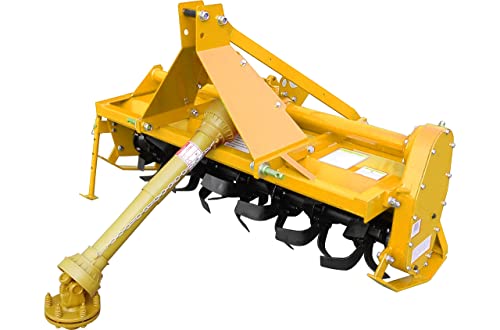
Engineered for durability, this Sigma tiler (5′ width, 60″ working width) includes a PTO shaft and a heavy-duty cast-iron gearbox. It’s designed for CAT I tractors in the 24-45 hp range, offering a maximum theoretical depth of cut around 6 inches under optimal conditions. The unit’s skid plate aids debris clearance and reduces resistance, though actual depth depends on blade configuration and soil. The model is well-suited for larger garden plots and farms where richer soil turnover is needed.
Sigma Heavy Duty 3 Point Rotary Tiller 4′ FT 48″

This Sigma 4′ tiller is a practical choice for CAT I hitches with tractors in the 20-35 hp range. It includes a PTO shaft and a heavy-duty cast-iron gearbox, with a working width of 48 inches and a maximum depth around 6 inches under ideal conditions. As with similar rotary tillers, soil depth is influenced by blade design and field conditions. The skid plate helps reduce resistance and debris buildup while not directly controlling depth. This size is a good fit for smaller farms or hobby plots needing quicker field turnover.
King Kutter Gear-Driven Rotary Tiller – 5ft TG-60-Y

King Kutter’s TG-60-Y is a 5-foot gear-driven rotary tiller with a heavy-duty cast iron gearbox and adjustable skid depth controls. The rear shield helps manage soil mixing and protect the work area. This unit is designed for reliability and straightforward maintenance, with the gearbox pre-greased to simplify lubrication routines. It suits larger plots and farms where a wider tilling pass is desired for fewer passes and greater efficiency.
Heavy-Duty 41-lb 3-Point Rotary Tiller Slip Clutch PTO Shaft

This heavy-duty option emphasizes slip clutch protection and a robust PTO shaft. With a stated weight class of 41 pounds, this tiller is built to provide consistent performance across a range of soils. The design supports CAT I tractors and is marketed as compatible with Sigma-brand tillers, focusing on reliable engagement and efficient power transfer between tractor and implement. Depth and coverage depend on working conditions and blade setup, as with other rotary tillers.
Buying Guide
Key purchase considerations ensure you pick a tiller that matches your tractor, soil, and field size. Evaluate the following perspectives:
- Tractor compatibility: Confirm CAT I compatibility and the minimum horsepower range recommended by each tiller. Ensure the three-point hitch, PTO shaft, and quick-hitch compatibility align with your tractor model.
- Working width and depth: Choose a tiller width that complements your field size. Wider tillers reduce passes but can be harder to maneuver. Consider depth controls and whether there is a skid plate for resistance reduction.
- Drive system and protection: Slip clutch or slip-over running clutch features protect both the implement and tractor. An over-running clutch reduces back-torque when stopping the PTO. A robust gearbox (cast iron preferred) supports long-term durability.
- Offset and track coverage: Some models offer adjustable offset to protect tire tracks and increase soil coverage efficiency. This is valuable for tractors with wide tires or to prevent overlapping passes.
- Maintenance and parts availability: Look for widely supported brands with replaceable blades, skids, and gearboxes. Availability of spare parts reduces downtime during busy seasons.
- Soil conditions: Heavier, clay soils may require deeper tilling and stronger gearboxes, while sandy soils may need shallower depths. The skid plate and blade configuration influence performance in varied soils.
- Maintenance routine: Regular grease points, gearbox lubrication, and belt/pulley checks extend life. Some units come pre-greased; verify service requirements and torque specs for PTO.
- Cost vs. value: Compare initial price against build quality, warranty terms, and long-term maintenance costs. Heavier gearboxes and longer working widths often deliver greater value over time.
- Safety and operation: Always review safety guidelines, ensure proper shielding, and avoid tilling on uneven terrain to prevent PTO or implement damage.
These considerations help balance field size, soil type, and tractor capability. For best results, match the tiller’s depth capability and gear robustness to your typical field conditions, and verify that the chosen model aligns with your tractor’s PTO horsepower and hitch compatibility.